

5 Small Kitchen Appliance Brands That Are Actually Owned By A Much Larger Company
We may receive a commission on purchases made from links.
It's no secret that many consumer brands are owned by larger companies, and this holds across industries. Samsung owns a bunch of audio brands, including Bowers & Wilkins, JBL, AKG, and Mark Levinson. Pepsi owns Frito-Lay, Tostitos, Doritos, Cap'n Crunch, and Gatorade. Nestle owns over 2,000 consumer brands worldwide. This also applies to appliances. One famous example is Whirlpool, which owns many of the best appliance brands, including Maytag, Amana, and many others. Even small kitchen appliances are often owned by a larger company these days.
There's nothing intrinsically wrong with the subsidiary model, but it can be if the parent company doesn't use it properly. Thus, as consumers, it's often important to know where your products actually come from, so that you can make more informed decisions about your purchases. For instance, Frigidaire still makes many of its products in the U.S., but it's actually owned by Electrolux, a Swedish company, and has been for 40 years. In this case, Electrolux allowing Frigidaire to keep its manufacturing process in the U.S. can be construed as a positive thing, even if some parts are sourced internationally.
It gets a little confusing once you start throwing so many names around. Small kitchen appliances is much the same way, with many brands having corporate overlords that see over its business. If you're in the market for a new garbage disposal or blender, it may be helpful to know where some major brands actually come from.
InSinkErator
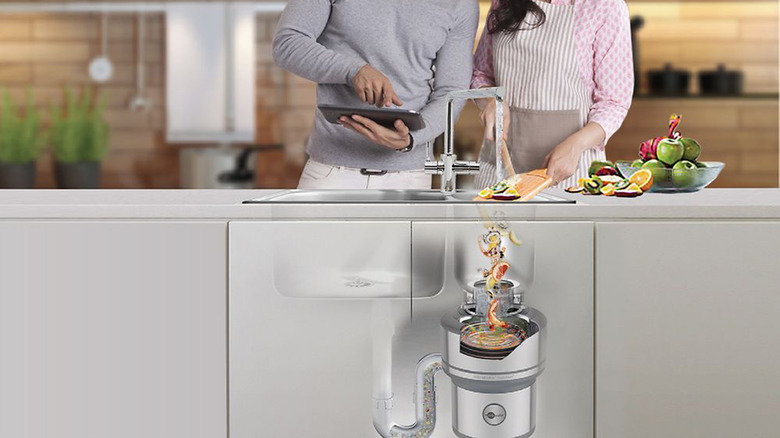
If you have a garbage disposal in your home, it was probably made by InSinkErator. The brand is way bigger than many realize, with a nearly 70% estimated market share. It's ubiquitously available in hardware stores like Home Depot and Lowe's, as well as from online retailers like Amazon. It also comes in many shapes and sizes across a variety of price points that range from budget to quite expensive for more serious home cooks. InSinkErator garbage disposals are available in 80 countries around the world as well, so even our non-U.S. readers have a good chance of having one.
InSinkErator is one of the many brands owned by Whirlpool. Whirlpool finalized the purchase in 2022 when it purchased the garbage disposal giant from Emerson Electric Co. for $3 billion. Emerson Electric is another very large company with a ton of brands of its own, so even if Whirlpool hadn't bought InSinkErator, it'd still be on the list anyway, although that would've been an arguably more interesting story since Emerson Electric owned InSinkErator from 1968 to 2022, during which InSinkErator became a household name.
The company isn't sitting on its hands. Some of its newer products have some pretty neat technology, including 24/7 always-on LED lights that promise to kill germs and reduce odors. It also appears to always be a cool purple color, adding some ambient lighting to your sink drain if you're into that kind of thing.
Crock-Pot
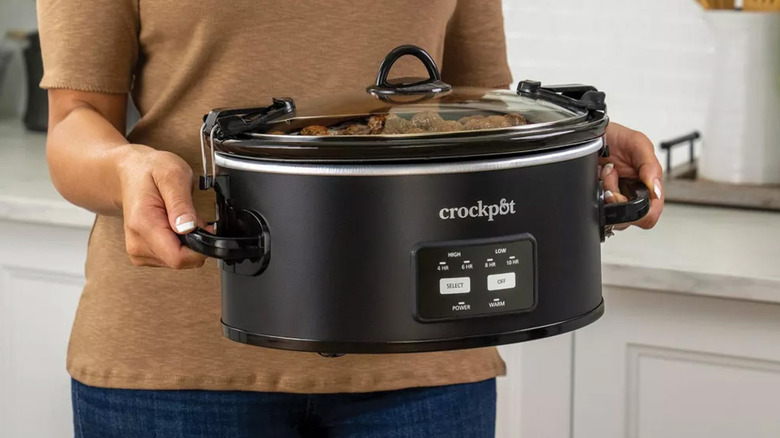
It's no surprise that the Crock-Pot is hugely popular in its space. It's one of the few companies whose brand name is often used as the generic term for its product, joining mainstays like Chapstick, Kleenex, and Band-Aid. As such, there's little doubt that Crock-Pot is the biggest name in its product category ahead of all other competitors, a title it earned by competing in the space since the 1950s. It's still sold today at dozens of brick-and-mortar and online retailers, and there's a good chance you've either owned, used, or eaten food made in one at least once.
Despite its decades of success and dominance, Crock-Pot is actually owned by a larger company. Newell purchased Crock-Pot as part of its acquisition of the Jarden Corporation in 2016. Once again, even if that hadn't happened, Crock-Pot would still be here because Jarden also owned Sharpie, Coleman, Rawlings, Sunbeam, and a few other brands. To complete the history, Jarden bought the brand from the Holmes Group in 2006 who had bought Crock-Pot from Rival in 1999. Rival bought the original company, the Naxon Utilities Corp, in 1970. Back then, the Crock-Pot was called the Naxon Beanery All Purpose Cooker. Rival changed it to the now-iconic Crock-Pot name shortly after its acquisition.
The technology has improved, but the overall process is still the same. Your biggest choice is how big you want your Crock-Pot to be and whether or not you want programmable or manual controls.
KitchenAid
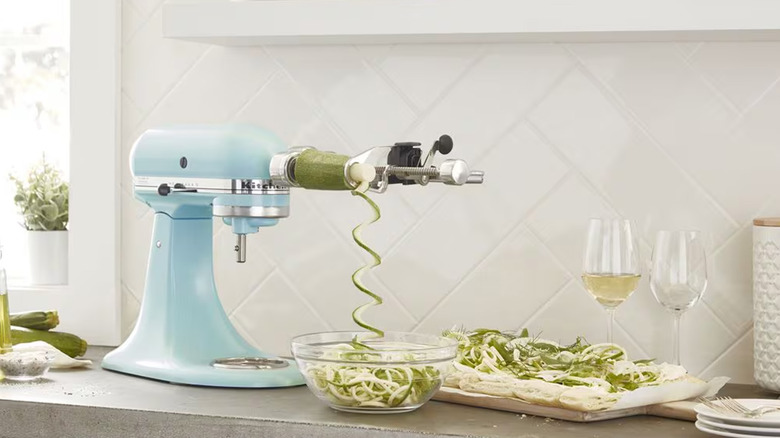
KitchenAid is perhaps best known for its legendary stand mixer. It was the brand's first product, released back in 1919, and it continues to be sold today in many colors, variants, and sizes. It has since expanded into other appliances like dishwashers, fridges, ranges, ovens, microwaves, hand mixers, toasters, and more. It is currently one of the most recognizable kitchen appliance brands in the U.S. and is the single biggest purveyor of stand mixers in the world. That's a pretty good portfolio for one brand, especially one that is owned by a larger company.
It's been a long time since KitchenAid was an independent company. Whirlpool bought the brand back in 1986, where it still resides to this day. Unlike many other brands that had many owners over the years, such as Crock-Pot, KitchenAid has only had two owners. The first was the Hobart Manufacturing Company, which officially opened its doors in 1919 with the stand mixer. KitchenAid remained under the Hobart Manufacturing Company umbrella until its sale to Whirlpool in 1986. By then, KitchenAid had already begun expanding into other appliance segments with dishwashers that were inspired by the original designs by its inventor, Josephine Cochrane.
Today, KitchenAid is available everywhere appliances are usually sold, and its small kitchen appliances are available at most large retailers. The brand's inclusion in Whirlpool's portfolio no doubt helps the brand remain a top dog in the appliance market.
Cuisinart
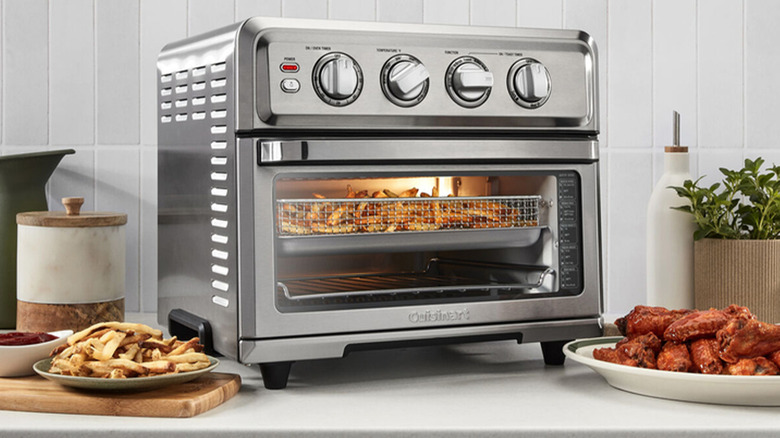
Cuisinart is a huge kitchen appliance company. It doesn't compete in the bigger appliance space like KitchenAid, but it has enough small kitchen appliances fill an entire kitchen twice over. Its appliances include air fryers, rice cookers, bread makers, can openers, ice cream machines, indoor grills, toasters, tea kettles, and basically any other well-known kitchen appliance that exists. If it needs to be heated up, opened, cooked, mixed, or processed, you can bet that Cuisinart makes something that'll do it. On top of that, the brand makes a ton of non-appliance kitchen stuff, like cookware, bakeware, cutlery, kitchen gadgets like salad spinners, and outdoor stuff like coolers. It's honestly ridiculous how many things Cuisinart makes.
All the money the company brings in goes to its corporate overlord, Conair — yes, the hair dryer company. Conair originally purchased Cuisinart in 1989. However, Conair itself was purchased by a private equity firm called American Securities in 2021, so there's another layer of ownership above Conair. Shortly after that, Conair purchased the Fulham Group, which was a licensing partner that made Cuisinart's outdoor products, putting all of Cuisinart's eggs back in the same corporate basket.
Its history prior to Conair was brief but tumultuous. Cuisinart started out in 1971 by Carl Sontheimer and his wife. The two popularized the food processor in American homes before being bought out in 1988 by a group of private investors, who nearly killed the company before Conair swooped in and bought it in 1989.
Oster
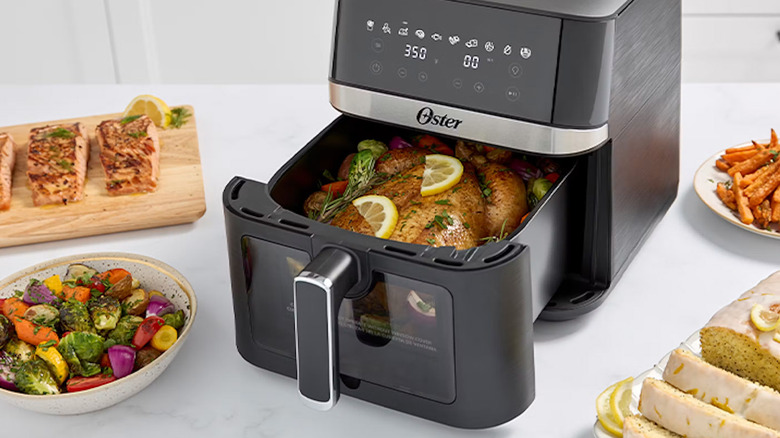
Earlier, we talked about Newell buying the Jaden Corporation in 2016, acquiring Crock-Pot in the process. It turns out that Newell got a few small kitchen appliance brands out of the deal, including Mr. Coffee, maker of coffee machines; FoodSaver, maker of vacuum sealers for the kitchen; and Oster, which makes a whole lot of other stuff. While FoodSaver and Mr. Coffee are big in their own right, Oster isn't as big as Cuisinart, but it does compete in the same space with budget-oriented products. Oster makes blenders, food processors, toasters, griddles, air fryers, and rice cookers.
Oster's full history is quite long. It's owned by Newell, which has held the brand since 2016. Oster's history is a little more interesting because, at one point, it bought other brands. In its early expansion years. For its first 20 years, it was a barbershop supply company that made handheld clippers. It bought Stevens Electric Company in 1946, which was its first foray into small kitchen appliances, with the famous Osterizer blender leading the lineup.
Sunbeam bought Oster in 1960 and held onto it for decades. Sunbeam merged with Allegheny International in 1981 and took Oster with it. The company was rebranded Sunbeam-Oster in 1989, a name it kept until 1995, but kept Oster as part of its product portfolio. Jarden bought Sunbeam, and by proxy Oster, in 2004. The brands remained closely associated with one another and remain that way today under Newell.