

What Are The Differences Between Class A, Class B, And Class C Motorhomes?

Recreational vehicles, or RVs as they're commonly known, encompass a wide variety of vehicles and trailers used for camping. Of course, we're using camping in its broadest sense because the accommodations in modern RVs range from rustic to luxurious. Motorhomes, often defined as drivable RVs, offer a similar range of accommodations across the Class A, Class B, and Class C designations. However, the ABCs of motorhomes aren't as intuitive as you might think.
Class A motorhomes represent the physically largest specimens. Their dimensions and design are the most bus-like of the three motorhome classes, with lengths up to 45 feet. You might guess that Class B motorhome sizes fall somewhere between Class A and Class C, but that is not the case, as they're the physically smallest class of motorhomes. Class B motorhomes are built on many of the same platforms as cargo vans. Lengths for Class B RVs typically range from 17 to 24 feet.
Class C motorhomes are the in-between class with common lengths from 20 to 33 feet. They're most often built on a cutaway van or truck chassis, like the Chevrolet 4500, the Mercedes-Benz Sprinter, or the Ford E-450. This gives them a more truck- or van-like cab than Class A or Class B motorhomes.
Which motorhome class is best?
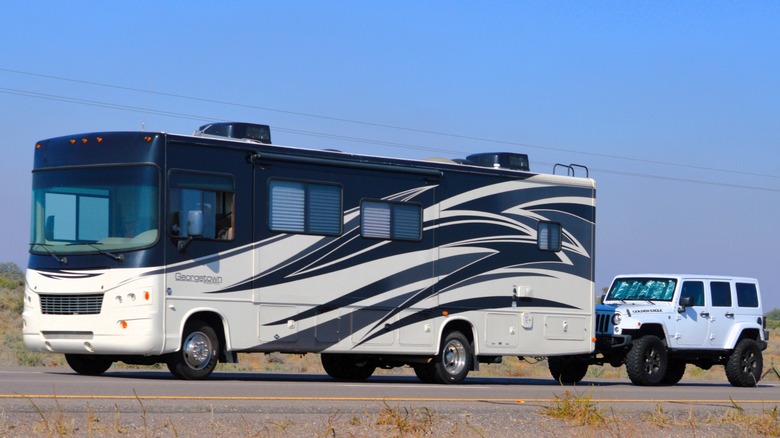
There are a number of considerations that affect which class of motorhome is best. Your preferred style of camping is a good place to start. For example, if you'd like an off-road camper built to explore the backcountry, a 40-plus-foot Class A probably isn't going to get you far off the pavement. Unfortunately, a 40-foot Class A will also drastically reduce the number of national park campgrounds you'll be able to access. Additionally, these big rigs are the most demanding to drive on city streets and maneuver in parking lots.
Part of your decision-making process should include thinking about the places you'd like to explore and researching some nearby campgrounds or boondocking opportunities. A smaller rig opens up more opportunities, whether it's a small Class A, Class C, or the largest Class B. Stick with the Class A or larger Class C if living space and house-like amenities are non-negotiables. Smaller Class C motorhomes and many Class B designs have some features that could require changing the way you think about your daily routine.
Pros and cons of smaller motorhomes
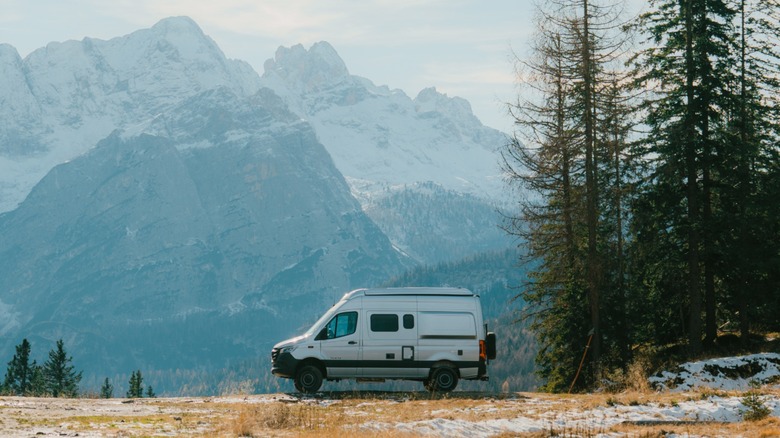
The drivability of smaller motorhomes is high on the list of pros, with most Class Bs fitting into a single large-ish parking spot. Larger Class B and most Class C motorhomes may require creative parking solutions that could mean you have to break some of the parking lot etiquette rules that every driver should follow.
While driving city streets, navigating congested parking lots, and fitting into more campgrounds are nice, those are merely examples to illustrate the maneuverability of smaller motorhomes. For some campers, the real fun lies in venturing off the beaten path to camp in dispersed camping areas scattered all across the country. There are a number of apps to help you find these hidden stops, and a four-wheel-drive Class B motorhome, or camper van, allows access to campsites that larger rigs simply cannot reach. Fuel economy is another factor in favor of the smaller Class B motorhome, with averages in the 15 to 22 mpg range. Class C motorhomes often get between 8 and 13 mpg, while larger Class A RVs seldom get better than single-digit fuel economy.
Cons of smaller motorhomes include the reduced floor space, of course, but also some aspects that could be deal breakers. The smallest Class B motorhomes may require transitioning the living space into a bed for sleeping and back again before cooking breakfast. In addition, many small motorhomes have a wet bath, a setup that requires getting the toilet and the entire bathroom floor wet when taking a shower. There may not be a shower at all, and the toilet may be stored in a cabinet and placed on the living area floor when needed. Your perfect motorhome depends on your camping goals. It'll also require a hard look at the level of comfort you desire.