

5 Times When It's Better To Use 18V Makita Tools Instead Of 12V
We may receive a commission on purchases made from links.
Makita offers several different battery types in the U.S., and each of them is designed to cater to a different kind of workflow. The 12V CXT system is powered by the brand's lower-tier battery packs. These offer the lowest voltage output, but they're balanced by several benefits. The line of associated power tools is largely comprised of affordable and compact devices that are lightweight, highly portable, and easy to use in tight spaces. This makes them a popular option for household tools that you'd want to keep on hand for basic DIY projects without needing to dedicate a bunch of storage space.
Makita's biggest and most popular line is the 18V LXT system. This is the one that you'll most likely see dominating the teal and black tool aisle at your local hardware store. There are over 350 solutions in the LXT lineup, giving collectors significantly more options when they need to pick up a specific tool for a new project. Not only are the tools in this system generally more powerful, but you can also use the batteries to power Makita's X2 line, which uses two 18V LXT batteries together to supply 36V power.
One thing that you might notice when taking a look at both of these product lines is that there is actually a fair amount of overlap in the types of products on offer. In fact, there is an 18V LXT version of just about every 12V CXT tool. There are a fair number of situations where the compactness of the CXT system makes its products the more desirable choice, but you might also want to consider that there are plenty of times when you'd definitely be better off investing in the raw power of an LXT tool.
Using a drill for high-torque applications
Makita currently only sells one standard drill/driver as part of its 12V line: the 12V Max CXT ⅜-inch Driver-Drill, which comes as part of a kit that also includes a pair of 2.0Ah batteries, a charger, and a carrying case. This is a handy little drill that only weighs 2.4 pounds with the battery installed. It has a variable speed that tops out at 450 RPM in Low and 1,700 RPM in High, and a motor that can deliver up to 250 in-lbs of torque.
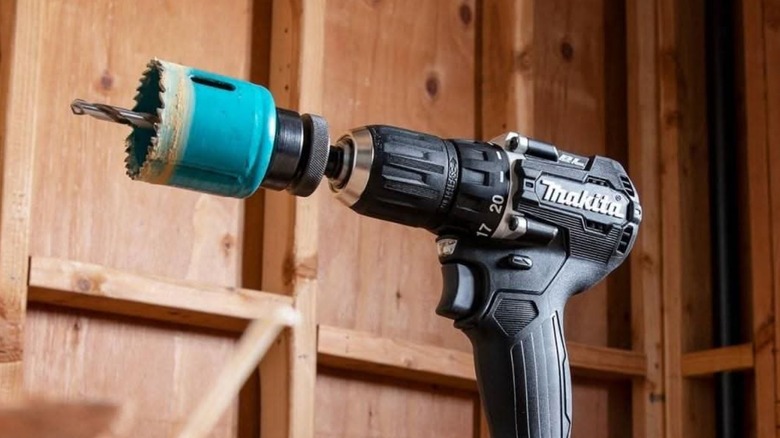
These specs place this little tool squarely in the light-duty category. The CXT drill will be able to drill pilot holes and drive fasteners in materials like drywall and softwoods with ease, but it will start to struggle when you ask it to perform high-torque applications, such as powering large hole saws, driving heavy lag bolts, and boring through dense hardwoods. These tasks require something that can generate a bit more torque.
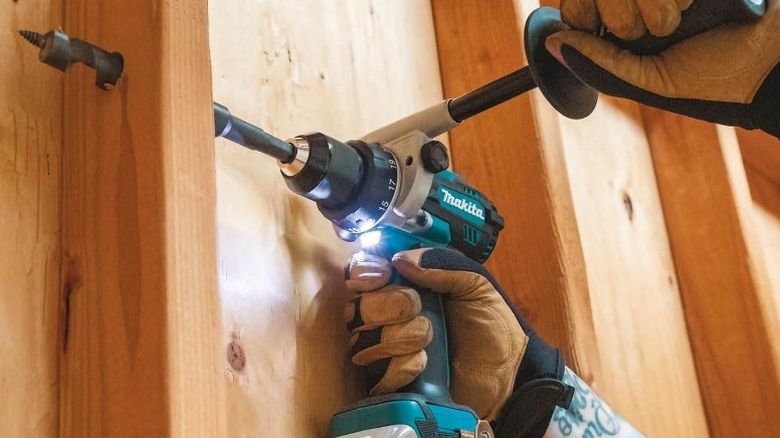
There are significantly more options to choose from in the 18V line. The lower-end drills, like the standard Makita 18V LXT ½-inch Drill-Driver, top out at 1,900 RPM and can generate up to 480 in-lbs of torque. This is already a significant increase in speed and power over the 12V option. Then there are more powerful models, like the Makita 18V LXT Brushless ½-inch Drill-Driver. Same make and similar style, but this one has a brushless motor that allows it to generate a whopping 970 in-lbs of torque. That big power boost makes this drill more suited to a wider range of high-torque tasks, like using larger hole saws, self-feed bits, and auger bits.
Sanding large surface areas and fine woodworking projects
There are a lot of different kinds of sanding and buffing tools out there, but the only option in Makita's 12V line is the 12V Max CXT Brushless 3-inch Polisher/2-inch Sander. This is pretty different from most other sanders because it has a small surface area and the pistol-like grip design that one would typically associate with a drill. This might do a decent enough job spot sanding a few rough patches in the narrow gaps around a deck railing, but you probably wouldn't want to use it for any large or decorative projects.
There are a few issues with this sander. The first is that it's a polisher/sander and not a standard orbital sander or a random orbital sander. Random orbital sanders are better for most fine woodworking tasks because their combined spinning and orbital motion helps decrease the likelihood of circular sanding marks. The second is the ergonomics, which would work fine for short bursts, but could prove awkward over a prolonged sanding session. The big third issue is that it doesn't have any sort of built-in dust collection system, and that excess dust will build up fast. The fourth and final issue is that the small surface area of the sanding disc means that any larger project would take a very long time to finish.
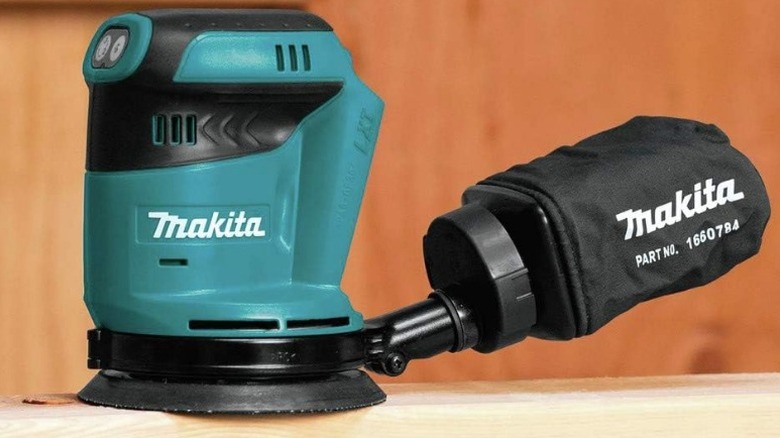
Makita has an 18V version of this sanding and polishing tool as well, and to the 12V model's credit, it matches the speed exactly. But for larger and more detailed work, you'd be much better off with something like the 18V LXT 5-inch Random Orbit Sander. This addresses all the issues in the 12V tool and boasts an impressive 11,000 OPM max speed.
Lighting large areas
There are three kinds of lights in the Makita 12V CXT line: the 12V Max CXT Compact LED Flashlight, 12V Max CXT Adjustable Beam LED Flashlight, and the 12V Max CXT ML104 LED Lantern. Most offer directional brightness in the 100-200 lumen range and various runtimes depending on the capacity of the battery and the brightness setting of the tool. One is able to get up to 710 lumens in its 360-degree lantern mode. Overall, these are great tools to have on hand during a power outage, and they're pretty decent for camping and small jobs too.
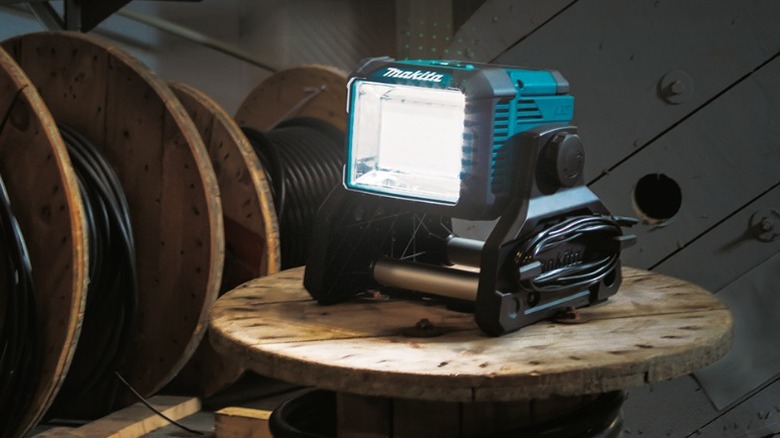
The issue is that none of them are really ideal for casting bright light on a large area. There is nothing in the 12V line that can compare to the Makita 18V LXT Cordless/Corded Work Light or the Makita 18V LXT Cordless Tower Multi-Directional Work Light, which can each hit up to 3,000 lumens. They also feature a range of directional adjustment settings to help you get light where you need it. These brightness control and adjustability settings are essential to lighting up a large workspace, making them both safer and more effective.
Even elsewhere in the lineup, though, the brightness of the 18V lights simply blows the 12V version out of the water. The 18V LXT LED Underhood Worklight is able to reach up to 1,700 lumens at its highest brightness setting, more than doubling the amount of light that you have to work with. This might be tempting all on its own for anyone who does a lot of late-night automotive work and doesn't want to spend a lot of time squinting and searching for lost bolts.
Busting high-torque lug nuts and structural bolts with an impact wrench
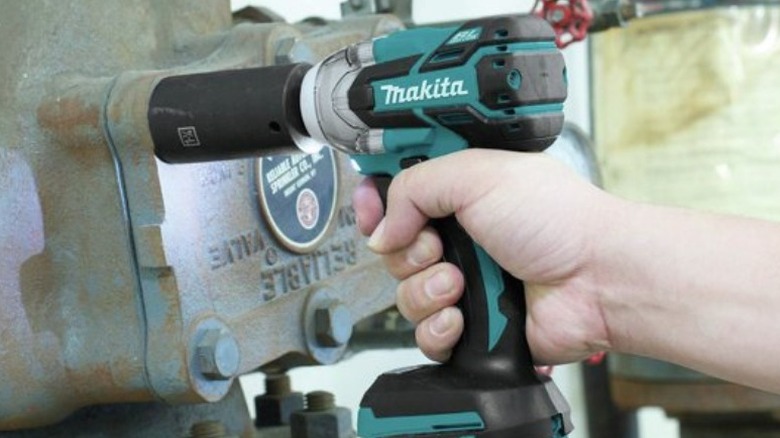
A good, high-torque impact wrench is an essential tool for most types of automotive and machine work. There are two models in the Makita 12V line. One is the 12V Max CXT ¼-inch Impact Wrench, which is only sold as part of a kit, and the other is the 12V Max CXT ½-inch Impact Wrench, which is only sold as a standalone tool. The smaller model is only able to generate up to 44 ft-lbs of torque, which is quite limited. The ½-inch model is a bit better, promising 122 ft-lbs of torque and 210 ft-lbs of nut-busting torque. Even so, it's safe to say that most serious mechanics wouldn't be likely to choose either of them as their weapon of choice, as these are also considered light-duty tools.
This is insufficient when it comes to a lot of automotive work. It's typically recommended that you get an impact wrench with at least 250-650 ft-lbs of torque for basic car repair, like busting lug nuts off tires. You'll need even more force if you plan on doing any heavy-duty suspension or engine repairs. These can sometimes require something more in the 650-1,000 ft-lb range.
You don't need to resort to pneumatic power tools to get that kind of performance, though. The Makita 18V LXT system has over a dozen impact wrench models across a range of power scales. The Makita 18V LXT 3-Speed ½-inch Square Drive Utility Impact Wrench, for instance, boasts a brushless motor that allows it to deliver up to 780 ft-lbs of fastening torque and up to 960 ft-lbs of nut-busting torque. This is a significant increase in raw force that should be able to handle most anything you're likely to encounter.
Cutting thick and dense wood with a circular saw
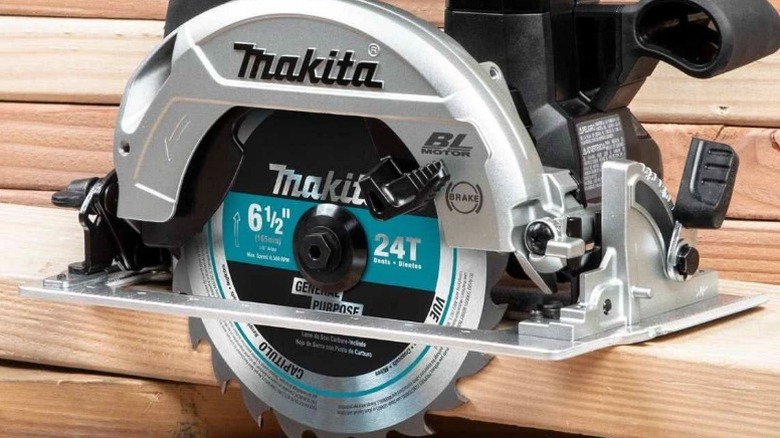
Makita only offers one circular saw as part of the 12V CXT line, and it's a bit of an unusual one. The 12V Max CXT 3 ⅜-inch Circular Saw is a small, one-handed tool that is primarily designed for cutting sheet goods. The description specifically cites thinner and softer materials like plywood, MDF, pegboard, melamine, and drywall in the list of materials that the tool was designed for. This is fine if that's all you plan to cut. The 3 ⅜-inch blade is able to cut materials up to 1 inch in thickness, and the tool has a motor that can deliver up to 1,500 RPM.
These specs are more than sufficient for the use cases cited by Makita, but you'll need a bigger blade with more power for just about anything else. Common building materials such as dimensional lumber can be 1 ½-3 ½ inches thick, which is more than the 12V saw can cut. What's more, this saw might struggle with denser materials, such as hardwoods. These typically require circular saws that are able to generate between 3,000 and 6,000 RPM depending on density and thickness.
Those looking for something a bit stronger will find plenty of options in Makita's 18V LXT line. The brand sells several models, with saws ranging from 5 ⅜ inches to 7 ¼ inches. The smallest model, the Makita 18V LXT 5 ⅜-inch Circular Trim Saw, has a 2-inch maximum cut depth and can hit speeds up to 3,600 RPM, more than doubling that of the 12V. Meanwhile, the larger 18V LXT Sub-Compact Brushless 6 ½-inch Circular Saw boasts a maximum speed of 5,000 RPM, and some models featured in the 36V X2 series can get over 6,000 RPM.
Our methodology
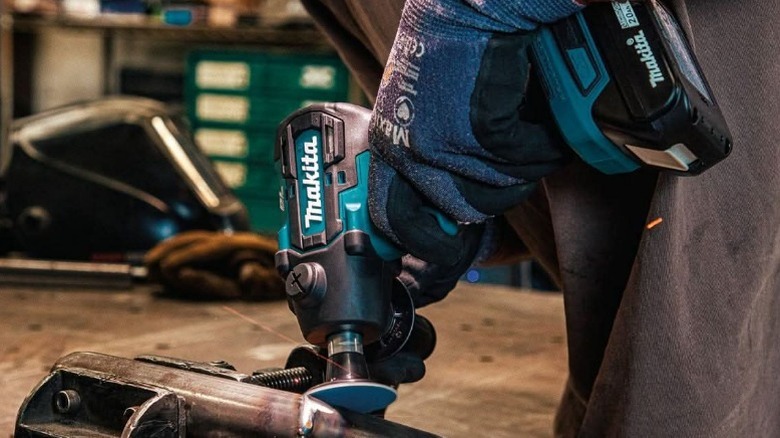
Makita's 12V Max CXT power tool line features a bevy of products that are primarily designed for light-duty work. They're known to provide an exceptional amount of power for such small, low-voltage tools, but the vast majority of them lack the performance that the brand can deliver in its 18V tools. Because of this, there are certain jobs that the 12V line simply isn't suited to.
In making this list, we started by looking at the products that were currently available in Makita's catalog of CXT tools. We examined the offerings available, as well as their specifications, and picked ones that we believed would struggle to perform specific heavy-duty tasks that other, similar tools might be able to take on. After that, we took a look at the 18V LXT hardware and made sure that there were products in that line that could offer a significant boost in speed and power, making them much more likely candidates for these kinds of difficult tasks. Finally, we sought to verify this when possible by checking outside guidance on the requirements for these jobs and comparing it with the specifications of the 18V and 12V tools to determine which were better suited to them.