

5 Downsides Of Asphalt Driveways Everyone Should Be Aware Of
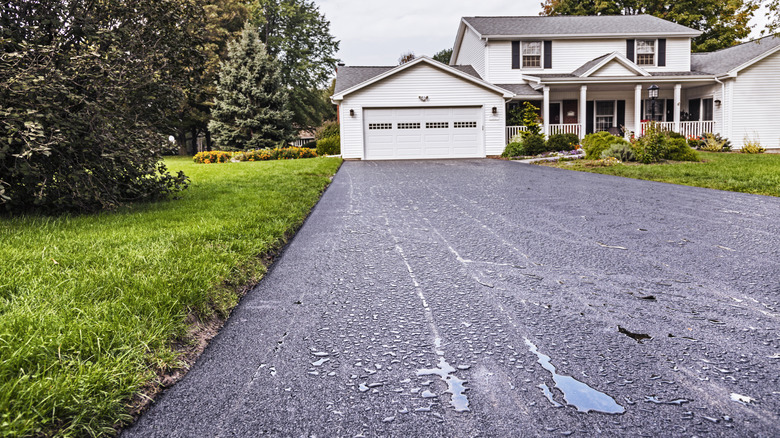
If you're thinking of remodeling your driveway or getting a home built, something to consider is the composition of your driveway. There are a few different options available, including full concrete, gravel, and even driveways made from recycled materials that are cheaper alternatives to concrete and gravel (but still look great). As an old reliable workhorse option for paved ground, asphalt is among the most common choices for driveway paving. Compared to concrete, it's also cheaper and has a shorter cooldown period before it's safe to walk or drive on.
However, as with anything — and especially in terms of driveway paving materials — asphalt isn't perfect. It has some quirks that could end up being a nuisance to deal with, including recurring cracks, temperature sensitivity, and upkeep needs that are more of a headache than you might expect. These caveats could be less or more of a problem for you depending on your personal standards, as well as factors like where you live, but it would still be in your best interest to know about them before changing up your driveway.
Asphalt needs regular upkeep
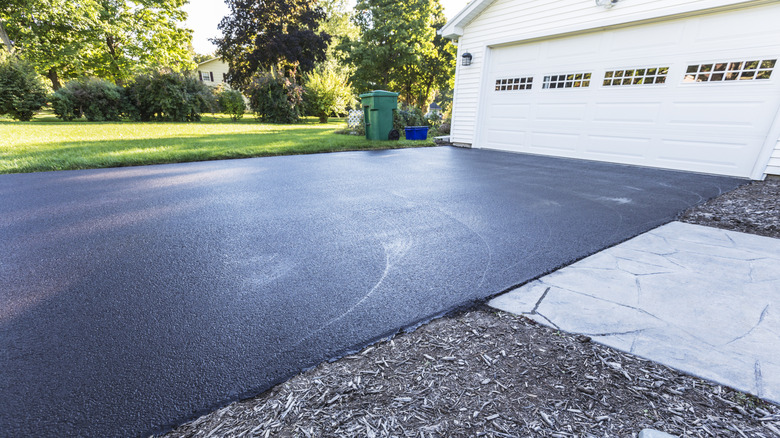
Asphalt may seem thick and sturdy when it dries, but it's more delicate than you'd think. A typical asphalt driveway can last anywhere from 20 to 30 years, but that range is heavily contingent on maintenance practices. If you simply put down some asphalt and leave it alone indefinitely, it's going to break down quickly with the strain of daily use.
Asphalt driveways require routine upkeep for maximum longevity and function. This includes sweeping away debris, as well as doing a full power wash a couple of times a year, to clean your driveway so it looks new again. Additionally, you should get your asphalt driveway fully repaved and sealed every few years. You can do some upkeep yourself if you don't mind the manual labor, up to and including fixing small cracks and applying sealant, but you do need some know-how for this, as well as tools like a caulking gun, putty knife, a brush for coal tar emulsion, and so forth. If the asphalt endures too much weathering without upkeep, you may need to get it professionally serviced.
Cracks and defects are common in asphalt driveways
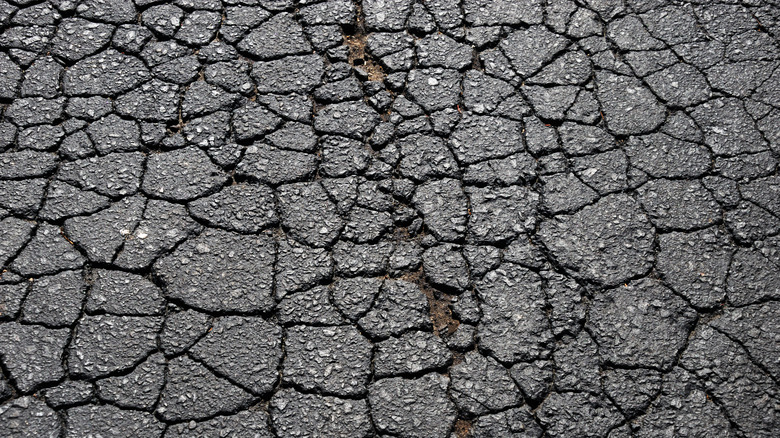
One of the most common complaints when it comes to asphalt driveways is the ubiquity of small cracks and defects. When it's freshly applied, asphalt starts out looking smooth and uniform, but with the passage of time, it's prone to start showing small cracks. The likelihood of this increases if you're regularly driving large, heavy vehicles across the asphalt, such as a large pickup truck. The cracks might just be unpleasant to look at when they first start to appear, but if the damage is left untreated, it could worsen into defects and hazards like potholes and uneven ground that presents a tripping hazard.
You might think the solution here would be to patch the cracks and holes with more asphalt — unfortunately, that's only a short-term solution. If you do this, you'll eventually notice what's known as reflective cracking, in which a layer of asphalt paved over an old one cracks in the same places the original layer did. This is because, even though the cracks are no longer visible, they still compromise the new layer by applying pressure against it during routine use.
Temperature concerns
Another prominent concern when it comes to asphalt driveways is temperature sensitivity. Naturally, asphalt spends a lot of time being exposed to the elements, from the hottest highs of summer to the coldest lows of winter. Compared to some other materials, Asphalt holds up decently well against temperature extremes, but there are still some concerns.
In the summer months, the solid black surface of an asphalt driveway directly absorbs the sun's intense heat. This can cause the surface to reach extremely high, dangerous temperatures, as high as 180 degrees Fahrenheit, even becoming slightly gooey in the process. These elevated temperatures can reflect onto nearby vehicles and surfaces, creating sweltering heat bubbles. Even putting that aside, hot asphalt can be very dangerous just to walk on, especially for kids or pets, potentially leading to actual burns. Conversely, asphalt holds up a little bit better in the winter, generally resisting flowing water from ice melt and standing up to damage incurred from loose road salt. However, it does become more difficult to patch cracks in the winter, as reduced ambient temperatures make it harder to get asphalt up to an adequate temperature for paving. Even if you can get it hot enough, it may not set properly after you use it.
Asphalt isn't the strongest possible option for your driveway
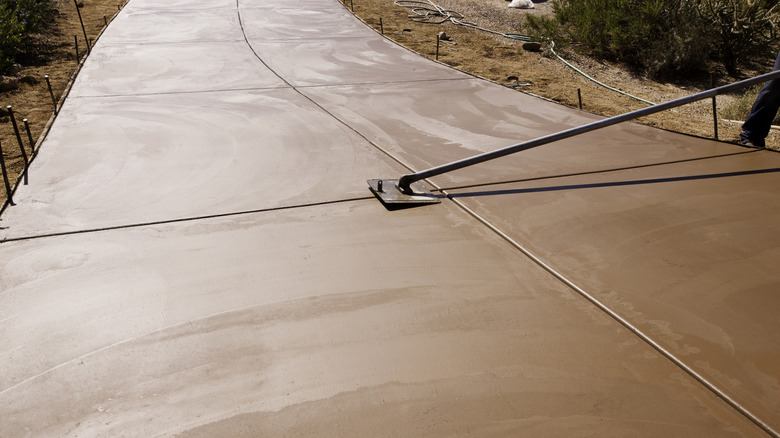
Asphalt isn't exactly a pushover in terms of durability, but that doesn't mean it's the highest-quality option available. There's another viable option for driveway treatment that typically lasts longer than asphalt does: concrete. In fact, some home improvement enthusiasts prefer concrete to asphalt for its strength and longevity.
Concrete does have a higher upfront cost compared to asphalt and has some other weaknesses of its own, like susceptibility to road salt. What concrete does have over asphalt, though, is its raw staying power. With upkeep, a concrete driveway could last anywhere from 30 to 40 years, a good 10 years longer than even the most nurtured asphalt driveways, and with generally lower upkeep requirements like repaving or resealing. Additionally, while concrete can get dangerously hot in the summer, it won't get goopy.
Whether concrete is the best option for you largely depends on your budget and where you live, among other factors. But if you're looking for the strongest driveway money can buy, asphalt is not the solution for you.
Less customization potential
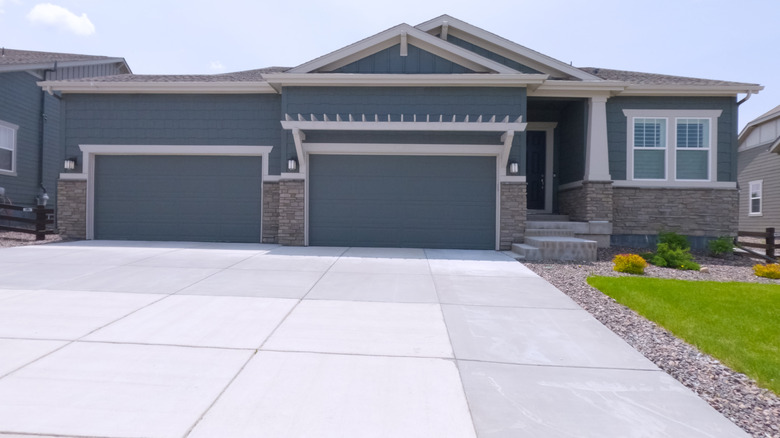
This is a relatively minor concern compared to the others, but it is a concern nonetheless — one that certain homeowners may find objectionable. Specifically, asphalt isn't the most customizable choice for a driveway. It is possible to get stamped or colored asphalt, for example, which adds basic patterns and pastels, but this can be notably more expensive than regular asphalt due to the extra steps in the paving process.
By contrast, concrete is generally easier to customize. Not only can it be stamped and colored, it can also be tinted in various shades, as well as have various artistic embellishments added. Even one of the simplest driveway options, gravel, has more customization potential, as you can pick and choose which types and colors of stone you want and contrast it with the colors of walkways. Asphalt does look nice and uniform right after it's applied, but as it starts to fade and crack from time and temperature exposure, there's little you can do to get it looking nicer beyond getting another layer of asphalt applied.