

Can You Use Dishwasher Tablets To Clean A Washing Machine?
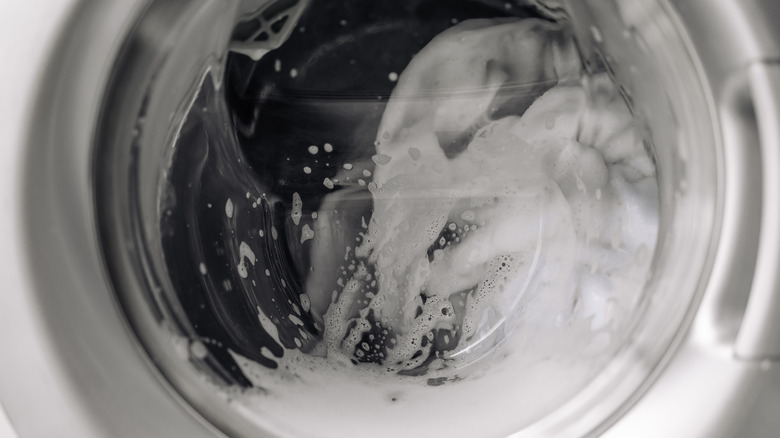
Considering the whole point of a washing machine is to clean your clothes and sheets, it's easy to forget that the machine itself also needs to be cleaned periodically, especially if you're regularly running very dirty, muddy clothes. Unfortunately, just running the cycle may not be enough to properly scour any caked-on crud, necessitating some more intensive cleaning power. The question, then, is what exactly you can use to facilitate that cleaning.
If you're nosing around in your cabinet for solutions, you may be thinking of trying dishwasher tablets. However, this wouldn't be a great idea. While the concept makes sense on paper, throwing a dishwasher tablet into your washing machine isn't quite the same thing as throwing one into your dishwasher. After all, dishwasher tablets are only made to be used in dishwashers, and using them anywhere else, even in a theoretically similar appliance, could have potentially negative effects. Rather than trying to take a shortcut, the best course of action is to stick to cleaning solutions specially formulated for washing machines.
Dishwasher tabs aren't formulated for washing machines
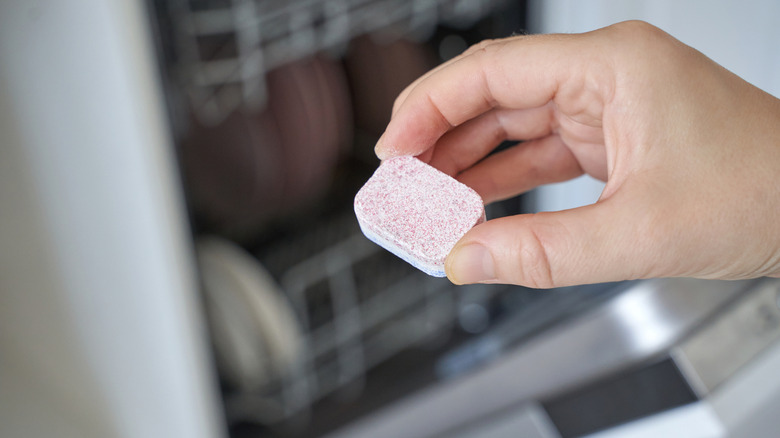
Dishwasher tablets are specially formulated to do their business in the environment created inside of a dishwasher while it's running. In other words, it works in an environment of continuous high heat, with regularly flowing and draining water moving on and around dishes, plastic, and utensils. While a washing machine's functions may seem similar, they're only similar in the broad lens of things. It's within the fine details that problems start to arise.
Washing machines generally don't get nearly as hot as dishwashers do, even on their hottest wash cycle. It's a big reason why dishwashers are so good at sanitizing. Because of this, though, there's a distinct chance that dishwasher tablets wouldn't actually dissolve in washing machines. If the tab doesn't dissolve, the cleaning solution doesn't circulate, which defeats the purpose. Not to mention, it also leaves a solid object rattling around inside the drum. Even if the tablets do dissolve, they may end up creating a greater concentration of foam and suds than your washing machine is equipped to handle, which can lead to overflowing and sensor errors.
Most pressingly, using dishwasher tabs, which are only formulated to clean dishes, could potentially damage your clothes. Dishwasher tabs contain chemicals and bleaching agents that, while great for sanitizing porcelain, can damage fabrics and cause colors to run. Even if you didn't run any clothes in the washer alongside the tab, any residue it leaves could still damage your clothes on subsequent cycles.
Stick to washer-formulated cleaners
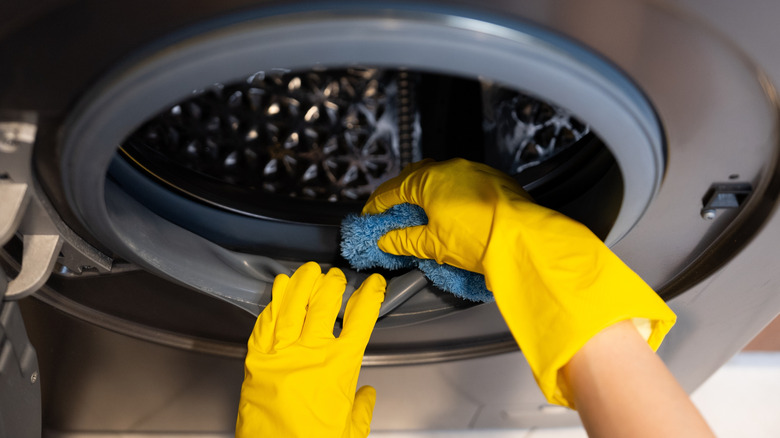
Rather than trying to use detergent from one appliance in another, the best course of action for keeping your washing machine clean is to stick to washer cleaning solutions specially formulated for your machine. Most major washer brands will recommend a particular product, usually also made by the same brand, for consistent washer upkeep. Bosch, for example, recommends using its own Bosch Washer Cleaner every few months to scrub off stubborn residues accumulated from numerous loads.
If you absolutely have to use some kind of homebrew method, an old standby is cleaning out the drum with a concoction of distilled white vinegar and baking soda. Simply pour two cups of vinegar into the drum, run the hottest wash cycle available, then sprinkle half a cup of baking soda into the drum and run the cycle again. This will clean most stuck-on residues, though you may want to do a quick wipe down with a microfiber cloth afterward to seal the deal and eliminate unpleasant odors.
Fair warning, though, some washing machine brands do advise against using vinegar to clean their devices, as acidic substances can damage sensitive components like seals and hoses. As such, vinegar and baking soda are best saved as a last resort in case you're not getting the results you want from official cleaners.