

5 Used Touring Motorcycles Riders Say You Should Steer Clear Of

Touring motorcycles are, on the whole, relatively reliable beasts, made with eating up miles in mind, and presumably built to a higher standard than some run-of-the-mill scooters. Although most rides will go off without a hitch, hardcore touring riders like to brag about overcoming breakdown dramas. They like trading war stories, recounting desperate scrambles for parts in remote locales and clever road side fixes.
However, most touring bikes do their job with little drama or fanfare as long as you comply with their maintenance schedule. Manufactures spend a great deal of time, money, and energy to ensure that their touring bikes, which are often some of their top offerings, don't to let the customer down.
But there are certainly cautionary tales passed around by riders, at meetups and online, that speak of pretenders laying in wait on the used market, waiting to ensnare the unwary with cheap entry prices and a striking mien only to beset them with eye-popping maintenance costs, intermittent mechanical gremlins, and a general sense of being unreliable, unfit, or outperformed.
Honda Pacific Coast
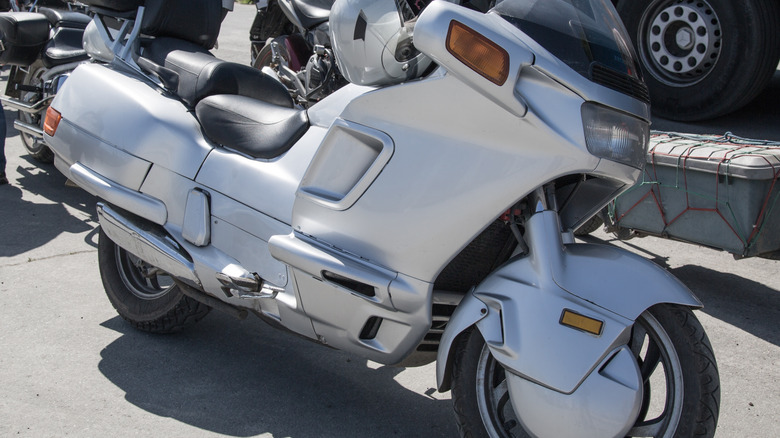
My apologies to Honda loyalists, but nobody bats a thousand; The Honda Pacific Coast is proof that even Big Red can get a swing and a miss from time to time. Honda's Pacific Coast tourer is also rolling proof that a bike does not have to be a miserable failure in every way to warrant concern. It can be just a few characteristics that make a used touring bike hard to recommend, all because of the trickle-down effect these problems can have.
Chief among its issues is its famously brittle, and intricate plastic body panels. These panels completely cloak the bikes' exterior. This gave the bike an appealing and, for the time, almost futuristic look, and provided significant aerodynamic benefits. However, as the plastics aged, they became increasingly brittle. Online forums are full of angry owners who, in an attempt to do some basic maintenance, had broken expensive and increasingly hard-to-source plastic body panels.
Throw in the fact that a touring bike is, by its very nature, going to rack up a lot of miles and require regular maintenance intervals, and you have a recipe for expensive surprises with every service. The fact that the Honda was considered by many riders to be a bit under powered only adds to its reputation as a motorcycle to stay away from when looking for a used touring bike.
BMW K1200LT (1999-2004)
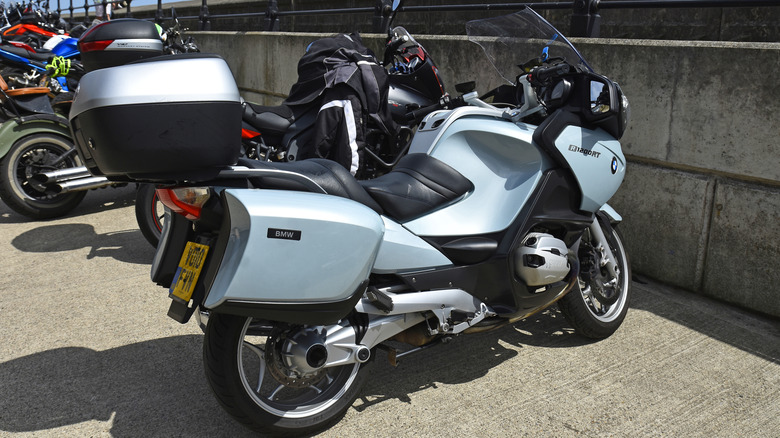
Beemer faithful were hoping to get a European challenger to the Goldwing upon the arrival of the feature-laden K1200LT, but instead it proved to be another reason to consider getting a Honda. The riding dynamics were solid, and few riders could be found who did not like the looks of the big Bavarian motorcycle, but what was lurking under the bike's attractive exterior made us raise an eyebrow.
The main concern that caused riders to shy away from this bike was its reputation for suffering drive line destruction due to bearing failure. To make matters more complicated, the bearings could fail in such a way as to give little warning, leaving riders stranded. Additionally, the K1200LT, which is a big bike that requires solid braking, was prone to issues related to its ABS system. These failures, when they cropped up, were known to riders to be expensive.
The final nail in the coffin of the K1200LT as a used touring bike option is the fact that it's fairly tall and top-heavy, and could be hard to ride. When these factors combined to cause the bike to tip, riders would discover the hard way that new body plastics, levers, control and signals all command new BMW prices and occasionally long lead times, making this an expensive bike to keep in good condition.
Ducati Multistrada 1200/1200S (2010-2014)
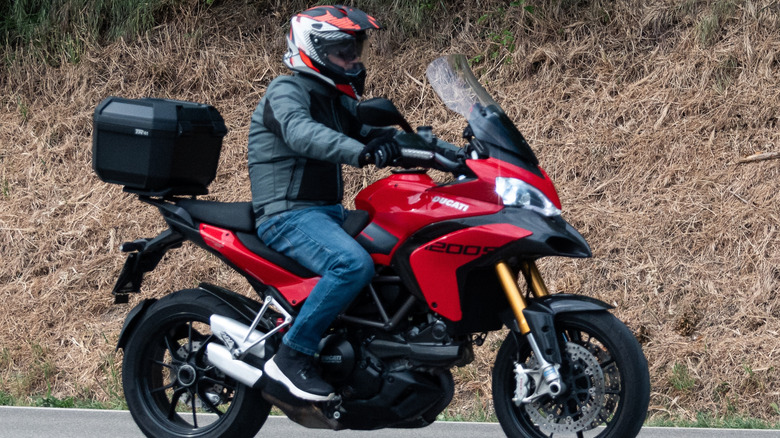
Few will deny that Ducati's Multistrada is a beautiful bike, or that when everything is humming it can be impressive, delivering 150 hp to whatever pavement it was tasked with touring. Ducati's racing heritage shines through on the performance, but it is on the reliability front that the big Duck dipped out.
Fuel sensors were notorious for failing but even before failing they were not considered trustworthy. The sensors gave erroneous information about the bike's fuel level, possibly due to the bike having trouble choking down North American ethanol blends. This is not great on any motorcycle, but for a touring platform it was doubly bad, and caused many riders to come to an unscheduled stop short of their destination.
The heart of the matter is that the Multistrada, for better or worse, had within its chassis the heart of a race beast. The very thing that made riders fall in love with Ducatis was, in the Multistrada, working against it. Ducati engineers never resolved issues related to this, despite recalls, such as uncomfortable heat buildup, frequent need for service, and a twitchy nature that means that although there are worse bikes for a long ride, you can do better than a used Mutistrada.
Can Am Spyder RT (early V-Twin models)
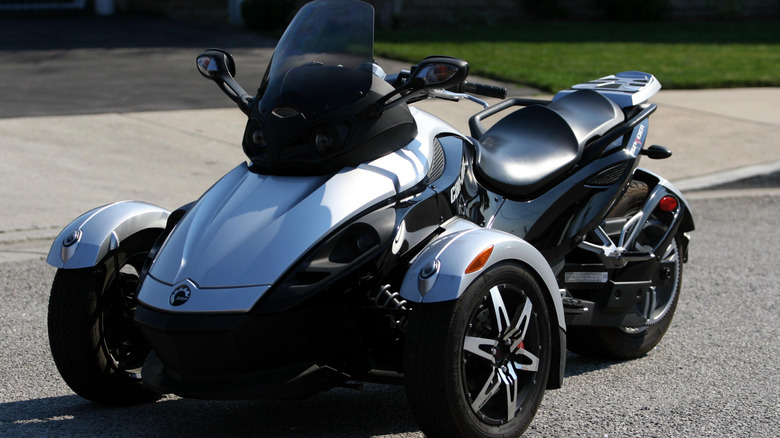
At first glance the touring trike formula makes a lot of sense: copious trunk space, increased stability and safety, and some weather protection. Riders in this market might be tempted to grab an early Spyder RT equipped with a V-twin rather than a newer model with the inline-three to save some money, but they may be unhappy they did so in the long run.
The early twins, though cheaper than the new three cylinder models that replaced them, have earned a reputation as bikes you may want to think twice about. One of the primary issues that riders report is a buildup of excessive heat in the tight cockpit. That kind of heat can make riding uncomfortable, but that's just the first of many issues.
That same excessive heat production that cooked rider legs and backsides has been reported to also send the vehicle in a heat-induced limp mode, which has come to be considered a real nuisance and difficult to reset. The Spyder RT's with V-twins also were subject to a recall relating to fire threats stemming from melting brake fluid lines. Throw in fuel economy that felt closer to a car than a standard motorcycle, and many riders feel you can do better in the used touring bike market.
Yamaha Venture Royale XVZ1200 / 1300
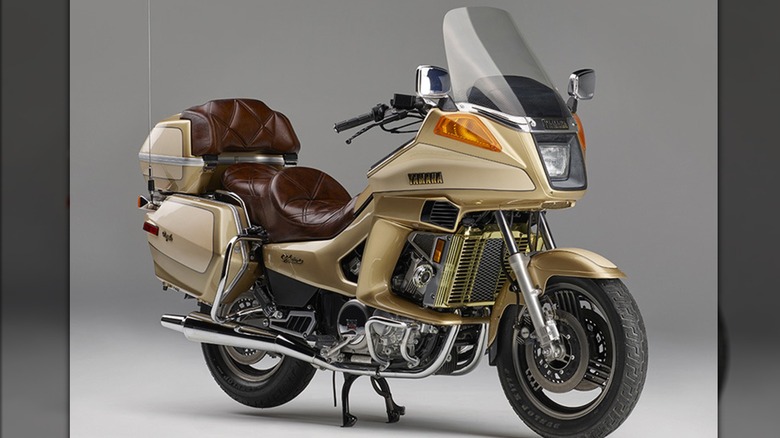
Now a Yamaha bike is showing up on a list of bikes to steer clear of! Is nothing sacred? In defense of Yamaha, one does have to go back to the 80s to find a bike coming out of its factories that scared riders away. That bike was the XVZ1200 and its big brother the XVZ1300. The failure of these bikes to challenge, let alone unseat, Honda's world-famous Goldwing illustrates just how difficult it can be to take on the segment that Honda pioneered.
In general the Venture Royale was, by all accounts, a solid motorcycle. But when you come to take in the big boy of the luxury touring segment, doing good is not good enough. It requires motorcycle excellence, and in that regard, the Yamaha fell short.
It was prone to gear failures that required a skilled technician to repair, and not every Yamaha dealer was up to the task. In addition, the Venture Royale used a very precise carburetor that was notorious for falling out of sync, meaning that many examples of these bikes run rough, or are hard to start, causing them to spend a lot of time on injured reserve. Sitting unused is one of the hardest things on a motorcycle, and if you come across an older Venture Royale with low miles, you can bet it spent some time in the garage, waiting for service.
Methodology
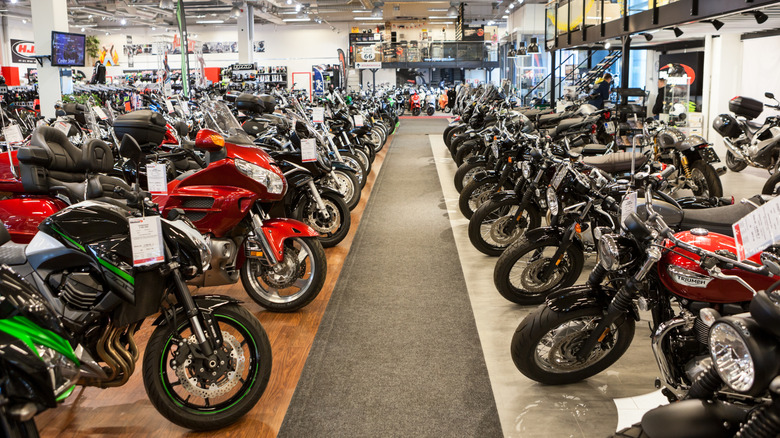
In order to compile this list of used touring motorcycles that you should stay away from, I leveraged decades of motorcycle riding and motorcycle dealership experience. I also consulted user forums such as Reddit, social media sites, manufacturers websites, motorcycle enthusiast websites, NHTSA recalls, and professional reviews to write this list of touring bikes that are overshadowed by better options.