

5 Car Brands Still Holding Out On Making An SUV
SUVs are big business for manufacturers across all segments of the automotive market. According to Edmunds, 60.9% of new vehicles sold in the U.S. in 2025 were SUVs, with Toyota, Honda, Chevrolet, and Tesla being among the biggest players in the American mass market. Many luxury car brands now have at least one SUV in their lineups, and some have benefited greatly from that decision.
In 2022, Lamborghini announced that its Urus SUV had become the bestselling model in its history in record time, and was responsible for doubling its overall sales volume. Likewise, Rolls-Royce had its best-ever year for sales in 2023 thanks to the success of the Cullinan SUV.
SUVs have increasingly become a necessity for carmakers looking to keep their sales figures looking healthy, and over the coming years, even some of the biggest remaining SUV-less brands are set to cave and build one. Chrysler is set to launch three new SUVs as part of its relaunch strategy, while McLaren is reportedly working on a hybrid V8-powered SUV. That leaves only a handful of smaller manufacturers without an SUV in their lineup — and, crucially, with no plans to build one anytime soon. These five brands are the most notable of those holdouts.
Bugatti
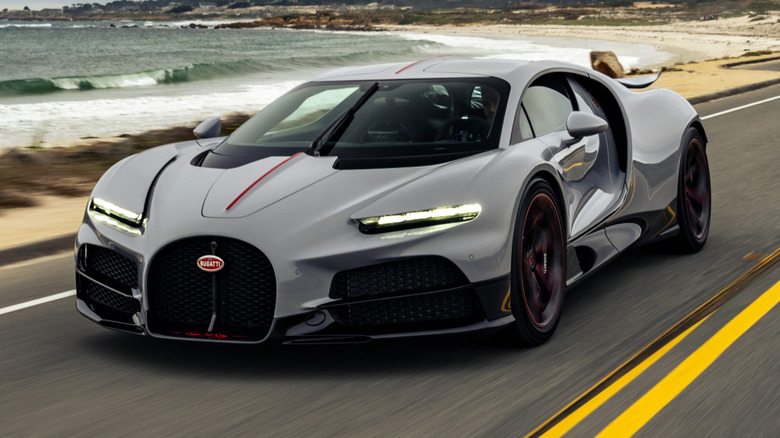
Since its resurrection under the VW Group, Bugatti has stuck to what it knows best. It churns out incredibly fast, extremely expensive hypercars for customers that don't even blink at a seven-figure price tag. Any deviation from that formula, then, could be seen as a dilution of the brand. Of course, that hasn't stopped Bugatti executives from toying with the idea of an SUV or a larger car over the years.
In 2022, then-CEO Stephan Winkelmann told CAR that he was considering various other models to broaden the brand's lineup, including a higher-riding, family-friendly model with some off-road capability. Despite describing all of the key attributes of an SUV, Winkelmann insisted that it wouldn't actually be an SUV. It's worth noting that Ferrari's CEO said the same thing in 2016 before the company unveiled the Purosangue. Winkelmann, for context, was the driving force behind Lamborghini's development of the Urus a few years before his tenure at Bugatti, so he had a track record of making controversial — but ultimately profitable — decisions.
Winkelmann stepped down in 2021 after Croatian hypercar maker Rimac bought a controlling stake in Bugatti, with founder Mate Rimac taking his place. Rimac has made it clear that his eponymous brand will never make an SUV, and he has no plans for Bugatti to branch out into the SUV market either. Speaking to CNBC in 2026, Rimac stated that his main focus over the next decade is investing further in the company to expand production and reduce wait times for customers.
Morgan
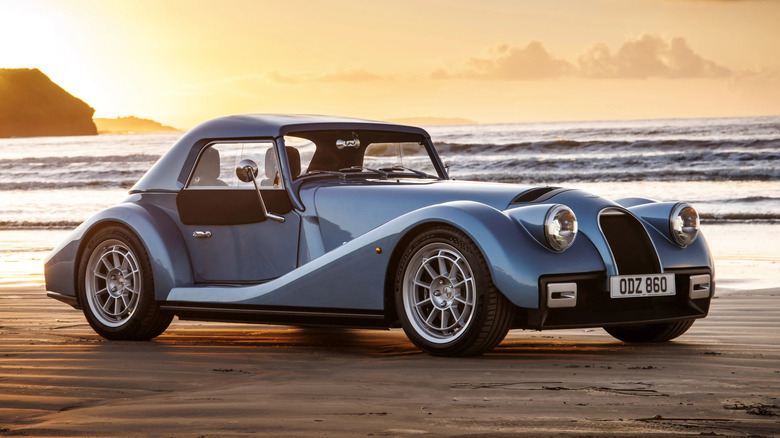
British boutique carmaker Morgan has only a minimal presence in the U.S., and that's not set to change anytime soon. FAST Act rules state that the carmaker can only sell 325 cars a year in America, and they must look similar to cars that are at least 25 years old. Nonetheless, it still offers a choice of three different models in its 2026 lineup: the Supersport, the Plus Four, and the Super 3, a funky three-wheeler we tested in 2024.
Speaking to Top Gear in 2025, Morgan boss Matthew Hole said the company aimed to make around 800 cars that year and, due to that small volume, that it was looking to double down on coachbuilding for the foreseeable future. Hole told the outlet that the low production numbers would be "part of our identity going forward," adding, "We don't have aspirations of building 5,000 cars a year. 800 or so is our sweet spot."
Given that the brand already has enough models in its roster to hit that production target, there's no room for an SUV in the lineup for now. That doesn't mean Morgan has ruled the idea out entirely, though. When asked in 2019 about a potential future SUV in an interview uploaded to Morgan's YouTube channel, then-CEO Steve Morris replied, "Never say never," saying that he "get[s] asked that question a lot, and I think it would be really dangerous to categorically go on record saying 'no, never'." He added, "It's certainly not on our agenda as we stand here now in the mid-term, but let's see."
Pagani
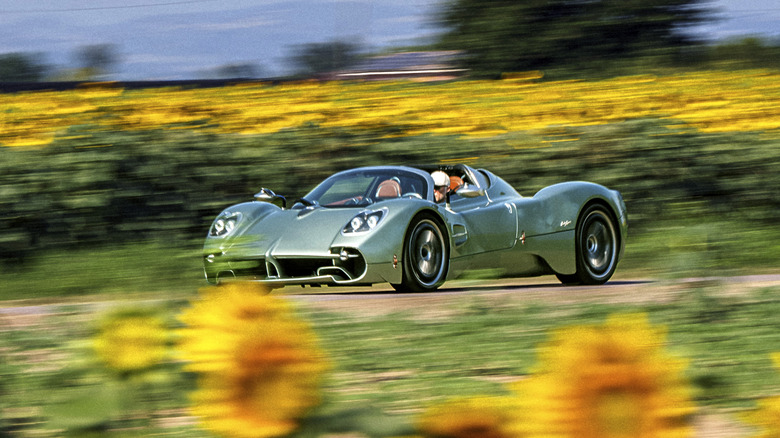
There aren't many brands that still make cars with V12 engines at all, and arguably none are as unflinchingly dedicated to the V12 as Pagani. This isn't down to some ideological attachment, though: for founder Horacio Pagani, it simply reflects what his customers want. Speaking to Motor1, Pagani said his customers were not interested in hybrid powertrains regardless of their power output. He added, "You have to try to please [the customer]. If he says he wants a naturally aspirated or turbo V12, you have to try to go in that direction."
He applies the same logic to the prospect of developing an SUV. Although Pagani acknowledged most other brands were considering them, he said he didn't have plans to diversify his company's lineup in the same way. According to Pagani, the company's development timeline runs to 2032, so it's safe to assume that any SUV wouldn't arrive for at least a decade. Like other brands, however, he hasn't ruled the idea out completely, telling MotorTrend in a 2019 interview that "You can never say for sure." For now, though, his customers are more than happy to keep buying V12-powered hypercars, and Pagani is more than happy to keep on selling them.
Koenigsegg
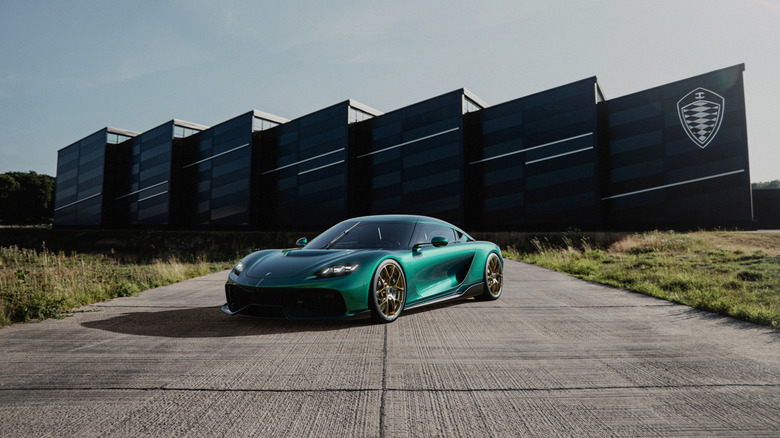
For much of its existence, Koenigsegg's primary focus was creating two-seater hypercars that pushed the boundaries of how fast a production car could go. That changed with the launch of the Gemera, which still boasted a four-figure horsepower output but also had four seats. It was designed to allow a family or a group of friends to enjoy the experience of being in a Koenigsegg, so would the company go one step further and make a family-friendly SUV in the future?
The answer is probably not. Christian von Koenigsegg told Misha Charoudin in a 2020 interview that he prefers to build cars he personally likes, and stated that he's "never been a great fan of SUVs." This was, he said, because he prefers cars that feel sportier to drive, and he doesn't think an SUV is a natural starting point for a truly sporty car. He summed up the development process of a performance SUV as, "creat[ing] something that should behave badly and then try[ing] to fix it."
An SUV might not be on the cards for Koenigsegg, but that doesn't mean the company won't experiment further with new types of vehicles. In the same interview, von Koenigsegg floated the idea of an off-road version of the Gemera, though the automaker has yet to reveal such a car as of writing.
Caterham
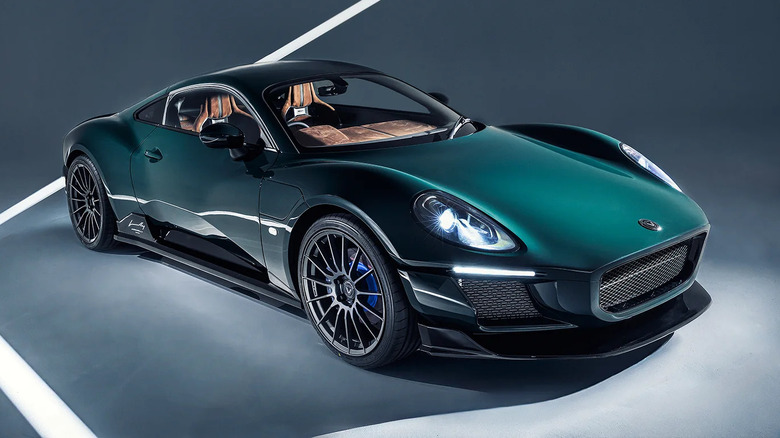
Caterham, like Morgan, is a small British brand that plans to spend its immediate future focusing on what sets it apart from the crowd. For both manufacturers, a key part of that appeal is continuing to build sports cars in limited numbers for enthusiasts in the know. As of 2026, Caterham's latest sales drive will see it target the U.S. market, with the boutique company planning to expand its American dealer network with the target of selling 750 cars per year globally.
As a small company, Caterham's resources are limited, and it's currently pouring all of its development cash into its all-electric Project V sports car. The company has not announced a concrete launch date for the car at the time of writing, but it did confirm in early 2026 that it was still testing the car with a view to starting production soon.
It therefore seems extremely unlikely that we'll see Caterham launch an SUV for the foreseeable future, although it's not impossible. In 2013, Caterham's then-boss Tony Fernandes said the company was considering an SUV for the Asian market that it would develop in collaboration with Renault, but it never materialized.