

Can You Use WD-40 With Pneumatic Tools?
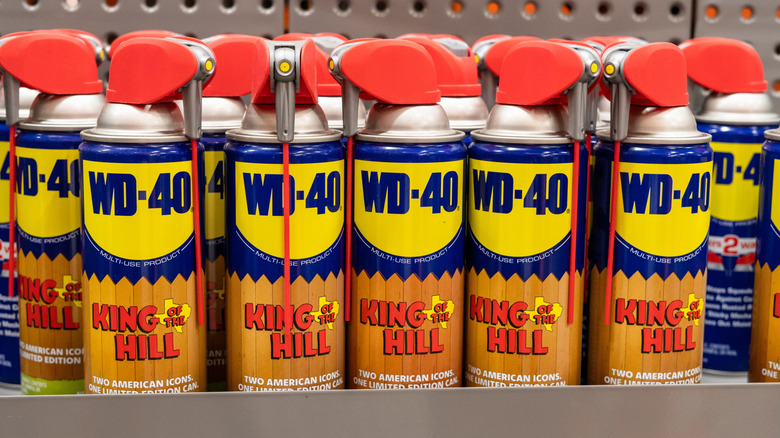
We all know someone who uses WD-40 as though the stuff is piped directly into their house alongside their water main. Squeaky hinge? WD-40. Rusty nut? WD-40. Cap stuck on your 11-oz can of WD-40? Take a lesson from Mr. Hank Hill and break out the 2.75 oz Handy Can.
But beneath the jokes about WD-40's role as a one-stop engineering solution, rumors of the mythical WD-50 (said to be powerful enough to loosen up continental drift), or claims that WD-40 has been banned as a performance-enhancing substance in wheelchair sports, lies a well-deserved reputation and a genuinely impressive product. From its commercial introduction in 1958, the original WD-40 has proven remarkably versatile. Most commonly used to displace moisture, help protect metal against corrosion, and penetrate seized and stuck parts, the original WD-40 has a documented list of more than 2,000 uses submitted by users.
But even a product with 2,000 uses still has limits. When it comes to pneumatic and air-driven tools, WD-40 is not a suitable air tool oil. For external surfaces, WD-40 is great for protecting against moisture and corrosion, but within the pneumatic components themselves: the air lines, connectors, and O-rings, WD-40's thin, hydrocarbon-based formula is more likely to dissolve or degrade internal seals, strip grease, and attract gunk. All of which can severely shorten, or completely end, the lifespan of the tool.
So, should the blue-and-yellow can be your go-to for lubing up compressor connections, air inlets, or pneumatic hosing? Absolutely not. That is where those legendary 2,000 uses run short.
Why WD-40 is the wrong choice for pneumatic tools
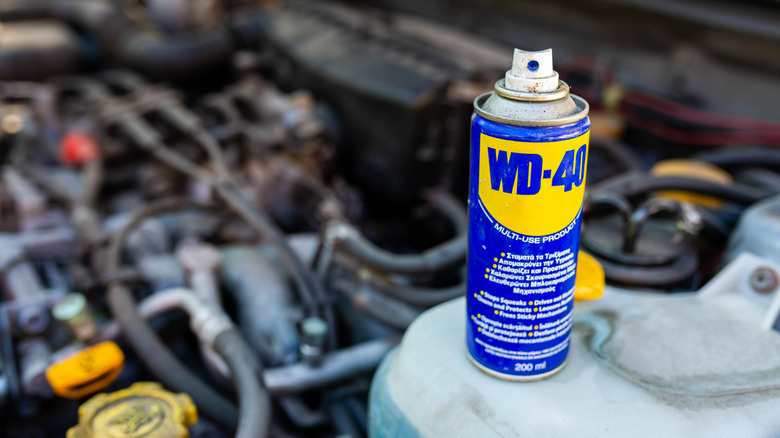
The clue is hiding in the name. WD stands for "water displacement", reflecting the product's original purpose: to displace moisture and protect against corrosion on the SM-65 Atlas missile. The "40" refers to the successful formula developed on the company's 40th attempt.
That makes WD-40 excellent at jobs that involve protecting surfaces from moisture or helping loosen components that have become corrosion-seized. But a pneumatic motor, although as vulnerable to corrosion as other tools, has mechanical requirements that demand a very specific method of lubrication. The internal components of pneumatic tools cycle extremely rapidly, driven via a stream of high-pressure compressed air. They therefore need a lubricant designed not just to withstand exposure to that continuous and powerful pneumatic jet but to remain effective over time.
Although WD-40 itself describes its flagship product as lubricating, that lubrication is provided by additives that play a secondary role to the hydrotreated heavy petroleum naphtha that delivers WD-40's key effect of water displacement. WD-40 is actually a relatively poor lubricant. Notably, the petrochemical and hydrocarbon solvents contained in its formula are notorious for evaporating extremely quickly, stripping the plasticizers that keep rubber parts soft and malleable. It is these chemicals that will almost certainly wreak havoc on any rubber seals, lines, and gaskets for the short time they are present in a pneumatic circuit.
Even WD-40's own guide to maintaining pneumatic tools advises operators to follow the manufacturer's recommended pneumatic oil. WD-40's official website names one of its own subsidiary products, 3-IN-ONE Professional Grade Pneumatic Tool Oil, as a baseline option.
Why proper air tool oil makes all the difference
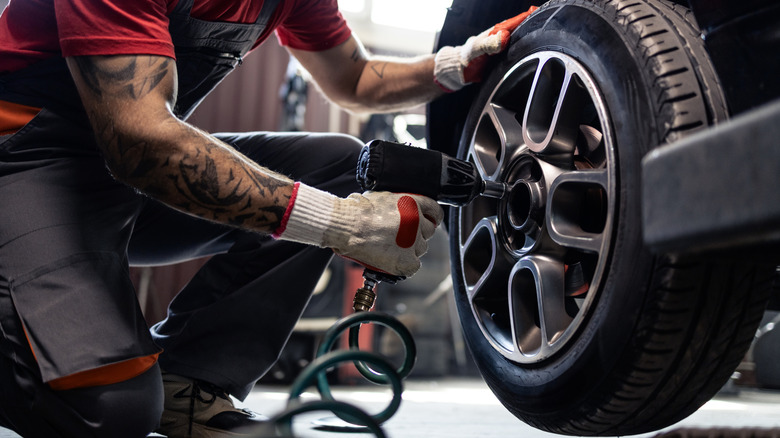
Pneumatic tools absolutely need lubrication, but high-pressure air and large amounts of elastomeric parts create a specific set of demands for how that lubricant needs to act. Most importantly, air tool oil does not use pure naphtha; instead, it uses naphthenic distillates or naphthalene.
Although their names are similar, naphthene differs from highly volatile naphtha solvents. Naphthalene is a heavier, more stable base oil that doesn't degrade or erode rubber parts. Secondly, WD-40's commercially protected "mineral base" leaves a viscous residue that provides a barrier against moisture, but very quickly attracts gunk, dust, and grime. It is therefore not surprising that air tool oil omits this ingredient, as dust bunnies and workshop schmutz are not welcome in thin pneumatic lines or the fine mesh filters that protect them.
WD-40 still has a very well-earned place in the workshop. Its water displacement properties offer excellent corrosion resistance for fasteners or static components, and its use as a penetrant can be invaluable for getting seized gears or drives running again, including through complete saturation, provided the tool is flushed properly afterward.
But protecting Atlas missiles from corrosion has a very different set of requirements when compared to pneumatic lubrication. When lubricating air tools, stick to proper pneumatic-tool oil, and keep the WD-40 for the jobs it was designed for. Otherwise, the only thing getting thoroughly lubricated may be you when a pressurized air line ruptures and sends all that WD-40 back the way it came.