

How Many Flock Cameras Are In The US? Here's Why It's Hard To Know For Sure
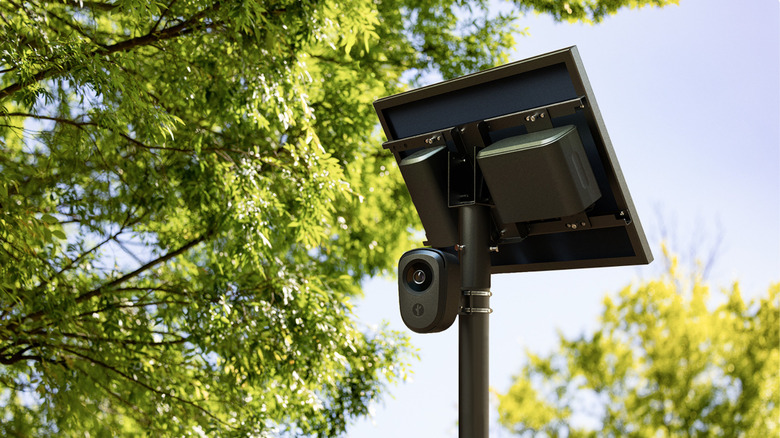
There are a growing number of AI-powered Automated License Plate Readers (ALPRs) from companies like Flock Safety being installed in U.S. cities, and growing resistance to them. But working out precisely how many of the cameras are deployed, and precisely where, is difficult. That's because Flock and its competitors don't make that information public. Instead, grassroots movements have sprung up to map ALPR locations using crowdsourced information. As of August 20, 2026, one such service, FlockHopper, listed 132,225 cameras in the contiguous U.S. Another site, DeFlock, had mapped 133,607, of which 82% (or around 110,000) belong to Flock. However, it's likely both services' listings are incomplete, given they're compiled from user-submitted information.
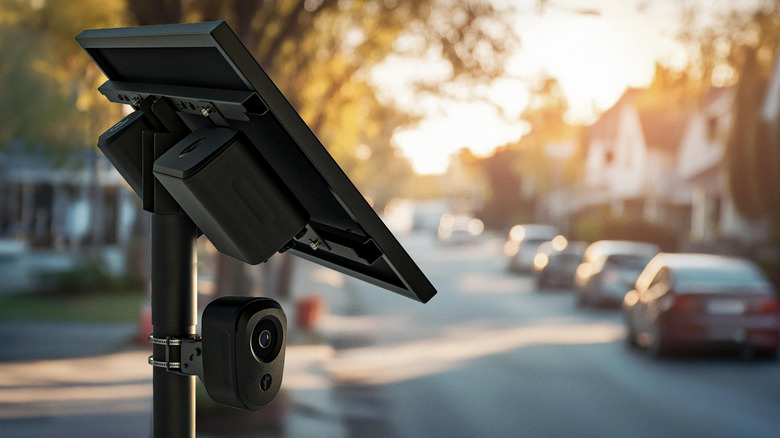
Keeping a precise tally is also complicated because the number of cameras continues to change as some cities reject and remove them (or citizens vandalize them) while others install new ones. Flock's cameras are solar powered and use LTE for connectivity, making them speedy to install and get operational. The cameras capture license plates and other visual information about a vehicle, like any damage or dents, bumper stickers, roof racks, or other identifying features — Flock calls the information a Vehicle Signature — and uses AI-powered software to turn it all into a searchable database. The company has a natural-language search feature called Flock FreeForm that enables customers to search using terms like "red pickup truck with a dog in the bed" rather than merely being able to search for vehicles using license plate information.
Flock says it's up to customers who they share the data with
Although law enforcement is one of Flock's core customer bases, accounting for more than 5,000 of its customers, the company says it doesn't share data from other customers like businesses or homeowners associations with police by default (although the American Civil Liberties Union (ACLU) found that it retains the right to share data even when police departments opt out), nor with the Department of Homeland Security (DHS) or Immigration and Customs Enforcement (ICE). However, Flock says its customers can choose to share data with anyone, including immigration and law enforcement agencies. So, for instance, a business with Flock cameras can choose to share its data with local police, DHS, ICE, or anyone else.
Also, worryingly, while Flock says it only retains data for 30 days, it adds that it "respects existing LPR retention laws and regulations that differ from 30 days." Adding that, should a customer want to impose a longer retention period "that is not already required by its jurisdiction's laws," Flock will offer "an extended retention for up to one year, but shall require the agency to first obtain approval from an elected official and/or a governing body." AP News reports that Flock plans to reduce its standard retention period to seven days from January 1, 2027, but that "it will allow data to be preserved for longer when it is evidence tied to a case number."
Flock cameras are being abused, but people are fighting back
There have already been more than a dozen documented cases of law enforcement officers abusing Flock cameras to stalk people. Those are just the ones where people got caught. It's easy to see how tempting it is to misuse Flock and to imagine how often that's happening. A court case brought by the Institute for Justice revealed that a pair of Virginia residents had been tracked 526 and 849 times respectively over four months. With that much data, no wonder Flock is able to advertise "instant alerts on flagged vehicles." But what's also clear is how easily the service can also be used to work out where people live, play, shop, or work, where their friends and family do the same, and where you're most likely to find them at 9 a.m. on any given Tuesday. Flock goes far beyond the information the police can usually see when they run your plates, essentially enabling any police officer to track down any person who drives a car without a warrant.
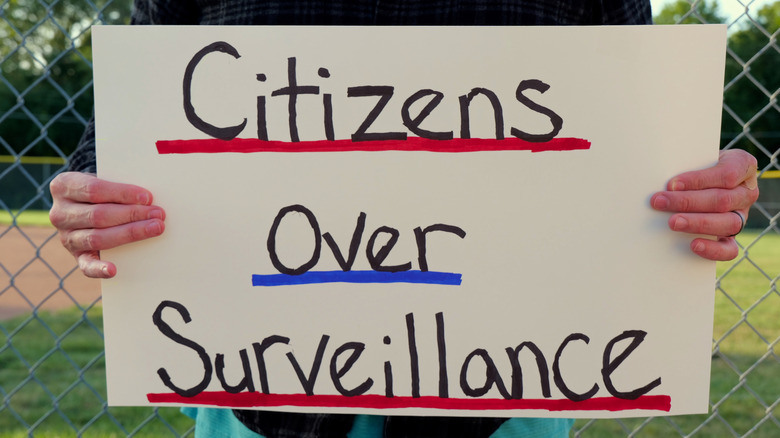
Flock is eager to expand its reach. To the chagrin of rangers and tourists alike, its cameras are showing up in National Parks, and 404 Media reports the company even pitched a plan to put its devices in 350,000 Ubers, Lyfts, and other delivery vehicles. Which means the prevalence of Flock cameras is only likely to increase, unless initiatives like the Plate Privacy Project succeed in their efforts to curtail ALPR usage in U.S. cities, and concerned citizens continue pressuring their representatives to legislate against the technology. If you want to check if your license plate has been searched using Flock, you can check the website Have I Been Flocked.