

Flock Cameras Capture A Whole Lot More Than Your License Plate Number
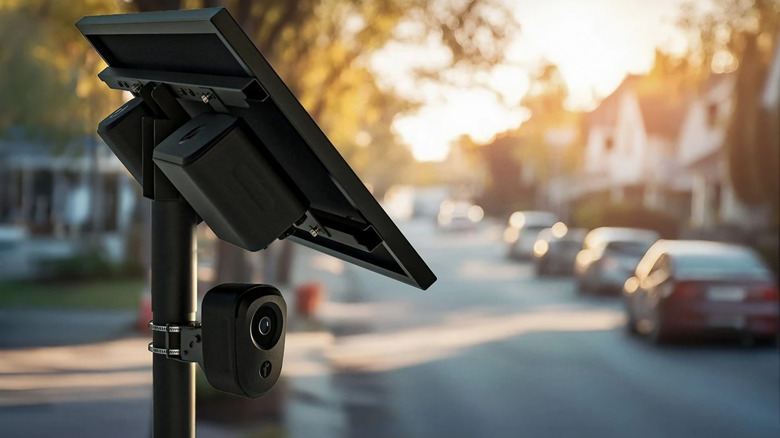
Flock Safety is one of those companies you may not have heard of, but it has probably heard of you. This company, headquartered in Atlanta, makes automatic license plate readers, usually placed on roadsides. The problem with those, though, is that they log a lot more than your license plate.
A feature that Flock calls Vehicle Fingerprint can track granular stuff like the make, the body style, a roof rack, and even bumper stickers and decals on a car. Because of this, the plate almost becomes optional, and that's exactly the pitch being made to the police – a half-glimpse of your car is plenty. Any lapses in info can be filled in using other details.
That said, this is just the opening act, as the same technology also allows for drones that trail cars from above and even pick someone out of a crowd by their outfit. Worse, as we'll learn later, there have been cases where officers have abused the technology.
Enabling all this is the Falcon camera system. The standard unit is capable of catching a car moving faster than 60mph, and its view stretches across two lanes of traffic. There's also this Falcon Long Range variant that's built for catching traffic blowing past triple-digit speeds, while at the same time watching a third lane. Across the U.S., over 80,000 of all these have been installed so far.
The software pulling the strings
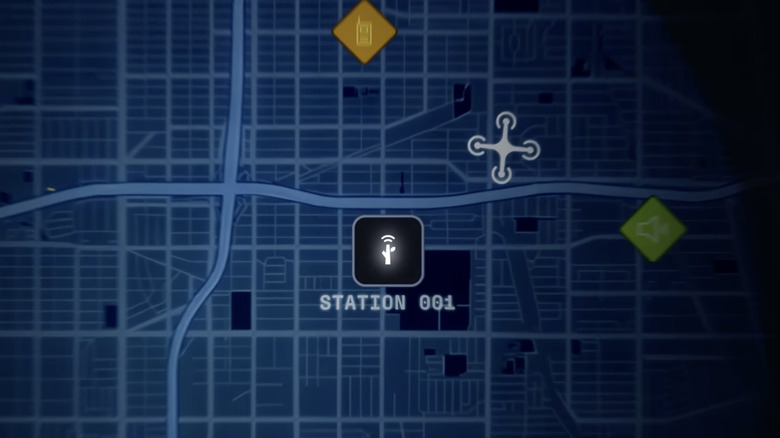
All that hardware is not nearly as useful without the software to back it up. One of Flock's more startling examples is a lookup tool called Nova, which Flock pitches as a search engine built for cops. It rakes in open-source intel, public records, and whatever the dispatch system is holding, then hands an officer one search bar for all of it. Flock even floated loading Nova with breached data pulled off the dark web, though it decided to back off. But even without the dark web data, it's still able to do a lot.
An officer can look for vehicles traveling together, which helps them pull up a cluster of cars that keep showing up, treating them as a group. There's also a separate tool that Flock calls multi geo search. This one, targeting a single car, stitches its appearances into a trail across different times and places, using the aforementioned clues it tracks.
Then come the drones, part of a program Flock calls Drone as First Responder, that launch the moment a 911 call lands. The drone then trails a person or car at up to 60 mph. There's also Freeform, where a cop types a plain description, down to what someone was wearing, and lets the software find a match. For what it's worth, Flock says it does not run facial recognition.
All that watching comes at a cost
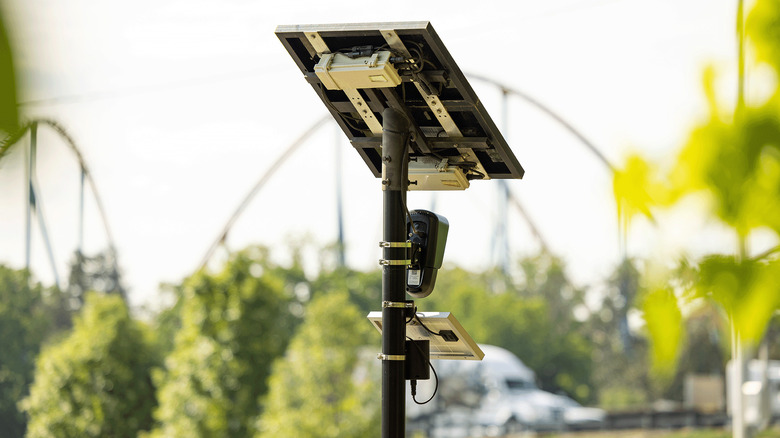
Regardless of the implications, police love these cameras. Backers call the cameras a force multiplier for short-staffed departments and officers have even linked them directly to drops in violent crime. The problem is the side effects from all the watching and the sheer scale of it all. One example is Oakland where 293 of these automatic license plate readers wired straight into the police feed racked up past 638 million reads in 2025. But barely any of those flagged a real crime. The few crimes that were actually flagged were mostly stolen plate alerts.
The creepiest part is the human factor, though. One case saw a chief in Sedgwick, Kansas, running his ex-girlfriend's plate 164 times in four months. He ended up losing his badge, but he's far from the only officer caught abusing the system.
There was also this case of a man in Norfolk, Virginia, who learned that Flock had logged his car 526 times, roughly four passes a day — in just four months. Due to these issues, and many other concerns with the tech, several cities have started bailing on the program. One instance is Mountain View, California, which shut down the it's Flock deployment after learning that Flock was quietly handing its data to outside agencies it never signed off on. It's joined by more than 45 cities that have now cut ties with the law-breaking Flock cameras. Even the people are pushing back, with cases of vandalism against Flock camera on the rise.