

3 Things To Consider Before Buying A Robotic Pool Vacuum
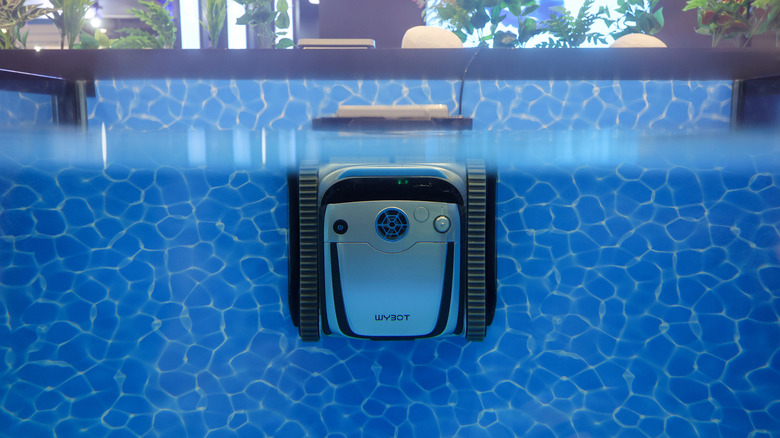
Pools are great to have in your own backyard come summertime, but there's no denying that they're difficult to clean. It's more than just a matter of skimming the top to clear out leaves — cleaning up dirt and sediment that sank to the bottom, scrubbing the walls and tiles, and more are all required to keep your pool sanitary and safe to swim in.
These necessary yet annoying tasks are what make a robotic pool cleaner such a cool gadget. It can take a lot of the regular labor and maintenance out of the equation for you, much like a robot vacuum and mop for your home. Robot pool cleaners vacuum the bottom of your pool, scrub its walls, and can even skim the waterline to clean up as much dirt and debris as possible.
However, despite the convenience, these devices aren't for everyone. Before you dive headfirst into the world of robot pool cleaners and vacuums, there are some important factors you'll want to keep in mind.
Different pools need different robot vacuums
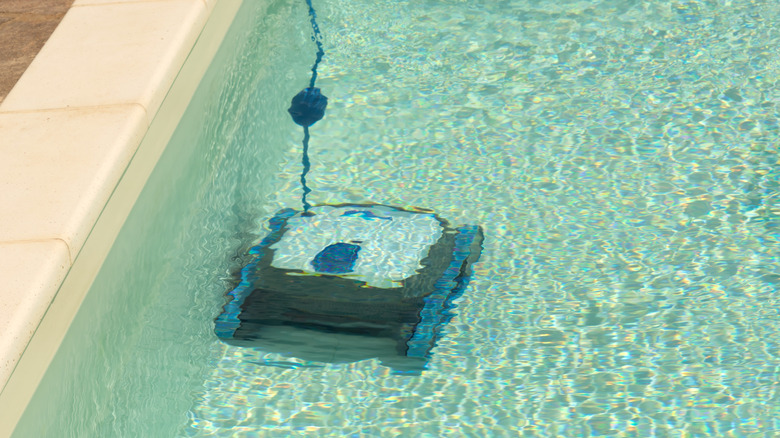
No robotic pool vacuum can clean every type of pool effectively, so make sure to properly research which cleaners will work for the type of pool you have (in addition to working well in general).
First, narrow your search based on whether you have an in-ground or above-ground pool. Most robotic pool vacuums are designed with in-ground pools and their materials in mind. You also need to make sure the robot cleaner can work well with the material used to build it. For example, you'll generally want a robot vacuum with a stronger brush to handle a concrete pool, whereas a softer brush will be preferable for a vinyl lining.
Beyond that, robot pool cleaners also tackle the task of cleaning pools differently. For instance, some only clean the pool floor, which can make them less expensive, but also less useful compared to one that climbs walls and skims the water too.
A robot isn't a complete replacement for pool maintenance
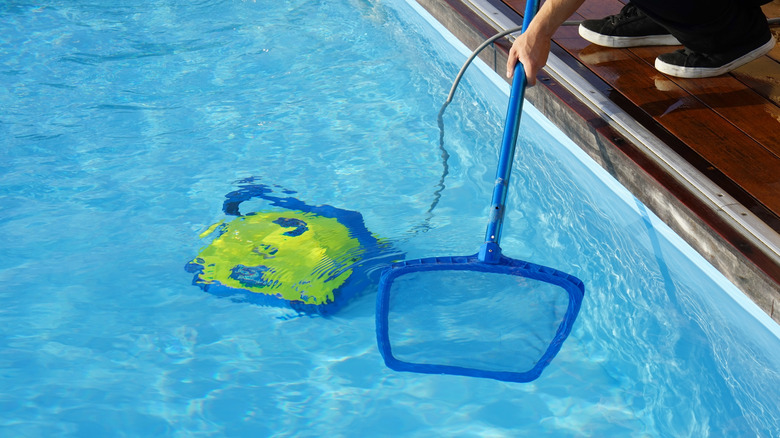
Like many robotic gadgets that take chores off your hands, the right robot pool vacuum will maintain your pool, keeping the walls, floor, and waterline clean. However, a robotic pool cleaner can't do the important work of deep cleaning.
Even the best cleaner can't pick up big debris like pinecones or longer sticks, nor can it easily suck up finer sediment and dirt. You'll still need to set aside time for a real deep clean occasionally, though the robot cleaner means you won't need to vacuum the bottom of the pool or skim the top for leaves every few days.
Not only that, you'll need to consider maintenance on the pool cleaner itself. This includes buying and replacing the filters and ensuring the brushes are clean and free of debris. Of course, the process of cleaning the robot pool cleaner is going to be easier than cleaning an entire pool, but it's still important to keep the extra cost and time in mind when you consider buying one.
Robot pool cleaners are very expensive
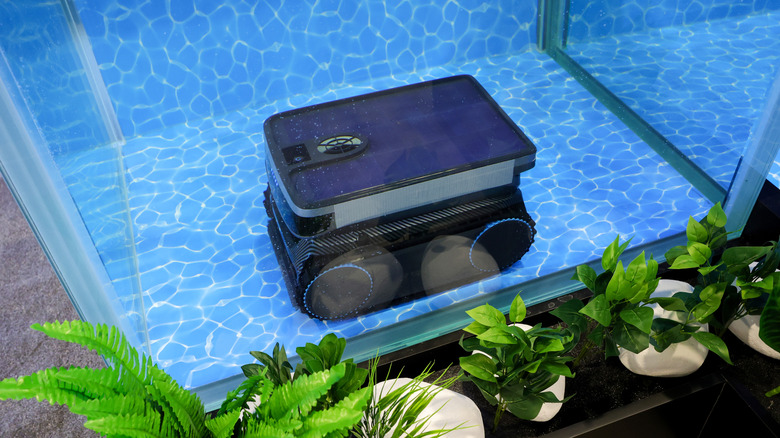
Robotic pool cleaners aren't for everyone. These aren't like robot vacuums, which come in a wide range of price points and features to fit every home — they're expensive. The best robotic pool cleaners cost several hundred dollars, and some even exceed the $2,000 mark.
You need to balance many factors to determine whether the upfront cost is worth it. How long does it usually take to clean your pool, and how often do you use it? What can you purchase within your budget, and how much of the maintenance will it truly minimize for you?
If you don't use your pool often enough to justify the cost of a fully robotic pool cleaner, it's better to look into alternatives to help make maintaining your pool easier. A manual pool vacuum, for instance, can save time on maintenance without costing nearly as much as a robotic vacuum.