

How Many Amps Does A Dryer Typically Use?
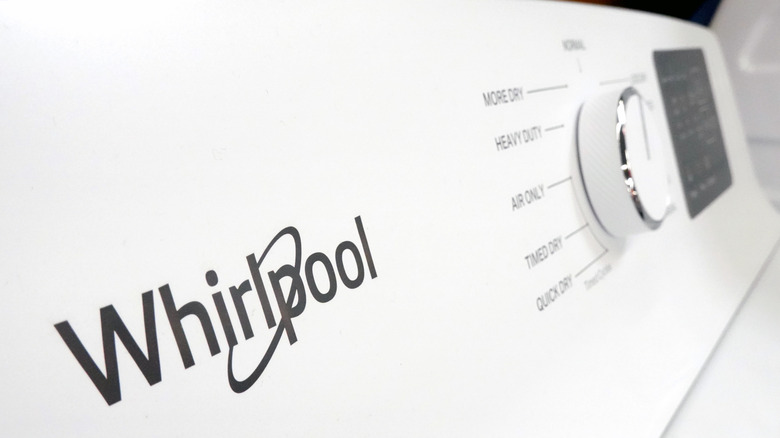
Dryers are just one of many everyday appliances we use, and it would be hard to imagine life without them. Electric dyers are also among the biggest power consumers in a home. They use more energy than you think and also require certain electrical provisions to ensure they operate safely and reliably. The single biggest factor impacting a clothes dryer's power consumption is the fuel source: electric or gas. Electric dyers use heating elements to create heat, as well as requiring power to run the drum motor, blower, and controls.
Gas dyers also require electricity, but nowhere near as much since they create heat by burning fossil fuels like natural gas or liquid propane. Though they still require electricity for the drum motor, electric igniter, blower, and control panel. Gas dryers require a 120V supply, and can be plugged into a general use receptacle or have a dedicated circuit. Residential electric dyers usually require a 208/240 volt, 30 amp dedicated circuit, though the overall wattage or amperage of a dryer depends on the type or size of the dryer. Some compact models, for instance, can run on a 120V, 15 amp circuit.
A typical gas dryer may use between three and six amps, while electric dryers can use between 10 and 25 amps, depending on the size. Compact dryers use less, while bigger dryers with larger heating elements will use more.
Dryer power requirements explained
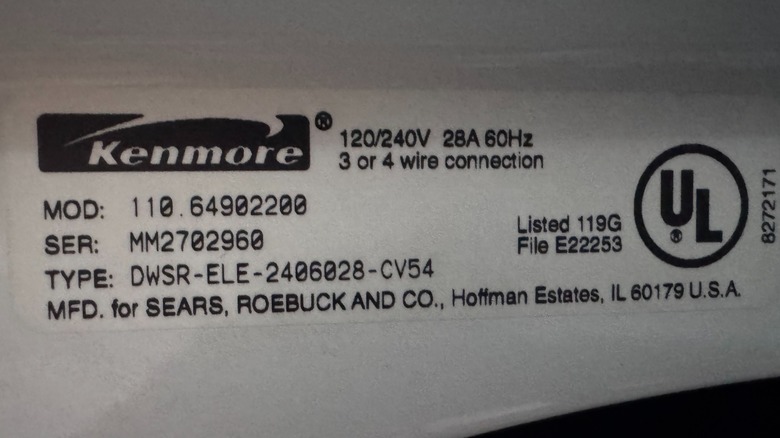
Despite what type of dryer you have or plan to buy – gas, electric, or a newer heat pump system – they will all have different features and power requirements. Keep in mind that some dryer features are worth paying for, while others you can safely skip. To determine power requirements, look at the nameplate or sticker. When you're shopping online and looking at specifications, a lot of times manufacturers will just list "30A" as the power requirement, but referring to the nameplate or sticker will give you specifics such as the model number, along with voltage, Hz, and either an amperage or wattage. You can usually find a sticker inside the door that lists this information, or it may be on the back of the machine.
In most cases, a residential electric dryer will require a 30 amp circuit, which means 10 gauge wire, a 30 amp 2-pole circuit breaker, and the appropriate cord and plug. There are a lot of factors at play that form this requirement. It's a combination of the manufacturer listed electrical requirements, as well as several National Electrical Codes (NEC) that govern the sizing and installation of branch circuits. Those codes include NEC 240.4 (D), 210.11 (C) (1), 210.21, 422.10 (A), and 422.11 (E). You can access the current edition of the NEC for free by visiting the NFPA website, where you can learn more about these codes.
It's also important to understand that homes built before 1996 likely have a three-pronged dryer receptacle, assuming it hasn't been upgraded. In 1996, the NEC mandated that all new homes require a four-wire circuit and a matching four-pronged receptacle for dryers. Older homes with three-wire configurations were grandfathered in, and it's why appliance cords are sold separately with either three or four wires.
Things you should never do with a dryer
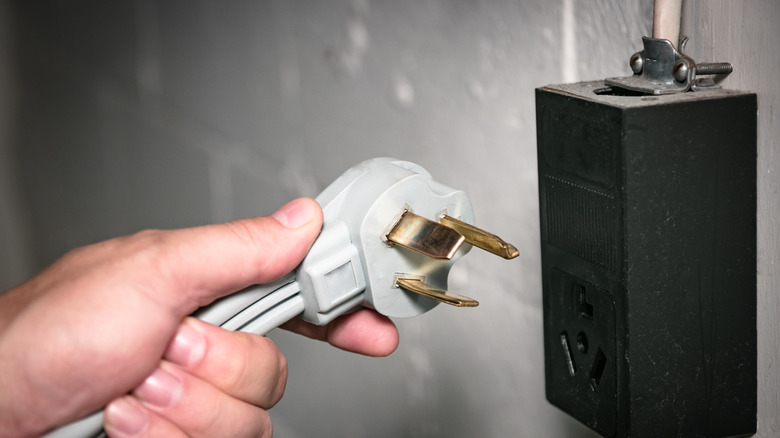
Regardless of the type of dryer, there are a few things you should never attempt to do with one. You should never try to plug a 30A dryer into a 50A receptacle, even if you're using an adapter. Plugging high amperage loads into corded adapters is generally a bad idea. It introduces a weak point for failure due to heat. However, the biggest problem is people running the dryers with such an adapter on a 50A circuit without changing it to a 30A breaker. This is called overfusing, and it's dangerous. If there's a fault current, it will take much longer for it to trip a 50A breaker, if it even trips it all, which can result in melted cords and damage to the dryer at best, and a fire at worst. You're better off spending that money on a 30A receptacle and 30A 2-pole breaker which will allow you to retrofit a 50A circuit to safely run a dryer.
You also shouldn't attempt to run a dryer on any kind of extension cord – heating loads and appliances should never use an extension cord. Extension cords add resistance which can create heat, and there's also the possibility of voltage drop, which can negatively impact the appliance. When it comes to sharing a receptacle between a washing machine and a gas dryer, you should consider what the NEC calls for. Per NEC 210.52(F) and 210.11(C)(2), one 20A/120V circuit is required for a laundry room, and cannot serve lighting or other receptacles.
So generally speaking, a washing machine and gas dryer can use the same receptacle, provided you know that circuit doesn't serve anything else. A 30A dryer requires a 30A circuit, there's no sharing it.