

Why Navy Pilots Call Themselves 'Aviators' – But Air Force Pilots Don't
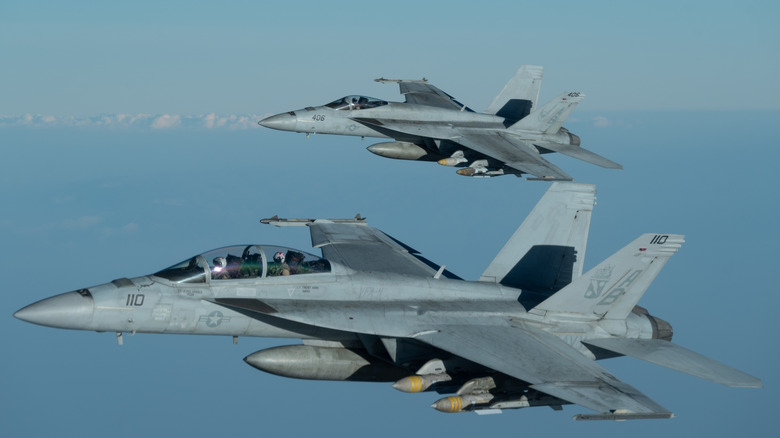
We tend to use the word aviator interchangeably with the word pilot. One important distinction, though, is that U.S. Air Force pilots typically won't refer to themselves as aviators, preferring "pilots." Meanwhile, the opposite tends to be true in the U.S. Navy, where they usually refer to themselves as aviators instead.
There are a combination of factors involved in this, and they revolve around military tradition. Long before the Wright Brothers' first powered flight, just one moment that changed aviation history forever, the word pilot was already used as a nautical term.
There are some crucial differences between Naval and Air Force aircraft and how they've historically been used, and what the term "pilot" has meant to each branch in particular. Let's take a look at these factors, as well as the perilous role that a maritime pilot continues to serve today and why the term "Naval Air Pilot" lost prominence in favor of "Naval Aviator" early in the 20th century.
The role of a maritime pilot is very different to that of an aircraft pilot
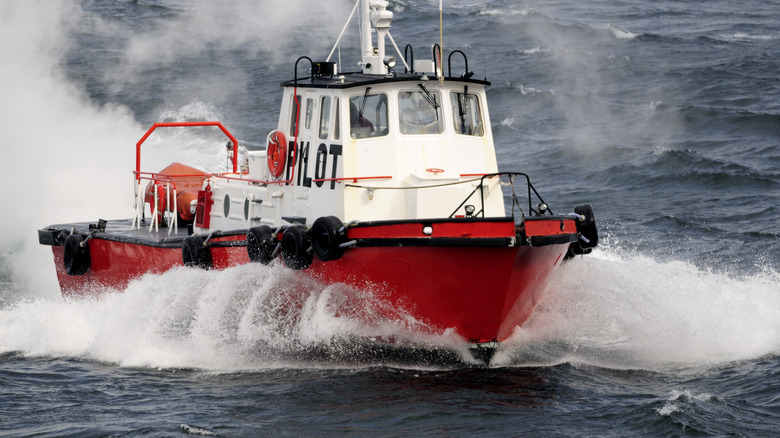
The National Maritime Museum in Cornwall, U.K., explains that the notions of pilotage, pilot boats, and pilots themselves have much more to them than aircraft. According to the museum, "the history of maritime pilotage describing the work and functions of a pilot can be traced to Ancient Greece and Rome." Their function is to navigate, not during the entire journey, but through specific areas and trickier waters.
A veteran captain may be able to navigate the ocean perfectly well, but an unfamiliar and potentially dangerous stretch of local water can require the expertise of a pilot familiar with its own unique tidal patterns, hazards, and so on. Today's maritime pilots often have specialized pilot boats, and access the vessel they're dispatched to guide by means of a ladder onto the deck or, in specialized cases that call for it, a helicopter. Needless to say, depending on the weather, the tides, and how much room they have to maneuver the vessel, it can be an extremely dangerous job, much like being an aircraft pilot. They helped ships navigate before GPS was invented, and continue to be invaluable.
The International Maritime Pilots' Association proudly states that they are "highly respected and pilots are considered the elite of the marine professionals," perhaps the most specialized job in the industry. This terminology can also be seen with pilot cars — smaller vehicles that help guide a larger one, and coincidentally enough, you might need a pilot's license for a flying car in the future.
When Naval Air Pilots became Naval Aviators
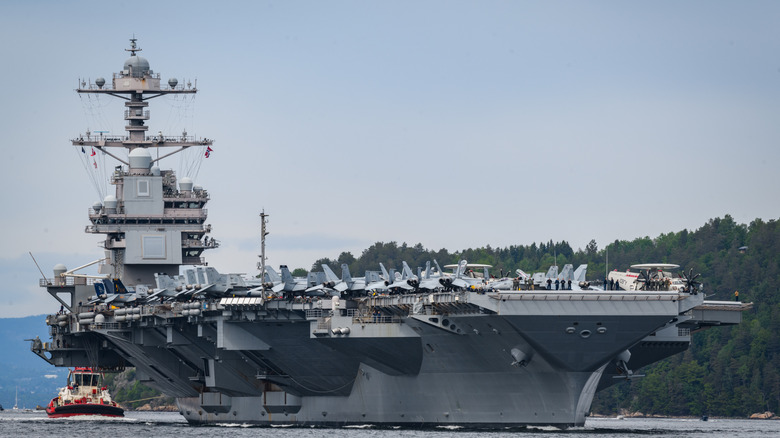
It's because of this long-held maritime meaning of the word that Navy servicepeople who fly airplanes often have a preference for the term "aviators."
The Naval History Heritage Command highlights one particular piece of early twentieth century legislation that had a huge impact on the Navy's aviator/pilot divide. The Naval Appropriations Act, approved in March 1915, marked early attempts to set standards for the pay of the Navy's fliers. Among other things, "it added enlisted men and student aviators to those eligible for increased pay and allowances while on duty involving flying." This is where the issue of semantics came in. "Naval Aviators" became a term specifically used for "those fliers completing the elementary flight course at Pensacola." These Naval Aviators were eligible for the new payment system, but not those certified as "Navy Air Pilots." For this reason, "a change was made to the Secretary of the Navy's performance standards certificate whereby the designation 'Navy Air Pilot' was changed to 'Naval Aviator.'"
The U.S. Navy would develop its own range of formidable aircraft, with a lot of more specialized models such as the famed Super Hornet. Those aircraft designed for and only utilized by the Navy and/or Marine Corps have unique adaptations for that role, which may include such factors as a frame designed for landings on the decks of aircraft carriers, a demanding maneuver that conventional Air Force jets cannot perform.