

Will You Need A Pilot's License For A Flying Car? It Depends
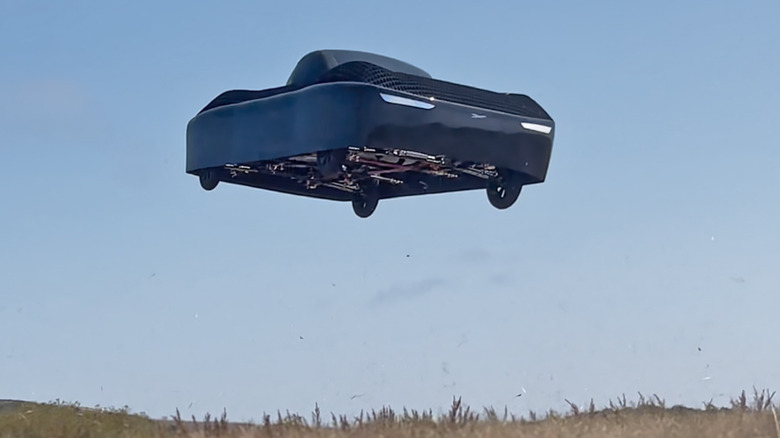
Smartphones, video calling, and the internet itself were all just science fiction at one time. The same was once true of flying cars, but even that technology exists today as well. But assuming this sci-fi mode of transportation actually develops enough to gain mass adoption, would a regular driver's license be enough to operate one? The answer isn't clear-cut, as it all depends on the type of flying car you're piloting.
Some flying cars can fall under aviation rules. For example, Klein Vision's AirCar was designed to transform from a traditional road-traveling car into a small aircraft. After the AirCar was certified for airworthiness in 2022, Klein Vision stated that a pilot's license would be required to operate it. However, Alef, which started production of its Model A Ultralight flying car in late 2025, is taking a different approach. The manufacturer designed it to qualify for FAA Part 103 certification, a classification that would not require a traditional pilot's license.
This is where things can get a bit tricky, because what many people consider "flying cars" are actually aircraft. For example, Pivotal's Helix is an eVTOL that is indeed classified as a Part 103 craft. While you wouldn't need a pilot's license to operate it, you would need to complete Pivotal's flight training program and become an authorized Helix pilot before flying. In contrast, AeroAuto's Air EV One, also an eVTOL, requires a flight license and certification training to operate, but the company does not specify that operators need an FAA-issued pilot's license.
The rules and regulations for flying cars are evolving
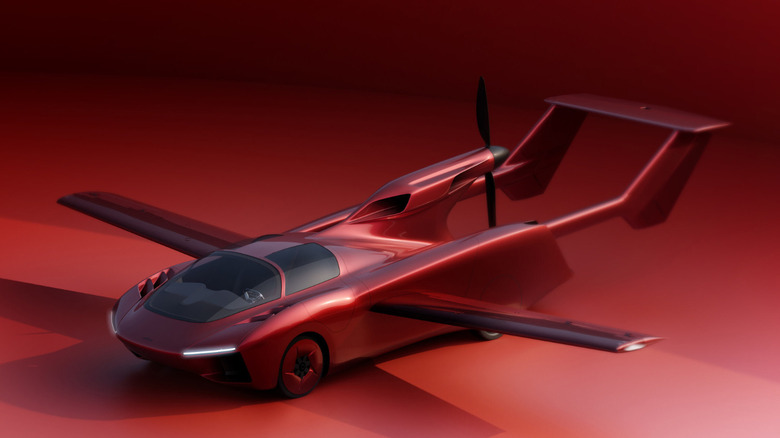
The future of flying cars may well depend on how these vehicles are classified. For example, Klein Vision, the company behind the AirCar, is working on developing aircraft with new FAA regulations in mind. So while the two-seat AirCar requires a pilot's license to operate, the company's future single-seat and cargo drones will not. Klein Vision would instead be responsible for conducting in-house training and certification.
These new FAA regulations are part of its Modernization of Special Airworthiness Certification (MOSAIC) rule. MOSAIC changes requirements around how light-sport aircraft are built, certified, maintained, and operated. MOSAIC's goal is to improve the safety and performance of light-sport aircraft while also making them more practical for flight training and personal travel. This could open the door for newer vehicles like flying cars, as Klein Vision and other manufacturers are anticipating.
But even after flying car certifications are determined, actually buying these vehicles may remain complicated. That's because integrating flying cars into the existing ecosystem is challenging, to say the least. The FAA requires that new aircraft concepts must be able to operate safely alongside traditional aircraft. This means that certain factors will need to be established, including how these vehicles will communicate with each other and with air traffic systems, as well as where they can even operate.