

Why Is The Google Pixel 10a Cheaper Than The Pixel 10 Phone?
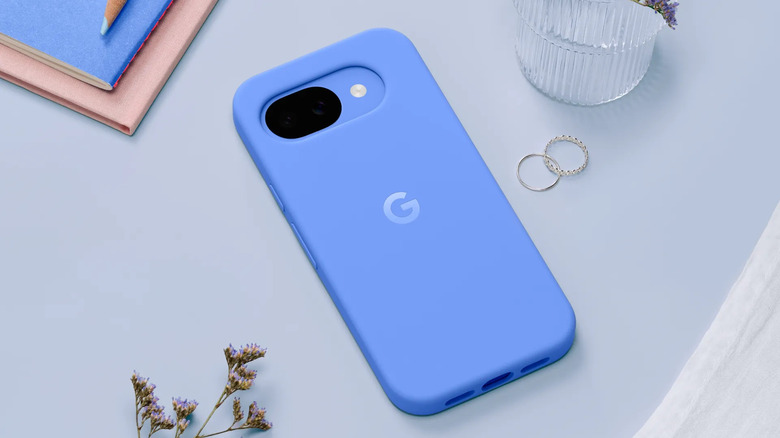
Two phones that may look and sometimes even feel similar can offer completely different experiences due to their innards or the choice of building materials. The Pixel 10a and the Pixel 10 are a great example of that. On paper, they offer the same screen size of 6.3 inches and even feature an identical 48MP camera sensor on the back. And yet, Google charges $300 more for one of them — the Pixel 10a costs $499 and the Pixel 10 carries a $799 sticker.
While both may look similar at first, spend more than a few minutes with them, and you'll quickly realize they're built with different materials. Even though both feature aluminum frames, the Pixel 10a packs a plastic back in place of the Pixel 10's Gorilla Glass Victus 2 rear panel. That same glass covers the front, too, though on the Pixel 10a it's the cheaper Gorilla Glass 7i. The use of plastic rules out Pixelsnap, the company's version of MagSafe-style magnetic wireless charging, which helps chargers and other Pixel accessories snap into place. The 10a also features comically wide bezels, likely another cost-cutting measure.
On the inside, the processor gets cheaper as well. The Pixel 10a is powered by the Tensor G4, the chip that ran the Pixel 9 family back in 2024. Meanwhile, the Pixel 10 gets the 3nm Tensor G5, manufactured by TSMC. Google says the newer chip's CPU runs 34% faster on average than the G4's. The 10a also carries 8 GB of RAM versus the Pixel 10's 12 GB.
Other features

Even though both phones share the same 48MP primary and matching 13MP ultrawide sensors, the Pixel 10a misses out on the Pixel 10's third lens — a 10.8MP telephoto that pulls 5x optical zoom. These are some of the biggest hardware omissions that help Google bring the 10a's price down. But there are some quieter subtractions too. For one, the Pixel 10 shoots 10-bit HDR video and handles the AV1 codec. Neither works on the 10a. The pricier phone also houses three microphones, allowing Spatial Audio and Audio Zoom. The 10a makes do with two.
The Pixel 10 also gets dual-band GNSS, which locks onto satellites across two frequencies for a sharper fix. It also keeps mmWave, the short-range 5G variant that allows for the fastest speeds around. The 10a has neither.
Those hardware gaps reach into the software. The G4 and 8 GB of RAM can't run Google's newest Gemini Nano model, the on-device AI behind its smartest tricks, so the 10a loses Magic Cue, a Pixel 10 productivity booster that pulls details from Gmail or Calendar into whatever app you're using.
You don't need to dig deep to find that the less expensive phone cheaps out on certain stuff compared to the other despite looking similar and carrying near-identical names. A phone tagged "a" has come to be known as an industry-wide shorthand for a more affordable version of the flagship. An example is the $379 Nothing Phone 3a, which is similar to Samsung's A series that undercuts its S series flagships.