

What Does WAN Stand For, And How Is It Different Than LAN?
WAN and LAN might sound like technical jargon, but they describe two of the most common types of computer networks. The main difference between a LAN and a WAN is the coverage range; a LAN covers a limited area while a WAN spans across a larger geographical one. WAN stands for wide area network, and its main purpose is to connect different devices and enable them to communicate with each other. However, another key piece of the puzzle is coverage: WANs enable the connection of devices across a wider area, such as a city, state, or even the world, while a LAN is much more localized.
In fact, the internet, a globally connected network of devices, is considered to be a WAN, which shows just how large a wide area network can really be. A WAN can use both wired and wireless technologies to connect networks or devices over a large area, including leased lines, fiber-optic cables, and satellite links. One practical application of a wide area network is to connect organizational offices located in different places (like different cities or even countries), enabling people to communicate with each other and also share data.
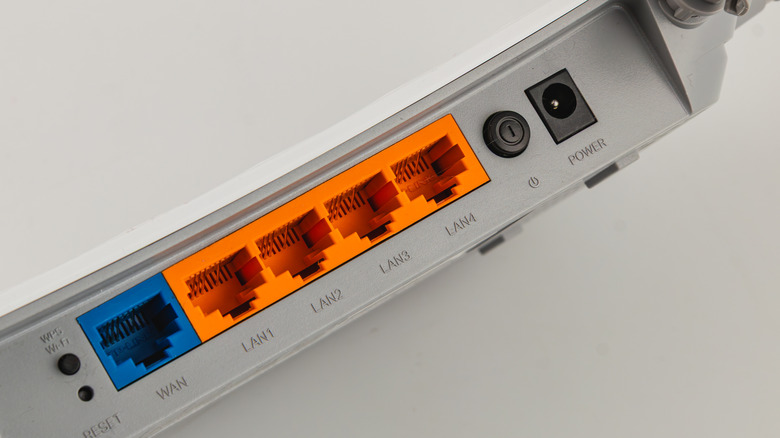
Perhaps a good example that will hit close to home is the WAN port on your Wi-Fi router. If you take a look at the back of your Wi-Fi router, you'll notice a port labeled WAN. This is the port that links your router to a wider network, typically the internet, through your internet service provider. This means if you just upgraded to a new router, you'll need to connect the cable from your ISP to the WAN port before you try to figure out why your Wi-Fi is down.
WAN vs. LAN: What's the difference?
Besides WAN, you'll also come across another seemingly similar-sounding acronym: LAN. LAN stands for local area network. Similar to WAN, a LAN is also a network that connects different devices, enabling communication and facilitating data and resource sharing. A major feature that differentiates a LAN from a WAN is the area of coverage. LAN covers only a small, localized area, such as an office, a home, or a school.
In contrast, as mentioned previously, a WAN connects devices over a large geographical area such as a country or a continent. A wide area network can also be viewed as a network that connects several LANs across a large area, enabling devices on different local networks to communicate with each other. Another distinction between the two is that a LAN typically has a single router, which serves as the gateway between the local network and the wider internet. In contrast, a WAN usually has multiple routers and switches.
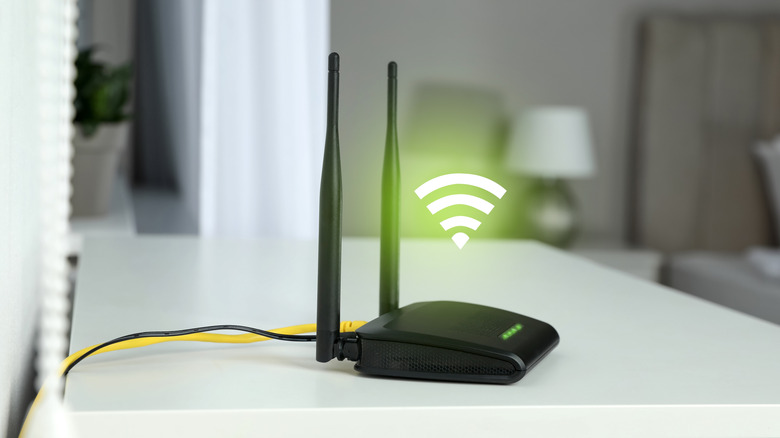
Your home's Wi-Fi network is an example of a local area network, and all the devices that you connect to it can communicate with each other and access the internet through your router. Some of the best Wi-Fi routers usually offer several LAN ports, allowing you to hook up different devices, such as a printer or network-attached storage (NAS for short), to your local network with LAN cables. Even your TV has a LAN port that you can use to connect it to the router and be able to access the internet.