

Flood Vs. Throw Flashlight: What's The Difference?
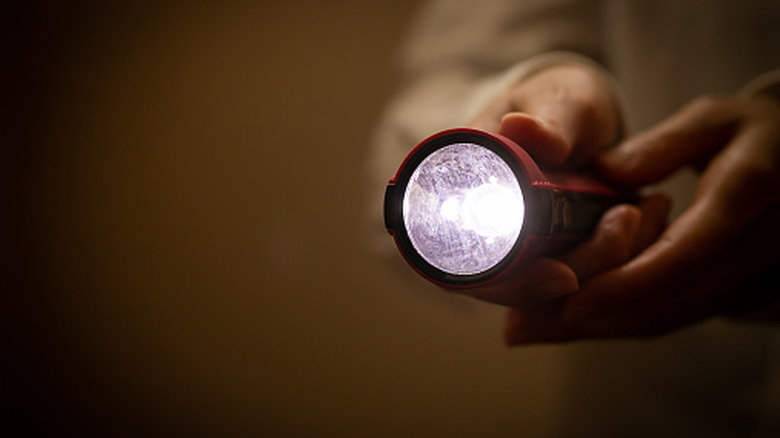
If you're looking to purchase a new flashlight, whether to have one in the cabinet for emergencies or to use out in the wilderness, the light's actual brightness level isn't the only thing you need to consider. You also need to be aware of the precise pattern that the light's beam projects. There are a few different beam patterns available from the most popular flashlight brands, but two of the most common are flood flashlights and throw flashlights, which are intended for illuminating large areas and projecting light onto a distant spot, respectively.
Choosing the right beam pattern is important because different beams are better suited for different use cases, and you should consider that before buying a powerful light on Amazon. If you've got the wrong type of flashlight for the job, you might not be able to make out what you're looking for on a dark night. You could also end up exhausting the battery trying to produce the kind of light a different flashlight could provide much more easily. Knowing the difference between flood and throw lights will help you pick the right light for the job, whether you're camping, patrolling, or doing other jobs.
A flood flashlight fills your immediate surroundings with light
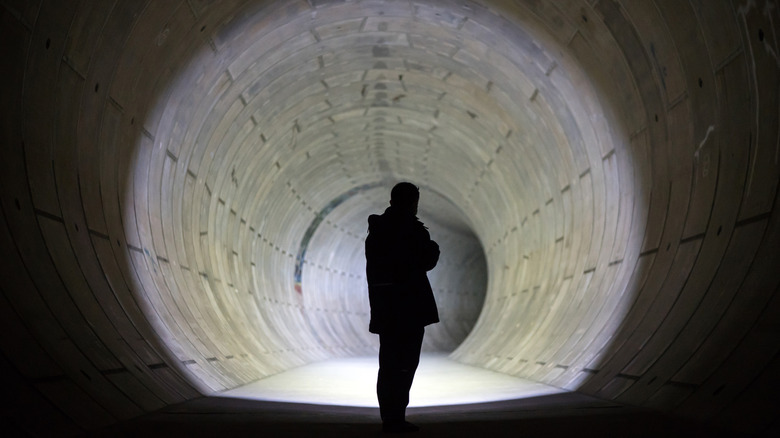
A flood flashlight, similar to the floodlights you see installed over a garage, is meant to provide large-scale illumination over an entire area. It's right there in the name: it "floods" your immediate surroundings with light. Flood flashlights have wider lenses designed to diffuse light over a large area, replacing pitch darkness with a bubble of soft illumination that's relatively easy on the eyes.
Flood flashlights are usually the optimal choice for consumer-grade, general-purpose use. They provide more than enough lumens to use as a camping flashlight, and they're great for providing large-scale illumination on a jobsite or in a dim garage, or just taking with you on a walk in the early morning or late afternoon. Because of their lower lighting intensity, flood flashlights can also last a good while on their lower illumination settings, though more powerful, high-lumen floods can be a bit power-hungry and can get uncomfortably hot on the higher settings. More importantly, flood flashlights are primarily intended for illuminating the space around you. If you need to see something further away, it's not going to do a good job of lighting it up. That would be a throw flashlight's job.
A throw flashlight projects a beam over a long distance
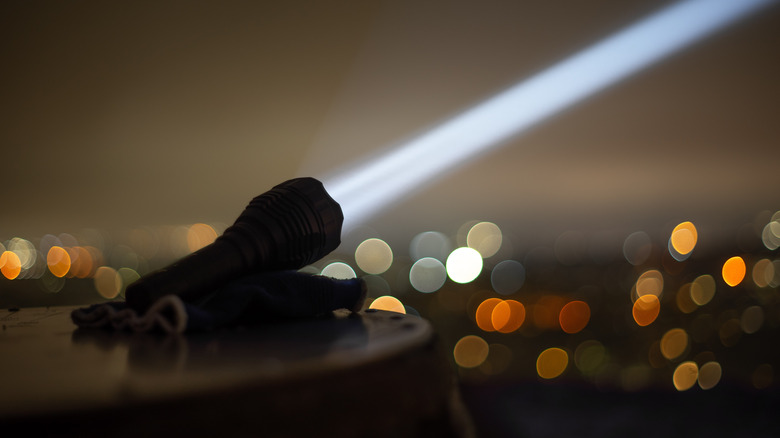
A throw flashlight is a little more in line with what you may expect a typical flashlight to do, using a powerful, focused beam to illuminate objects at a longer distance. Again, it's in the name: the light "throws" its illumination far away. Throw flashlights combine high candela outputs with a carefully angled reflector to create a narrow cone of intense illumination.
Where flood flashlights are better for general-purpose use, throw flashlights are more specialized in their application. They're a favored tool for search and rescue squads who can't afford to miss small details in uneven terrain like a forest, security officers who need to double-check the finer points of a perimeter, and marine navigators spotting markers and ships in the distance. Throw flashlights are especially valuable for those at sea, as their powerful beams can pierce through low-visibility conditions like rain and fog. The only catch to a throw flashlight is that, since the beam is so focused, it provides little-to-no peripheral vision. Anything outside the direct cone of illumination remains just as dark as always, and if you're trying to see things in a large area, you're going to be whipping your hand around a lot.