

What Makes The 1967 Ford Mustang Fastback Such An Iconic Car?
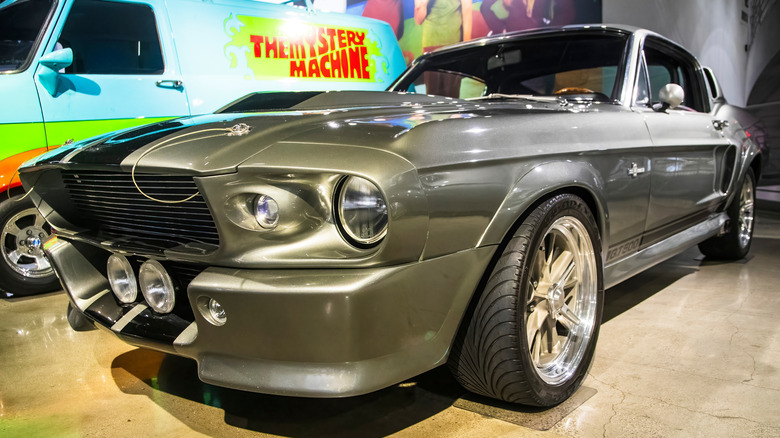
The first-ever Mustang instantly flew off the shelves when it arrived in April 1964, selling a whopping 418,000 units in the first year alone. There was nothing in the market that looked quite like it, with that sporty shape and long hood. It was so successful that other carmakers wasted no time conjuring up competitors. By 1967, Chevrolet had the Camaro ready and Pontiac had the Firebird. Even Ford's own Mercury division introduced the Cougar, powered by the Cobra 428 engine.
Just three years later, Ford came out with a redesign, which took the best features from the '64 model and exaggerated them. Two inches longer and 2.7 inches wider, the new 1967 model had its headlights and taillights sunk into recesses. A carved-out section was also added to the body panel above each rear wheel. Buyers could pick the car up in three flavors: a coupe, a convertible, or a fastback.
It's the Fastback that's undoubtedly the most iconic of the three, and it's what most people picture today when the '67 model is brought up, as this variant featured a roof that sloped from the windshield down to the tail. That car's design is perhaps what attracted film studios to use it over the years. As such, the 1967 Ford Mustang Fastback became an iconic car both on the screen and in the streets.
Buyers liked the 1967 Ford Mustang Fastback's engine and design
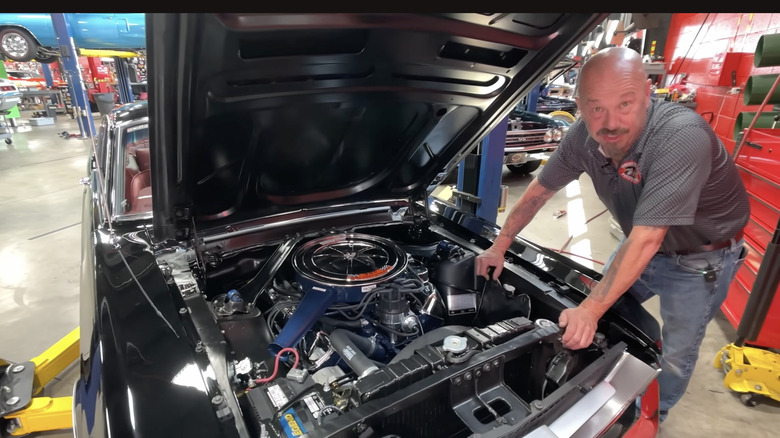
Part of the reason the 1967 Mustang is so memorable is its engine. In fact, the reason the model year grew larger was partly to accommodate a larger engine. The standard V8 in a GT measured 289 cubic inches, making 225 horsepower. Ford also offered a 390-cubic-inch V8, a physically bigger and heavier design of the type known as a big block that made 320 horsepower. A Fastback fitted with it reached 60 mph from a standstill in 7.5 seconds and achieved a top speed of 115 mph.
It's worth mentioning that the iconic look most people remember was actually the Fastback GT variant. It put fog lamps in the grille and four exhaust tips at the back – details that show up on almost every replica. However, after the GT package Carroll Shelby took over and designed another iconic variant of the '67 Mustang. Called the GT500, it was the fastest 1967 Mustang money could buy. It carried a 428-cubic-inch V8 that reached 60 mph in 5.7 seconds.
It also got popular in Hollywood and on the big screens
The 1967 Fastback's sleek design and impressive engine under the hood caught the attention of several movie producers in Hollywood. A silver version of the model was featured as Eleanor, the car Nicolas Cage keeps trying to steal in the 2000 remake of "Gone in 60 Seconds." That model actually started life as a 1967 Fastback before Cinema Vehicle Services rebuilt it. Six years later, Sean Boswell's ride in a 1967 Mustang Fastback in "Tokyo Drift" put the same shape in front of a much younger audience.
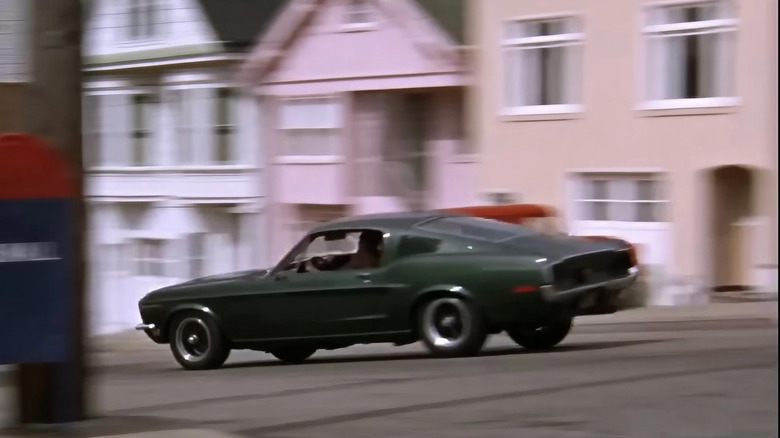
There were just 71,042 of these Fastback variants built, which means they fetch a high sales price today. In 2013, one of the 1967 Ford Mustang Eleanors built for "Gone in 60 Seconds" sold for $1 million. In comparison, the Highland Green 1968 Mustang Steve McQueen drove in "Bullitt," which shares the same redesigned body as the '67 model, sold for $3.74 million in 2020. Besides models that actually appeared on screen, plenty of builders also make Eleanor copies today, starting around $189,000 and climbing near $300,000 for a carbon-bodied car.
Today, the '67 Mustang's design — including the long hood, short rear deck, and three-element taillights — stays alive in the seventh-generation Mustang. Beyond living as collector's items, many people still actually drive these things, too. Modified versions also show up in drag races.