

11 Lowe's Finds Under $2 That Are Actually Worth Buying
If you walk into a hardware store with some disposable income and without a plan, there's no telling how much you might spend. It's certainly possible to spend hundreds or thousands of dollars at the hardware store without even breaking much of a sweat. It's also possible to get in, grab a few goodies, and get out without breaking the bank.
Some of these items could come in handy on a regular basis, helping you complete everyday tasks and solve everyday problems. Others are meant for emergencies and, with any luck, you'll never have to use them. But you'll be glad you invested a few spare dollars if and when you need them.
If you've got $20 burning a hole in your pocket and need some suggestions, you can get everything on this list with a few bucks to spare. While prices may vary based on location and are subject to change over time, each item on this list costs $2 or less at the time of writing.
Pencil tire gauge
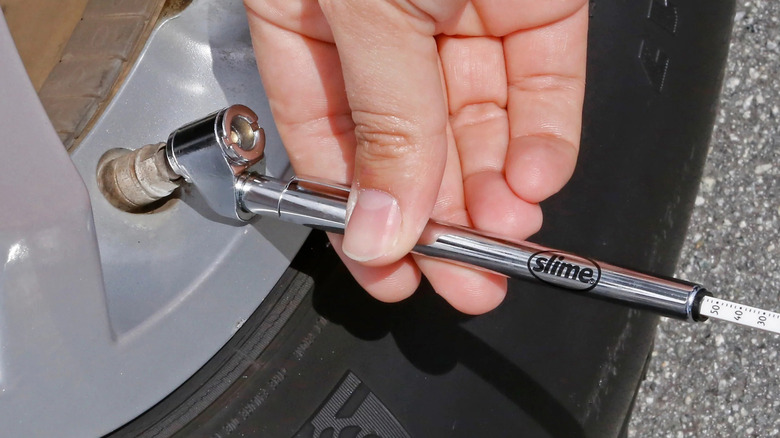
Many modern tire inflators have a pressure gauge built in, letting you measure the pressure, set a desired pressure, and refill your tires. We recommend everyone have one, but if you don't have the budget for a fancy inflator or you just want to supplement your roadside gear, a pencil tire gauge can help you measure the pressure of tires and other inflatable items with the power of physics.
At one end of the Slime pencil tire gauge is an opening that slides onto a tire's valve stem. The pin inside the opening presses against the pin inside the tire's valve stem, releasing air from the tire into the gauge. Inside the body of the gauge, pressurized air pushes against a piston connected to a compressed spring. As the piston moves toward the other end of the gauge, it pushes an adjacent rod a distance that corresponds to the pressure. Simply put, the more pressure inside a tire, the farther the piston moves, pushing the rod farther outward. Once the air pressure is released, the piston returns to its starting position, but the rod stays in place, with markings on its surface indicating the maximum pressure reached.
They're useful for keeping an eye on slow leaks or for checking the pressure while filling a tire if another gauge isn't available. They're also a clever little piece of engineering that relies on the stored energy inside your tire, so they don't need charging or any other power source.
Emergency poncho

Every time we leave our driveway, we hope to get where we're going without encountering too many hurdles, but it's still a good idea to be prepared for an emergency. We recommend stocking your car with a few emergency tools and some emergency basics. For about a buck-and-a-half, you can add an emergency poncho to your mobile emergency kit.
This emergency poncho from Lowe's is lightweight (weighing about a tenth of a pound, according to the product specs), waterproof, and reusable. It's not the most glamorous piece of attire; it's essentially a hooded garbage bag fashioned into a baggy overshirt. You're probably not going to win any fashion shows wearing it, but you should still consider adding it to your emergency wardrobe.
Because it's waterproof, a poncho can be used to keep you dry in inclement weather. Depending on the circumstances, that can be pretty important. Getting caught out in the cold is a problem, but getting caught out in the cold while soaking wet is quite a bit worse. In addition to keeping you dry, an emergency poncho can help protect you from sun exposure, collect rainwater, aid in building a waterproof structure, and more.
Survival blanket
If you ever drive beyond the boundaries of civilization, it's a good idea to keep a well-stocked emergency kit in your car. Recommendations for your emergency kit vary depending on the organization or authority giving those recommendations, but survival blankets are a popular addition to many lists.
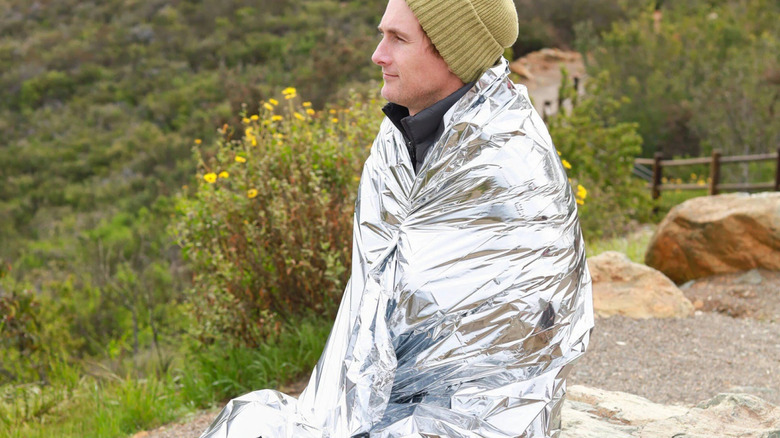
Thin, shiny, Mylar blankets are sometimes called thermal blankets or space blankets, and for good reason. They were first developed by NASA in 1964 and have since been used to help regulate the temperature of distant spacecraft and people on Earth alike.
Space blankets like the Ready America survival blanket from Lowe's are made of a thin, shiny material that reflects heat. That means they reflect the heat from sunshine away from you, but they also reflect your body heat back toward you. According to the manufacturer, the blanket retains about 90% of your body heat, creating a layer of warm air that could help keep you safe in the right kind of emergency.
Arm & Hammer air freshener
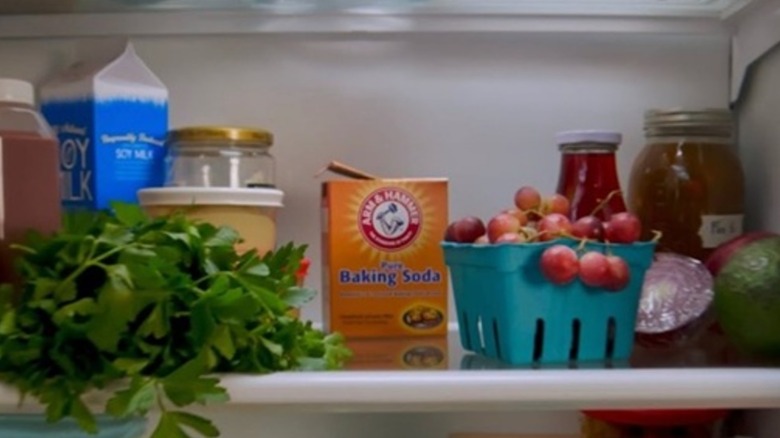
People have been using baking soda to manage odors in their refrigerators and freezers since at least 1972. While Arm & Hammer markets its baking soda fridge-n-freezer product as an odor absorber, it doesn't actually absorb smells. Instead, it neutralizes odors through the power of chemistry.
Many refrigerator odors are caused by volatile organic compounds (VOCs), specifically volatile fatty acids in food and other acidic compounds released by bacteria, molds, and more. Because they're acids, they can be neutralized with a base like sodium bicarbonate, commonly called baking soda.
Put simply, minor smells can be managed by keeping a steady supply of fresh baking soda in the fridge and freezer. It's important to note that the chemical reaction that neutralizes smells relies on contact, so you can improve the reaction rate by increasing the surface area. If your fridge is particularly stinky, try pouring the baking soda onto a plate or another large, flat surface.
Liquid Nails
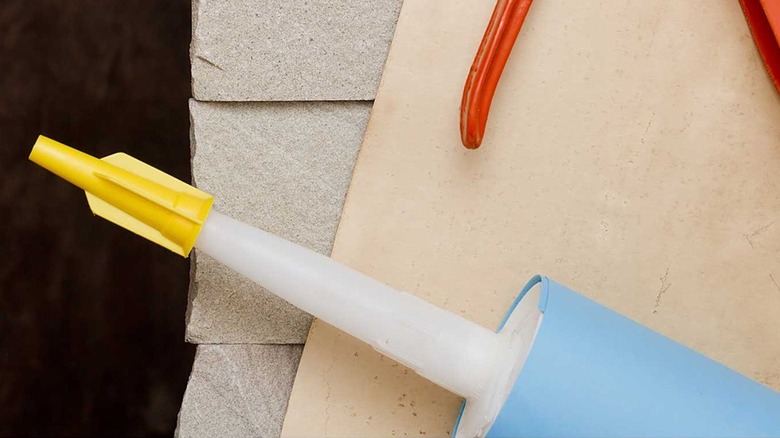
Making things is generally an exercise in addition and subtraction. Despite the wide variety of tools found on hardware store shelves, they generally do one of two things: Take things apart or put things together. Liquid Nails takes that second job to its most basic level, offering an adhesive that bonds a wide range of materials together.
The Liquid Nails Construction Adhesive from Lowe's comes in a 10-ounce bottle, with 12 bottles per package. It's a waterproof adhesive that's flexible, fills gaps up to 3/8 inch wide, and can be worked with for about 10 minutes after application. It'll mostly solidify after that, but it takes about 24 hours to fully cure at room temperature.
Liquid Nails Construction Adhesive works on a variety of materials, including wood, corkboard, drywall, paneling, treated wood, plywood, ceramic tile, and more. It's not suitable for mirrors, plastic, vinyl, marble, granite, or synthetic marble or granite. It's also not intended for outdoor use, but if you've got indoor materials that need gluing, Liquid Nails is worth considering.
Plumber's tape
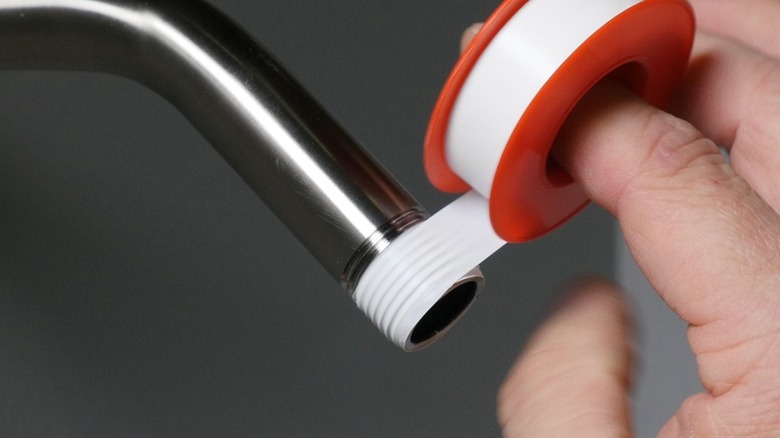
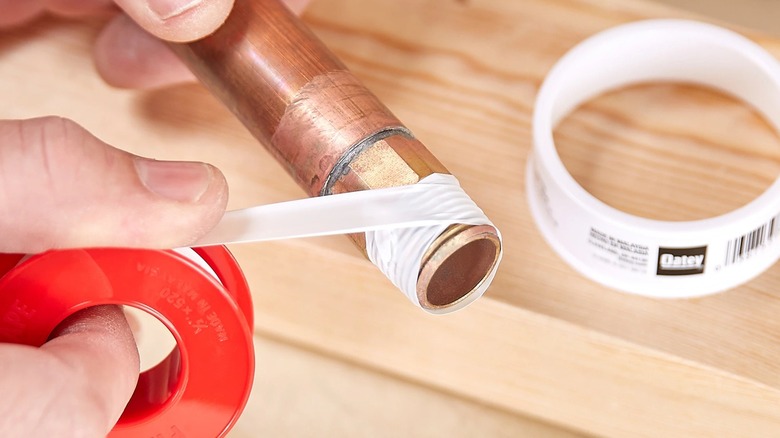
Electricity and water are two things people are famously spooked to work with, and for good reason. If you get it wrong, you can do some pretty serious damage to people and property. With that in mind, anytime you're working with water pipes, it's important to get a watertight seal, which is where plumber's tape comes in handy.
Commonly called sealant tape or thread seal tape, this home repair material is made of polytetrafluoroethylene (PTFE), popularly known as Teflon. It's a nonreactive material that can be used on water pipes and is even safe to use on potable water systems. It can also be used on pipes transporting natural gas, propane, butane, oil, and other gaseous or liquid compounds.
Oatey PTFE Thread Seal Tape from Lowe's stretches slightly and forms itself around threads to offer a tight seal. It can be useful to keep around for fixing or preventing minor leaks in your garden spigot, bathroom faucet, or elsewhere. To use the tape, clean the pipe threads to remove hard water deposits or other foreign material. Wrap the tape in the same direction as the adjoining pipe or attachment turns; righty-tighty, lefty-loosey. Connect your attachment and test for leaks. If present, remove the tape and start over.
Hand warmer

If you spend any time hiking, camping, or spending time in the cold wilderness, portable hand warmers are probably a familiar friend and common addition to your packing list. Whether you're familiar with hand warmers or not, they can help keep your hands, feet, and other parts of your body warm for hours at a time.
While electric hand warmers use electrical resistance to generate heat, disposable hand warmers take advantage of a chemical reaction to produce heat on demand. Typically, the packets contain a combination of iron powder, water, salt, and other ingredients like activated charcoal. When the ingredients are exposed to oxygen, they undergo oxidation, the process that causes iron to rust.
While other hand warmers need to be shaken or broken like a glow stick to expose all the ingredients, HotHands hand warmers are sealed in airtight packaging, and they activate automatically as soon as you open the package. As the iron powder in the package rusts, it gives off heat as a byproduct, generating temperatures between 100 and 180 degrees Fahrenheit. Activated charcoal isn't involved in the exothermic reaction, but it helps distribute heat more evenly, so the packet can produce heat in a safe and comfortable range for an extended period of time.
Lighter
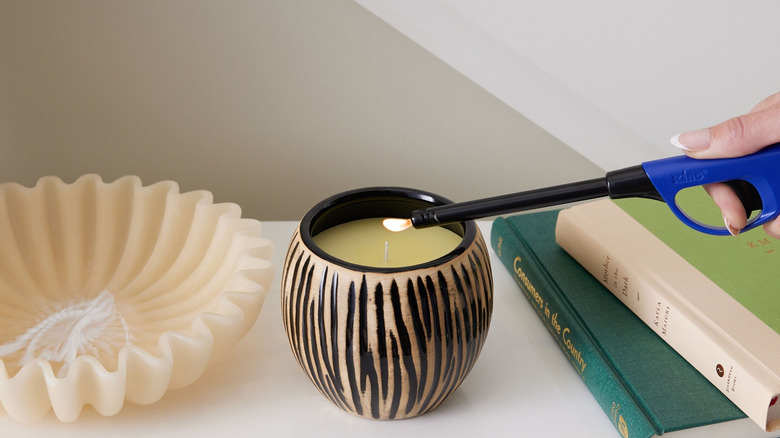
The ability to control fire is one of our most ancient technologies, and it's still one of the most useful. Throughout history we've used fire to light up the dark, protect ourselves from predators, cook our food, and power more advanced technologies, from smelting to combustion. Once upon a time, controlling fire took expertise and care. Nowadays, you can carry portable fire in your pocket.
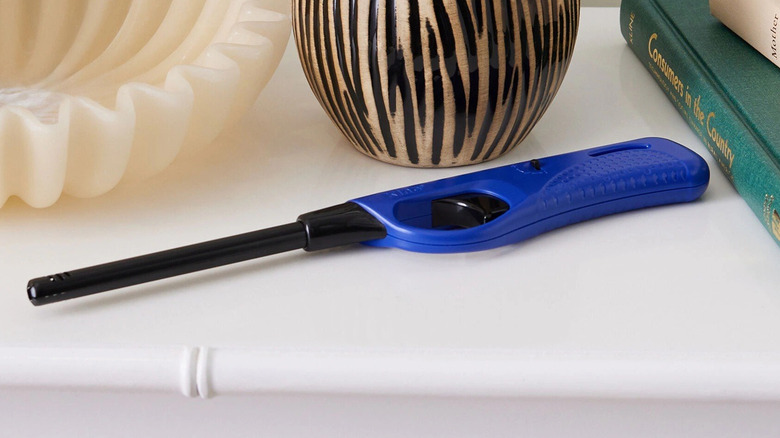
This refillable utility lighter, part of the Lowe's Essentials line of products, is designed to be safer than your average lighter. It has a child safety lock and an extended wand to keep your fingers away from the flames. You can adjust the height of the flame (and the rate of fuel consumption) with a dial on the side. You can also see the fuel level through a window in the body and refill the tank when fuel runs low.
You've probably used a lighter like this before. They're useful for lighting everything from barbecue grills to pilot lights. It's not a game changer (what do you expect for a couple of bucks?), but it is the sort of thing that's likely to come in handy often enough to make it worth keeping around. And, if you take advantage of the refillable reservoir instead of replacing empty lighters, you could even help reduce waste and save some money in the process.
Safety glasses

Before you jump headfirst into an unfinished to-do list or a shiny new project, stop to make sure your workspace is safe and you have the appropriate safety gear. Safety around tools, whether they're powered or not, is at least as important as your tools and materials. It's difficult to finish projects from a hospital bed.
You can't put a price on safety, but if you had to, that price would be under $2. The SAS Safety plastic safety glasses (model 5270) feature polycarbonate impact-resistant lenses with an anti-fog and scratch-resistant coating. They meet the ANSI (American National Standards Institute) Z87.1+ standard for safety glasses and are designed to hold up to daily abuse and provide a layer of protection from sawdust, flying debris, and other workshop dangers.
The frames adjust at the temples to provide a customized fit, and they'll even protect you from some of the effects of sun exposure. The lenses block 99.9% of UV radiation to help shield your eyes if you're working outside for long periods.
Teeny Tote
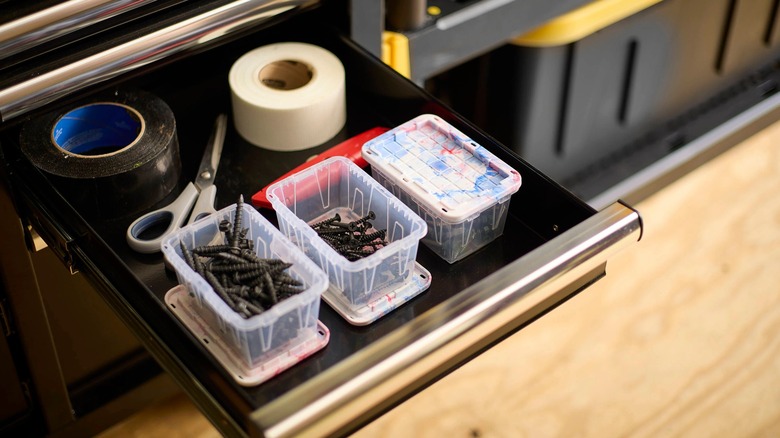
For a combination of complicated psychological and economic reasons, many of us love miniature things. If you take something that's usually big and make a small version of it, there's a certain subset of the population that's immediately interested. If that describes you, or if you've got some small stuff that needs organizing, it might be worth checking out the Teeny Tote.
Made by Project Source, the Teeny Tote is described as a compact version of the brand's "beloved 27-gallon heavy-duty storage tote." The word "beloved" seems like pretty strong language when talking about storage solutions, but it's hard to argue with when you're holding one of these cute little boxes.
As Project Source suggests, it's just like the larger storage tubs you're used to, but considerably smaller, though not quite small enough to fit into a pocket. While the brand's 27-gallon totes measure 14.3 inches tall, 30.6 inches long, and 20.6 inches wide, the Teeny Tote measures just 2.44 inches tall, 4.81 inches long, and 3.31 inches wide. Assuming you want it for more than just the dopamine, you could use the Teeny Tote to organize and store office supplies, craft supplies, and any other small objects you want to keep safe and organized. The Teeny Tote is available exclusively at Lowe's for a limited time.
Carpenter's pencil
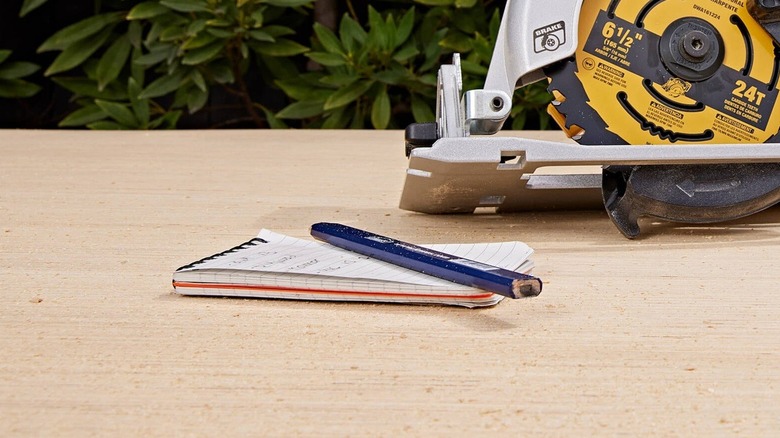
The carpenter's pencil is one of the most useful objects you can have in your tool belt. It can be used to mark your measurements or take notes, just like any pencil, but that's not all it can do. It's a weird pencil, but everything weird about it is for a reason. The unique design of a carpenter's pencil gives it a collection of other unconventional uses.
A carpenter's pencil from Lowe's looks like an ordinary pencil that got flattened by a cartoon anvil. It's still a pencil, but it's flatter and wider than normal. You also won't find an eraser at one end; it's wood and graphite all the way down.
The rectangular shape means your pencil won't roll away when you're working on an inclined surface, and you can use the sides of your pencil as a spacer for a wide range of projects. A fresh pencil measures 7 inches long, about half an inch wide, and about a quarter-inch thick. It's not exact because there's often variance in the manufacturing process, but if all you need is a consistent spacer for laying down tiles or deck boards, a carpenter's pencil can do the trick.
Methodology: How we made our choices
Lowe's is a popular hardware store in the United States, serving a large portion of the market. While The Home Depot claims a little more than half of home improvement consumers, Lowe's comes in second with nearly 29% of the market, and when it comes to customer satisfaction, Lowe's takes the crown, according to J.D. Power. All of which is to say that SlashGear authors, like many of you, are no strangers to the blue-tinted walls of a Lowe's.
Most of these products are common items used by SlashGear authors on a fairly regular basis. Things like Liquid Nails, plumber's tape, carpenter's pencils, and lighters are regular fixtures in many of our tool kits. I've personally had a pressure gauge just like this one in every car I've ever owned (alongside an emergency blanket and poncho), despite later upgrading to a digital gauge/inflator. The Teeny Tote is a more recent addition, but it's worth the cost for the whimsy alone. None of these products are likely to be game changers in your everyday DIY activities, but they are worth spending a couple of dollars on to have on hand.