

11 Surprisingly Useful Power Tools You Probably Didn't Realize Existed

The power tool ecosystem is filled with excellent pieces of equipment that can make the slog of cutting, fastening, and everything in between significantly faster while limiting the exertion required of you during home renovation jobs. There are some highly visible power tools that should always be in homeowners' kits before winter storms, and plenty of equally commonplace pieces of gear that support basic tasks, like combi-drills, jigsaws, and sanders. All of these are obvious choices to help round out a toolbox, however.
Lots of more obscure options will also provide some serious value. Each of these tools delivers incredible value to a renovator, hobby crafter, or woodworker and can be serious force multipliers to your workflow. Some are so uniquely suited to certain types of work, they'll outpace all other options you might rely on for a wide range of tasks from the intimately niche to other areas with incredibly varied applicability. All of these tools are worth evaluating by those who frequently pick up tools to support their job or DIY projects.
Biscuit jointer
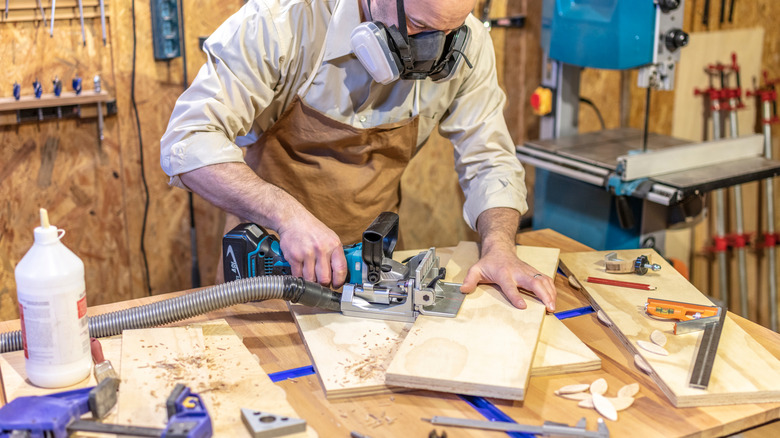
The biscuit joiner is a cutting tool, but not one that will support routine slices through workpieces. Instead, it features a router-type cutting element that pushes into the base and allows you to cut channels into the sides of your boards. The result is a hole cut with precision into the edge of a board that allows you to stick biscuits (flat pieces of wood that act like dowels in your joint) into the recessed space for a firmer hold when working on glue ups for woodworking projects.
Gluing workpieces together is all about the surface area you are able to capture. The greater the volume of adjoining surfaces the more strength your connection will have. But this can only go so far when butting together two flat boards without added joinery. Placing a hidden biscuit inside the two pieces that will be glued together at their edges allows for and additional structural element to sit within the connection and lend some additional strength to the mix. This is not a tool that plays a central role in many projects, but it is a significantly valuable addition to any workshop that supports woodworking projects and will require some creative ways to produce strong bonds within otherwise weak edge gluing operations.
Drywall sander

The drywall sander is a tool I have used on many occasions. It features a wide sanding head and works with much larger sanding pads than the typical random orbit or detail sander that a home improver may be used to. The tools generally feature at least a basic dust shroud, as well, to help minimize dust thrown into the air. They frequently include collection bags and many add in the ability to connect a vacuum to the tool, capturing a nice chunk of the resulting dust produced by its use when used in tandem with a shop vac.
As the name suggests, this tool is specifically built to handle sanding drywall elements. Many models feature long handles or extendable poles for reaching all the way up to the ceiling or down to the floor without having to stretch, bend, or step up on a work platform or a ladder. This is a key addition for anyone who will be putting up drywall, but it's also incredibly useful for renovators who have lots of spot fixes to do ahead of new painting tasks or big installation jobs. Really anytime you're installing drywall or doing lots of (or large) wall repairs in the house, this tool can be of great service.
Right angle drill
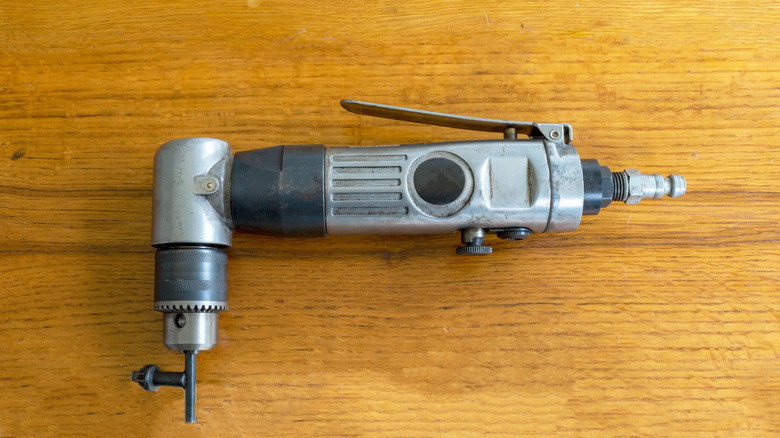
This is another tool that telegraphs what it does perfectly well by its naming convention. The right angle drill converts your standard drilling tool into a unit with an elongated body and a 90-degree turn to support the chuck. Right angle drills come in both small and large options, with tools like the Milwaukee Hole Hawg (one of the best right angle drills available, as rated by users) acting as incredibly powerful drills that can rip through thick joists with ease. Others act as installation tools that provide enhanced access to odd or difficult workpieces or areas of your project. Regardless, the right angle drill offers a key alteration to the overall framework of a drilling and fastening tool, giving you the ability to attack areas between narrow or otherwise difficult components, and it can be an ideal addition for automotive technicians, as well.
Those working on project cars in their spare time can gain serious functional advantages with the help of a right angle drill. Engine compartments and other areas of a car offer the same spatial setbacks that recessed areas within building project bring to the fore. When working under the hood, you'll frequently have to maneuver around all manner of additional parts and complicated systems. A right angle drill allows for a different approach than your standard tool, giving you enhanced access when it matters the most.
Die grinder
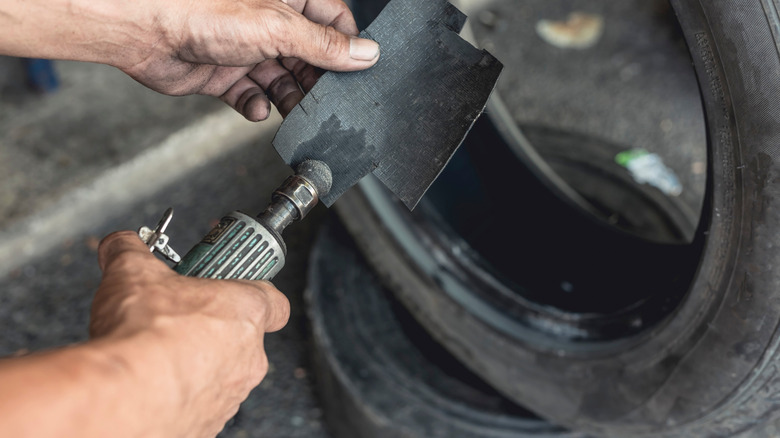
The die grinder is a viable replacement for an angle grinder, similarly capable of cutting, sanding, and polishing dense material with a rapidly spinning blade or alternative accessory attachment, but with a much more precise attack. These tools are smaller than angle grinders and tend to offer either straight or right angle builds to support a range of needs. Even in their battery operated form, plenty of die grinders weigh in the neighborhood of 1 pound, which is typically only seen in air tools of other equipment types.
These tools utilize a small collet attachment instead of the bulkier plate shape used in an angle grinder. All around, the die grinder is a more precise option for material removal, shaping, and surface preparation. Your attachments will be smaller, but so are the target areas you'll want to use this tool on. Machinists and automotive repairers often utilize die grinders, in particular, but hobby crafters also have a tendency to reach for this tool to perform detail work that elevates their finished products.
Palm nailer
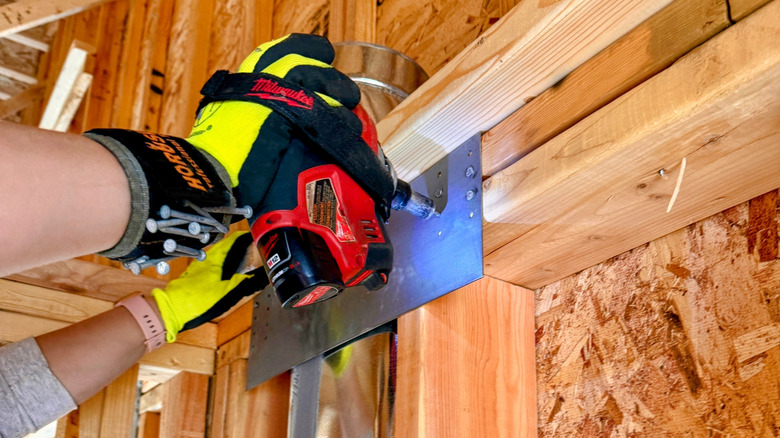
Palm nailers can be powered by pneumatic systems or electric elements. These handheld tools typically feature ergonomic, partially rounded bodies, and they're meant to replace your hammer for driving in nails. A palm nailer doesn't extend far beyond the grip of your palm in its dimensions, and the tool features an anvil housed within its body to deliver a high strike force to a fastener placed within grip. Essentially, you stick a nail into the receiver, position it where you want to sink the fastener, and then press the nailer into the workpiece to activate the tool. Your equipment will do the rest, driving the nail into your workpiece without requiring any additional, physical input from you to sink it to your desired depth.
This is not a fast tool in the same way that a brad or framing nailer frequently act to deliver multiple fasteners in rapid succession. Palm nailers require you to manually replace the nail each time you want to sink a new one, so this isn't exactly a piece of equipment that can add speed to your workflow. However, what it does provide is access. Instead of having to swing a hammer or position a large nailing tool into an awkward or recessed area, the palm nailer provides critical clearance and high power to drive fasteners into position without any big moving parts coming into the picture to complicate matters.
Drywall screwgun
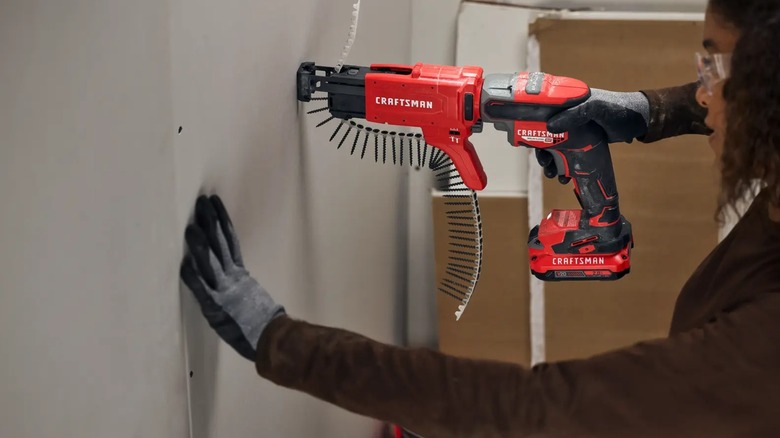
An alternative take on a drill, the drywall screwgun is designed to work specifically with drywall screws. These tools generally feature an auto feed function that allows you to set a fastener and then reset at the next position without needing to use your other hand — extra handing if you're using it to hold a sheet of drywall in place all by yourself. And when the board is secured with the first few screws, a drywall screwgun will allow for rapid fastening throughout the remainder, and moving on to the next one without delay.
There are some screw guns in this category worth avoiding, however. The Makita autofeed screwdriver is among a small set of tools from the brand that owners rate poorly, for instance. However, on the whole this tool type can be a massive game changer for anyone renovating their basement, performing substantial improvements throughout the house, or building half walls or recessed bookshelf and other storage spaces in a custom living area. Even with a helper, having this tool at your disposal can make drywall installation projects significantly easier.
Electric planer
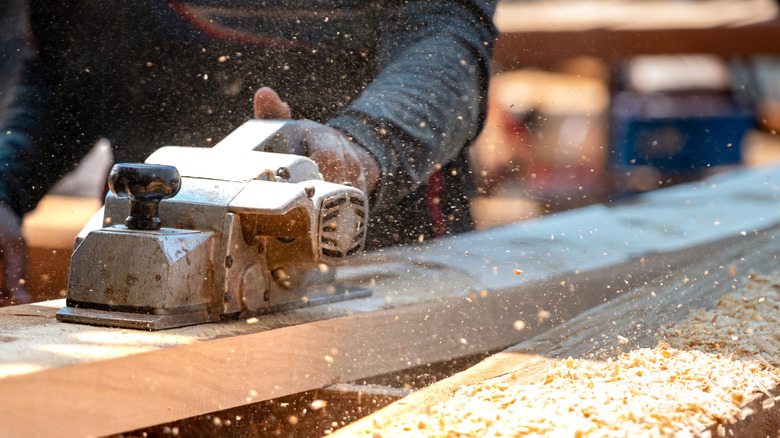
A hand plane is a classic piece of equipment for fine woodworking tasks that allows you to flatten boards with great precision. Vintage hand planes are exciting and frequent finds at garage sales and they can be particularly valuable if you encounter specialized models. However, the classic hand plane has a cousin of sorts that often flies under the radar. The electrified variant of this tool can make incredibly quick work of your planing tasks. It features a cutting head that rotates with multiple cutting blades built into the unit. This allows you to simply glide across your workpiece and let the motorized power handle all the work of shaving down the face of the board.
An electric planer is a fast and efficient option for handling all sorts of tasks from furniture making to door installation. Attempting to perfect a self-built Adirondak chair for your backyard or squaring up the edge of a new door to fit seamlessly into its closed position are tasks that benefit in great measure from a powered planer. The electric hand plane takes some of the visceral feeling of hand cutting out of the equation, but it's hard to argue with the speed and level of precision that this tool offers.
Scroll Saw
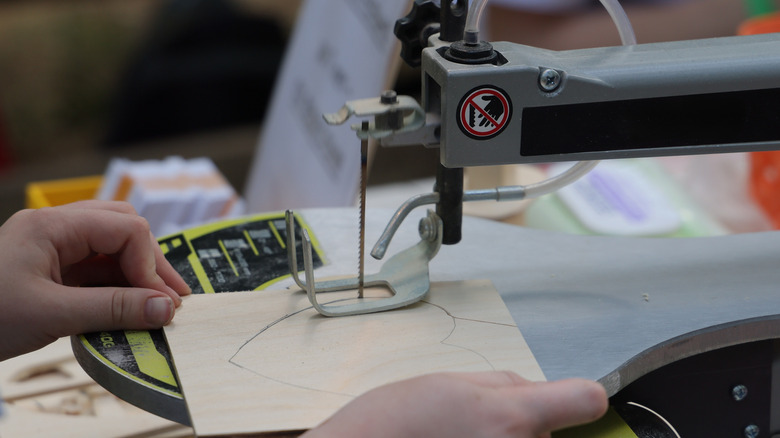
A scroll saw is similar in nature to a small bandsaw, but features a different sort of thin-kerfed blade. It features a cutting table and cuts almost as if it were a jerry-rigged jigsaw that has been matched up with a tabletop element. The tool's capability closely resembles a cross between these two power tools when you get right down to it. The scroll saw allows you to bring a workpiece up to the saw blade and cut curving arcs into your work. The tool is great for very detailed and precise slices through all types of material, and it can generally accommodate a wide range of angular cuts, too. Many feature integrated lights and blower elements that helped take the precision you can achieve to an even higher level by adding visibility and removing debris as you cut.
The scroll saw was once very common in the workshop. However, for some reason it has fallen out of favor in all but niche crafting environments. Even so, if you're looking to upgrade your garage or tool collection with a piece of equipment that can help bring about a cleaner finish to your work and greater detail in your results, the scroll saw can be a big winner that imparts plenty of new capabilities into your workspace.
Caulking gun
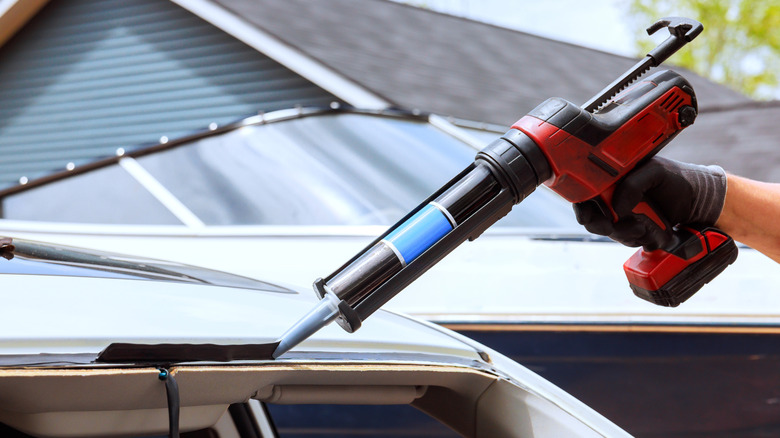
Standard caulking tools retail for just a few bucks and can get the job done perfectly well in most situations, but powered alternatives also exist and they can provide a massive productivity boost. Tubed adhesives and caulk are essential in many building and renovation tasks, letting you fill tiny gaps in assembled workpieces like cabinet doors or window frames to deliver a visually seamless finished product while also providing some weather and soundproofing. Caulking your windows ahead of the winter chill is a common task for homeowners, for instance.
However, anyone who has tackled numerous window caulking jobs knows how physically demanding the process can be, and more windows only multiply the effort level required. Squeezing out this sealant product requires intense grip strength, and the amount of energy and focus required to produce a consistent bead of can frequently take away from the accuracy you'll try to achieve in its placement.
The power tool equivalent takes that physical demand off your plate, allowing you to focus essentially all of your energy on precise application. Making this switch can really save you a significant amount of time and energy, freeing you up to tackle other jobs on the same day you caulk your windows or handle all the edge work on an upcycling project.
Drill press
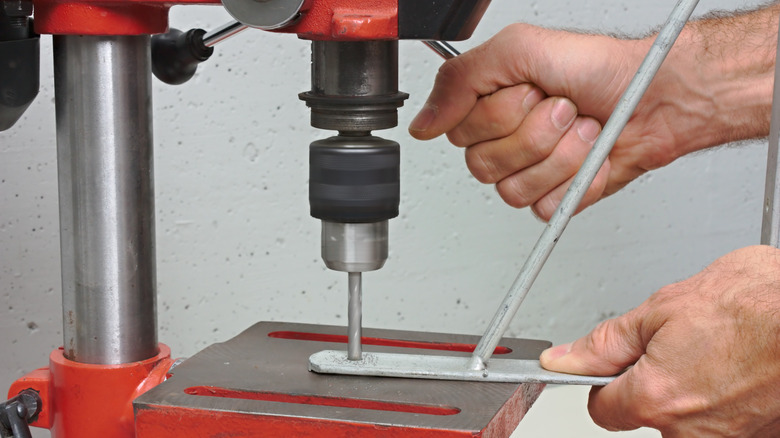
The drill press makes drilling straight down into a workpiece a breeze. These tools are perhaps not a ones you'll use frequently if you are a routine DIYer, admittedly, and that's probably why they so frequently ends up flying under the radar. Even so, a drill press belongs in just about any intermediate woodworker's shop (although likely not in a beginner's arsenal) and it can be a valuable asset for DIYers who frequently customize elements of their renovation projects and builds.
A drill press operates with an integrated motor and belt system in many cases. It's a piece of equipment you will likely have to manage with far greater detail and nuance than a standard power tool. But the result is a tool that can drill precision holes in workpieces and perform all sorts of milling tasks that can't be done effectively, or even safely in some cases, while holding mobile power tool and trying to line up a hole or cut by hand.
Lawn blower/vacuum
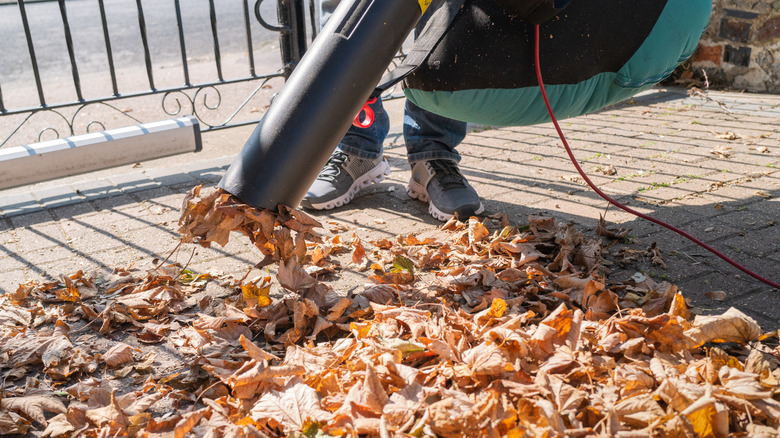
There are many leaf blowing tools out there in marketplace, and this isn't a surprising piece of gear to come across. However, a far less visible take on this sort of equipment delivers the opposite effect. A lawn vacuum can suck up leaves and other yard debris, operating like a shop vac for your landscaping projects. Some models feature both a blower element and a vacuum, combining the two tools into one unit for solid versatility and an important space saving feature in your garage.
The lawn vacuum can help you remove errant grass clippings left sitting on the yard, drastically reducing the potential to stain your clothing green while wandering around in the yard right after a mow. This is particularly useful for households that include young children who love playing outside. Lawn vacuums also have the ability to suck up leaves that have fallen from trees, and powerful models may even be able to remove denser debris like small bush material or even a top dressing of mulch from your flower beds to allow you to start fresh when adding new amendments to the growing space. The result is a much more versatile lawn cleaning approach that can save you time and lots of raking effort that would otherwise be necessary to clear the typical fallen debris that accumulates on the grass over time.