

13 Of The Most Minimalist Phones Available In 2026
We may receive a commission on purchases made from links.
It's clear to anyone with eyes that the constant use of our mobile phones has a mostly negative impact on our mental health, focus, and productivity. Enter: the minimalist phone. Whether you want a digital detox from social media or are just tired of incessant notifications, the minimalist phone aims to strip those things away — or at least make them less disruptive. An entire market has sprung up for people looking to ditch their iPhone, and perhaps ironically, it's young people leading the charge.
Our criteria is simple: these need to be actual phones that you can use for calls and texts, but phones that take some approach — whatever it may be — to make the device less of a digital distraction and more of a tool. Whether or not they are shoe-ins for your mobile device is a question you'll have to answer yourself, depending on how minimalist you want to go, and what your needs are. These are what we consider the best 13 minimalist phones available in the current year.
Bigme Hibreak Dual
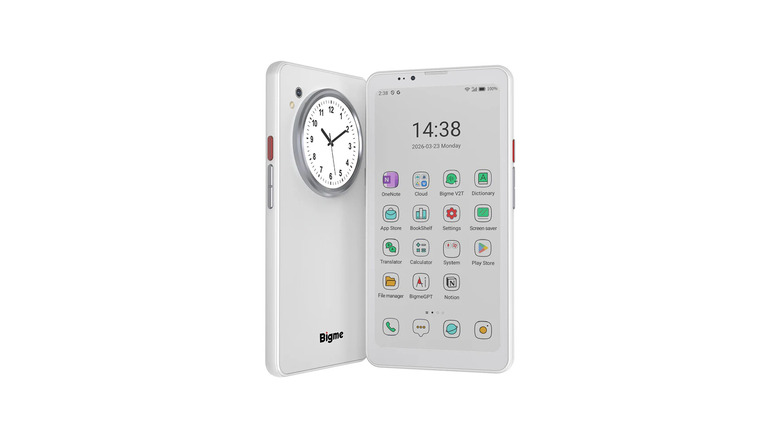
Bigme is at the leading edge of a growing category of e-ink screen smartphones. Imagine a run-of-the-mill smartphone with an e-ink screen, and boom: Bigme Hibreak Dual. It runs Android 14 and supports 5G with dual sims. The main course is the 6.13-inch color e-ink display with a frontlight that supports an 80Hz refresh rate. There's also a circular LCD display on the backend and support for a stylus. Though there are few reviews, they lean positively.
This is the phone we'd recommend for people who want to cut down on social media usage but don't want to commit to a barebones phone. The HiBreak Dual has a front and back camera, GPS, NFC, support for basically every modern smartphone hardware and software feature. Since the screen is not going to be the most enjoyable medium for consuming content, you're incentivized to spend less time on it. As an added bonus, you can use it as a pocket e-reader.
You can purchase the Bigme Hibreak Dual directly from its website. Note, there's a cheaper black-and-white display option if you want to further minimize your phone. The device does not appear to be available on Amazon. You can check out Bigme's other e-ink smartphones here instead.
Punkt MP02 4G Minimalist Phone
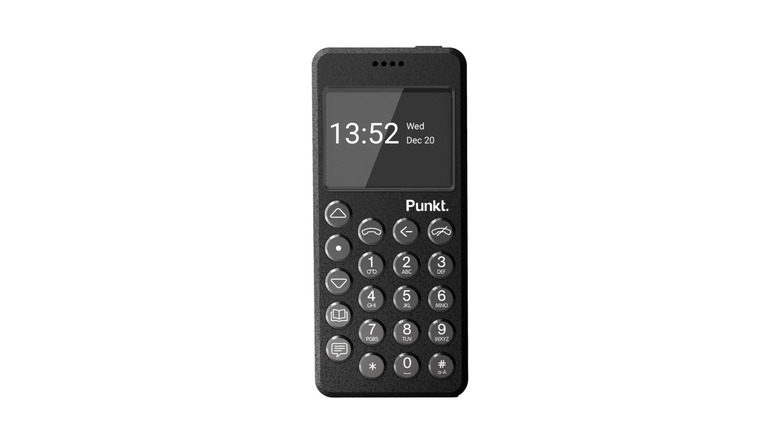
Some minimalists want to go all the way in, taking the smart completely out of the phone without it looking "old." The Punkt MP02 4G does just that. Strange name aside, it's a stylish, modern take on the cell phones that were common before the iPhone released in 2007, when battery life was measured in days and texts were sent with T9, except now with 4G. Punkt says it's supported on AT&T and T-Mobile, but not Verizon. Reviews give it a solid rating. Privacy enthusiasts will love it, too, since it incorporates encrypted messaging via Pigeon, a version of the Signal Messenger.
It's worth noting that this phone was released in 2021. Currently, Punkt only has refurbished versions available from its official website. As you can imagine, this is an incredibly bare-bones experience with a handful of very basic apps — think calculator, calendar, etc. — and an interface that could be clunky to navigate. You can't take pictures with a camera, listen to music, or play games, but perhaps that's exactly what you're looking for. Our only complaint is that pricing. Even for discounted refurbished models, the cheapest you can get one is $204.99 on its site.
Minimal Phone
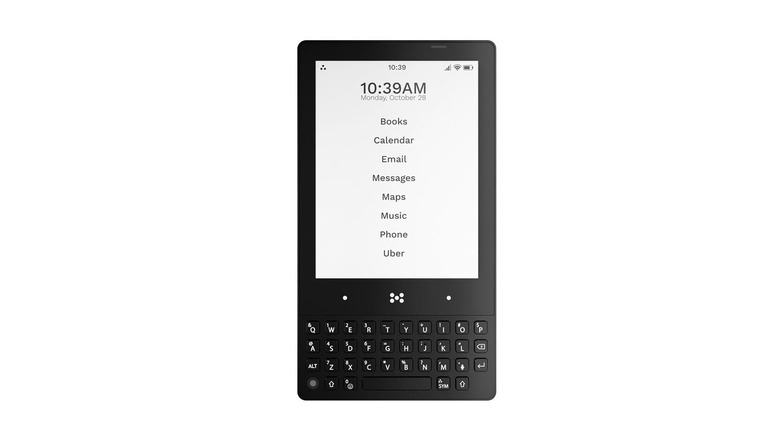
The Minimal Phone puts its purpose right there in the name, and its promotional images don't beat around the bush either. The Minimal Phone sports a black-and-white e-ink display, which you'll navigate with physical buttons and a hardware keyboard. There's a front and back camera, fingerprint scanner, SD card slot, a 3.5 mm jack, and... that's basically it. For what it offers and what it hopes to achieve, it earns positive reviews.
Though it is quite minimalist and seems to imply a phone with a few stock apps and nothing else, it can install non pre-installed apps from Google Play. So if the Punkt is too over the top, and the Hibreak Dual not enough over it, the Minimal Phone is the halfway point.
You can purchase the Minimal Phone here from the official website. Reviewers unanimously noted that battery life was poorer than expected and the camera is pretty bad. Otherwise, it seems like the Minimal Phone is achieving its primary objective.
Mudita Kompakt
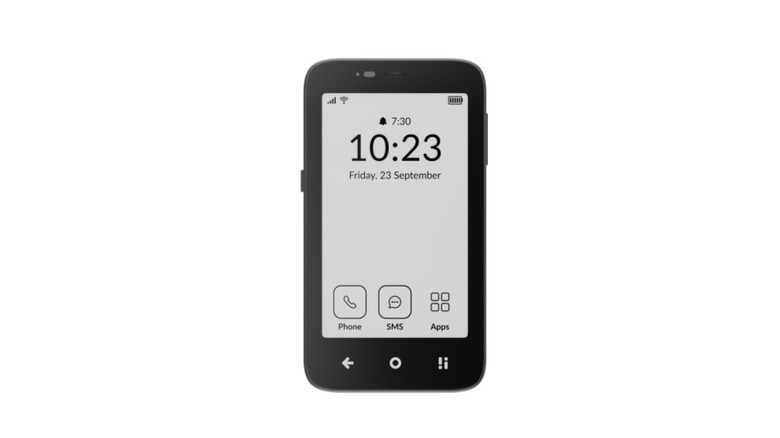
The curiously named Mudita Kompakt is another heavy-hitter in the minimalist phone space. It also has an e-ink display, but rather than use a flavor of Android like previous ones we've seen, Mudita includes its own custom OS bereft of any features or apps a minimalist phone shouldn't have. Any third-party Android apps can be added later with Mudita's sideloading utility if you like. Reviews paint it in a positive light.
The Kompakt feels like an even more reduced version of the Minimal Phone, once more including most modern smartphone hardware and software features — camera, GPS, fingerprint reader — but otherwise punishing the use of content consumption by way of the phone's simplistic e-ink design. It's a positive if your intention is to keep digital distractions away.
In what seems to be a continuing theme with minimalist phones, the Kompakt is quite pricey at $399. That's in the same ballpark as a whole bunch of amazing budget smartphones you could get instead. Again, it's for you to decide whether you need a whole phone to cure your digital addictions, but we admit $399 is a lot for a phone that's so limited, intentional or not. You can purchase the Mudita Kompakt here.
Light Phone III
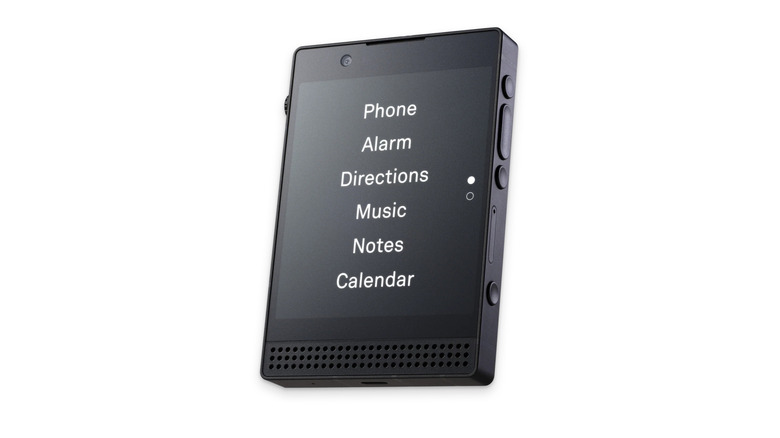
To complete the trifecta of phones marketed as minimalist, specifically, we have the Light Phone III. It runs on an Android-based LightOS with an OLED screen, and displays strictly in black-and-white, except when taking photos. As far as reviews go, it takes its place as a solid option.
Compared to other minimalist phones on this list, the Light Phone III one is high on the intentionally restrictive list, keeping things to simple white letters on black. No frills, no flourishes. There are only basic apps like the alarm, calculator, directions, contacts, and music, so there's no chance for distraction. It's a phone that hovers in a gray zone of technically being a smartphone (it's basically Android under the hood) but, in practice, it's really a feature phone; you can't sideload third-party apps like with the Mudita Kompakt.
One major downside to the Light Phone III is its price. When it released in 2025, it sold for $599. Thanks to (presumably) the RAM crisis, that's no longer the case. Currently, a pre-order for the next wave of Light Phone IIIs coming in November 2026 will cost you an eye-watering $899. While that may be out of the control of a small company navigating turbulent waters, it is challenging to justify as much money as an iPhone for a fraction of the features and functionality.
F1 Horizon Bluebird
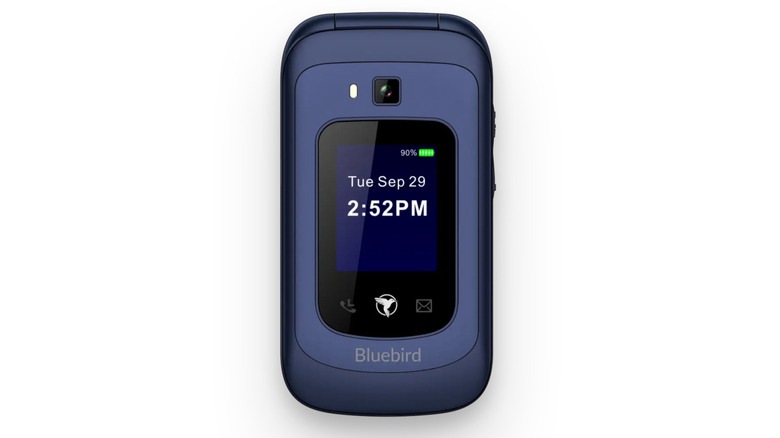
You thought flip phones were dead and buried in the early aughts? Think again. Modern flip phones tend to be feature phones (the midway point between smartphone and cellphone) and they're growing in use in some developing nations. They also happen to be perfect for minimalists. Sunbeam Wireless's F1 Horizon Bluebird is an excellent starting point. You can take pictures, listen to music, check the weather and navigation (with Waze), keep a calendar, and more. Importantly, it comes in at a more reasonable $279 price point and garners good reviews.
Bear in mind that there are limitations here, some to your benefit. It doesn't support any sort of social media, nor can it browse the web. There's also no app store, so you can't download any apps beyond those preloaded. Users outside North and South America should not buy this phone, as it has no LTE bands. We'd like to note that Sunbeam Wireless has a whole range of devices, each offering varying levels of functionality so you can choose the one that suits your needs. The F1 Horizon Bluebird can be found here.
Jitterbug Flip2
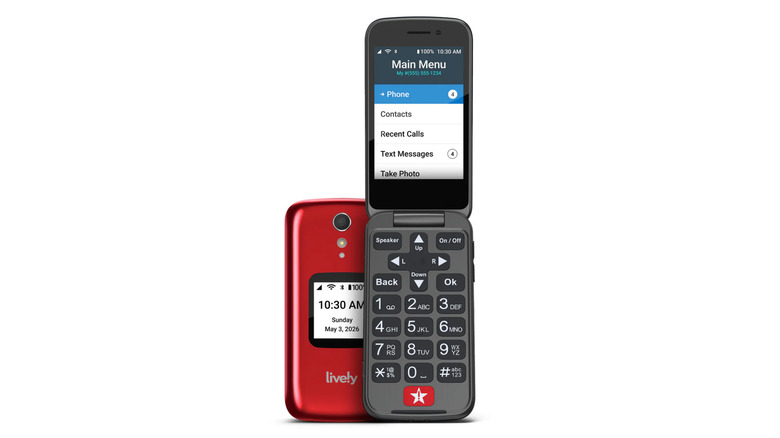
The Jitterbug Flip2 styles itself as a cell phone for seniors, but we feel that it's also perfect for anyone in search of a minimalist mobile experience. Seniors may want big buttons, simple menus, and few apps or options to limit complexity. So do minimalists. Once again, we have a phone that heavily limits what you can do, so don't expect anything beyond texting, calling, and other basic phone functions. Reviews give it good marks.
You will need to purchase the Jitterbug Flip2 with a Lively service plan, a cell service that's operates through Best Buy. However, these plans aren't expensive; The cheapest $14.99 per month basic plan gets you 300 minutes of talk and 300 texts ($5 more makes it unlimited), which in this day and age might be more than enough if this is just meant to be a phone that people can reach you at. The preferred and premium plans at $34.99 and $44.99 respectively include access to 24/7 emergency operators via the "Urgent Response" button — though it's oriented at seniors. The phone starts at $39.99 and you can purchase it here.
Kyocera DuraXV Extreme
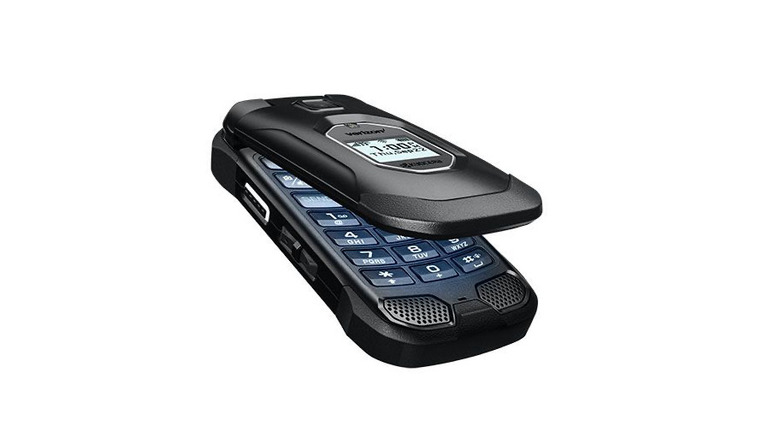
Part of the appeal of phones back in the aughts was their durability. Remember the Nokia? We all thought those phones could survive a nuclear apocalypse or two, and phones since are rarely as indestructible. The Kyocera DuraXV Extreme is a throwback to the Nokia days. It boasts IP68 dust and water protection in addition to being able to weather a 5-foot drop on concrete. The DuraXV Extreme also claims clear, noise-cancelling call quality. Battery life is rated at up to 18 days in standby mode, truly calling back to the flip-phone era. Overall, it does well with critics.
In a day and age when some phones make repairing them without official parts difficult — to say nothing of the cost of the repair — the DuraXV Extreme could be more than just a minimalist device to kill your phone addiction; it could be a device that easily outlasts smartphones that cost many times as much. The Kyocera DuraXV Extreme retails for $250. Purchase it with a plan through Verizon here.
Nokia 2760 Flip
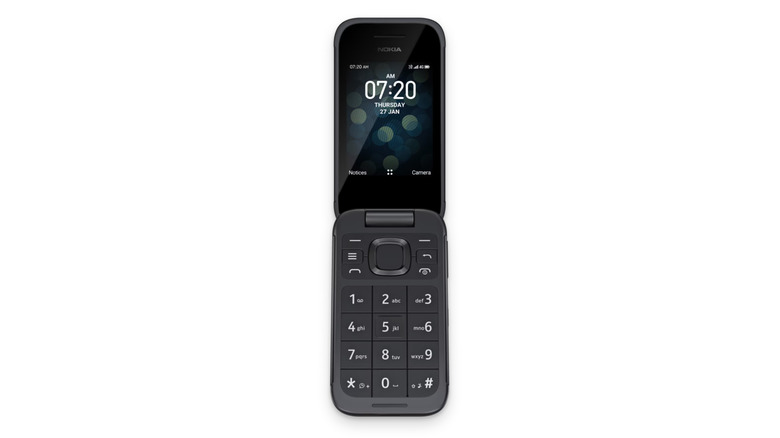
Nokia is the brand name you think of when you imagine a feature phone in the pre-smartphone days. Luckily, it's still in the game. Nokia manufactures a wide array of feature phones outside its smartphone variety. One we recommend is the Nokia 2760 Flip. This is a true-to-form feature phone that looks and feels like what the average teenager had in 2005. It claims a roughly 18-day battery life when on standby, or about 6.9 hours of talk time. Reviews feature the phone favorably. On Amazon it has a 4.1-star average.
The Nokia 2760 Flip uses KaiOS, an OS typical to modern feature phones that allows for something approximating an Android/iOS experience, particularly modern apps — though, since it's a flip phone, you'll be disincentivized against using it for mindless consumption. It's a plus if you want a "dumb" phone that's not so dumbed down that it can't fulfill modern needs. You can also check out Nokia's long list of other feature phones if this one doesn't appeal to you.
TCL Flip Pro
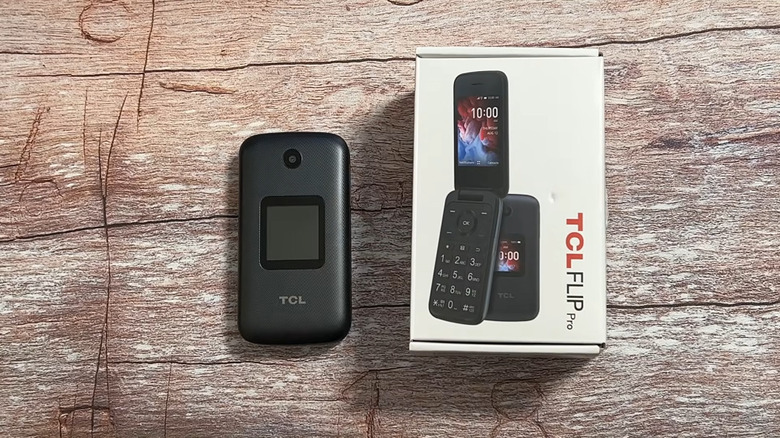
Another solid flip phone that stands as a minimalist contender is the TCL Flip Pro. Like the Nokia above, it also runs on KaiOS, so it supports those more modern apps in addition to features like Bluetooth for a headset chatting or music listening. This one boasts HD voice calling over VoLTE and includes a voice assistant. The 2MP camera can also take video. An included microSD card slot will provide you with an additional 32GB of storage, if needed. A solid device, if reviews are to be believed. TCL's other flip phones have rated highly with reviewers.
The TCL Flip Pro has been around for a few years now, so you may have trouble getting one from your provider, such as Verizon. Amazon sells a renewed version that goes as low as $36. For the price though, and the rounded-out feature set, this is yet another solid choice among many.
TTfone TT990 4G
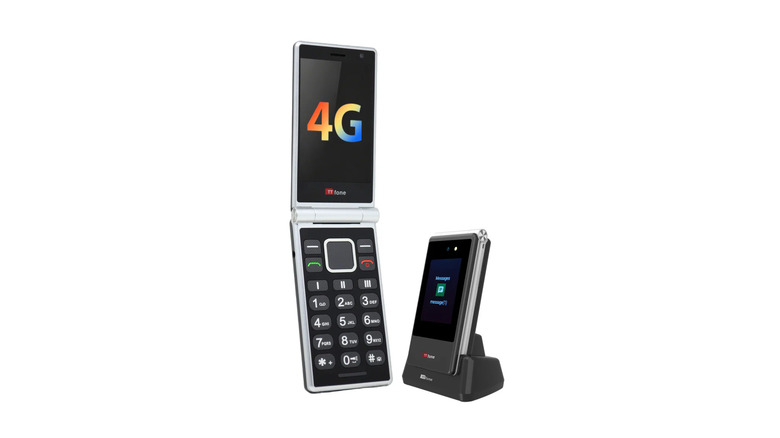
TTfone is another, lesser-known player in the feature phone space. Its TTfone TT990 4G offers a bit more potential and functionality than the competition, thanks to Android 14. And there's a twist here: it's a "de-Googled" Android variety, i.e. no official Google Play app store or Google service apps. You can still download apps via Aurora Store and use them with the touch screen — and you can do stuff like video calling — while being restricted by a hardware keypad. It's the perfect blend between a feature phone and a smartphone, taking the best parts of both, and it costs a reasonable $199, with a pay-as-you-go SIM included for free. Reviews are favorable.
Bear in mind, the de-Googled aspect of the TTphone TT990 4G comes with drawbacks. The biggest one is that some of your apps — like banking — may not work, since your phone will fail integrity checks. In some cases, non-functional apps have alternatives. Take YouTube for instance, which you can supplant with NewPipe. You can purchase it here.
Wisephone II
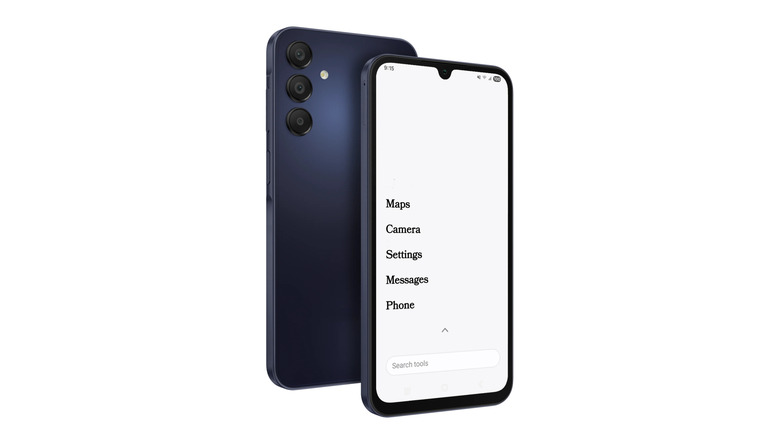
At first glance, the Wisephone II looks like any smartphone: a candy-bar shape with a notch selfie cam, AMOLED screen, and a three-camera array on the back. And that's because it is; it's essentially just a Samsung A16 5G. Software-wise, however, Wisephone II dubs itself a "healthy smartphone." Aside from the essentials like messages, photos, calendar, it includes a small, curated selection of third-party apps for you to use — Whatsapp, Waze, Spotify — minus any social media or web browser. You can request a third-party app if it's not available. The reviews we've seen give it strong ratings.
So who is this for? Probably someone who likes the smartphone form factor and a beautiful OLED screen, but who cannot trust themselves to moderate their usage. The Wisephone also appeals to parents; restrictions are in place prevent accessing adult content, social media, and games.
There is one big downside: a mandatory WiseOS subscription. Wisephone claims that the subscription is to support the phone long term with software updates and improvements, but it seems ironic that a device meant to eliminate the problematic parts of smartphones costs $14.99 per month. Wise also says you cannot replace the OS. If that still appeals to you, then you can buy one from the Wisephone website.
AGM M9
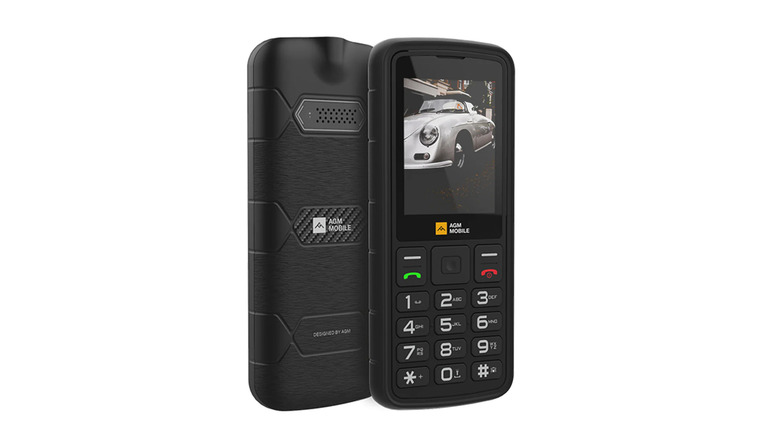
The AGM M9 is a surprisingly affordable feature phone at just $49, yet it boasts incredible durability. It has IP68/IP69 dust and water resistance ratings respectively, and there's a rugged design quality resistant to drops of up to 1.8 meters. Other things we like include its easily replaceable battery, built-in flashlight, expandable microSD card slot, and a cover-protected 3.5mm audio jack and USB-C connector. Bluetooth is also supported. Aside from that, it uses a simple, lightweight operating system that will do fine for calls and basic texting. Reviews give it a thumbs up by our standards.
You'd be hard pressed to find a phone this durable with as many hardware additions for the price. AGM claims the phone is meant for T-Mobile exclusively; If you plan to use this on another network, you should check first. You can purchase it here from the official website or on Amazon.
Your existing phone (with some settings tweaks)
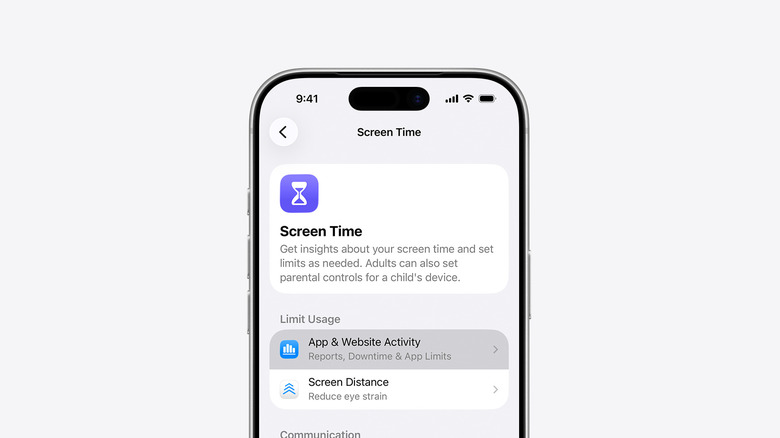
Some argue that you don't need to buy a minimalist phone, just change the relationship with your existing one. For example, you could enable focus modes. These are available on iOS and Android. Further, iOS and Android both have built-in tools for limiting your own — or others' — usage of apps and websites. These are Screen Time and Digital Wellbeing, respectively. Some specific smartphone manufacturers have lockdown modes that block the majority of your smartphone's functions for a time to help with focus; OnePlus's Zen Mode is an example.
Alternatively, you can change your phone's UI and layout to be more thoughtful. On iOS, this can be done via Assistive Access. On Android, you can change the launcher to taste, such as the Before Launcher. You can also change how you receive notifications. On iOS, you can enable Scheduled Summary to get bulk deliveries of all your notifications at specific times; On Android, you can snooze notifications or use cooldown if they're arriving in large quantities.
If you want to go a bit more extreme, there are hardware options available. Tap your phone on a Brick, and it basically makes your phone unusable until tapped again. If you're adventurous enough, you can make your own brick with an NFC tag and the Broke project. Based on personal experience, though, the solution may be even simpler than that; something as simple as putting your phone in another room when you need to focus might give you back the attention you lost.