

Why So Many Video Cards Come With Only One HDMI Port
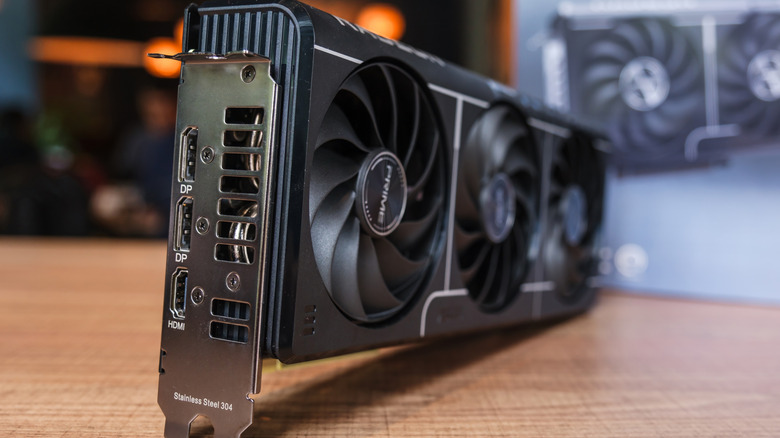
HDMI has emerged as one of the most ubiquitous audio/video standards to ever be adopted in consumer electronics. According to the HDMI Licensing Administrator, Inc. (HDMI LA), almost 14 billion HDMI-enabled devices have shipped since HDMI 1.0 was introduced in 2002. The latest HDMI 2.2 was announced in 2025, and we expect to see HDMI 2.2 devices in 2027. You can find an HDMI port on something as small as a Raspberry Pi single-board computer, or as big as something like Samsung's The Wall 130" smart display. Somewhere on that spectrum is graphics cards, which have been incorporating HDMI ports for years.
The first graphics cards that made use of HDMI hit the market in 2006, and have continued to evolve alongside HDMI, as well as other technologies like DisplayPort. Modern graphics cards usually ship with only one HDMI port alongside usually 2 or more DisplayPort ports. As far as why so many graphics cards ship with only one HDMI port is a question many users have pondered, and there isn't a single answer. The truth is that the decision comes down to equal parts business costs, user needs, and engineering.
In the world of monitors, DisplayPort is king
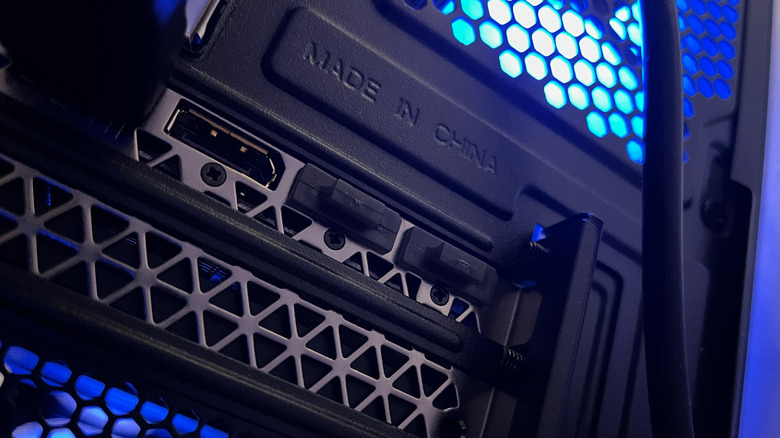
Graphics cards are built for PCs, and PCs are predominantly going to use monitors. Monitors favor DisplayPort, as the format has become an incredibly robust and PC-centric standard that can carry video, audio, data, and power along a single cable. DisplayPort also enables multi-monitor setups by daisy-chaining monitors with Multi Stream Transport (MST), with only a single cable from the source. DisplayPort is also better equipped to consistently handle higher refresh rates, and also supports VESA Adaptive Sync, which is what variable refresh rate technologies like AMD's FreeSync are based on. Importantly, Nvidia's G-Sync is limited to DisplayPort, but G-Sync Compatible will work over HDMI in addition to DisplayPort.
On a graphics card, HDMI is treated more like a compatibility port, ensuring the card can be used across a variety of potential outputs, monitors included. The bandwidth roadmap for DisplayPort has also routinely exceeded that of HDMI, though HDMI 2.2 looks to change that with a top end bandwidth of 96 Gbps –- but HDMI 2.2 ports will come with a catch in the form of certified cables and ports that will likely be expensive and confusing to buy into. DisplayPort 2.1 can already accommodate up to three 4K monitors at 90 Hz or two 4K monitors at 144 Hz without using compression, all while being the more versatile interface.
The slight bandwidth lead HDMI 2.2 enjoys likely won't make a huge impact, as resolutions beyond 4K have yet to break into the mainstream consumer market. And based on the history of DisplayPort's roadmap, we can expect the next version to leapfrog HDMI 2.2.
HDMI is expensive to implement
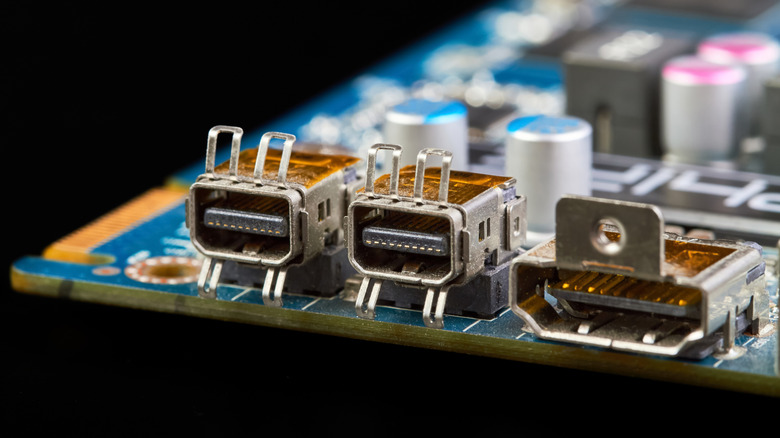
Compared to DisplayPort, HDMI is costly to build into a graphics card. An HDMI port has a higher physical complexity than DisplayPort, and can take up more PCB space –- which is already premium real estate on graphics cards. Depending on the version, HDMI ports can also require additional hardware and board space to meet the electrical and bandwidth requirements. For instance, an HDMI 2.1 port that supports the newer Fixed Rate Link (FRL) encoding will cost more than an HDMI 2.0 port that relies on Transition-minimized differential signaling (TMDS).
GamersNexus covers this in a tour they took of a Taiwan factory that manufactures Intel Arc GPUs for Sparkle. In that video, it is also revealed that HDMI ports cost about $1/port for Sparkle's Intel Arc GPUs, with most of the cost going to licensing fees. This is because HDMI is not an open standard; HDMI adopters (companies paying to license HDMI) have to pay annual adopter fees and royalties on devices. For something like Sparkle's Intel A310 Omni View SKU that has 4 HDMI ports, that's $4 in HDMI costs for a card that's targeting a $100-$110 price point. Sparkle's Taiwanese factory produces over 1,000 Intel Arc GPUs per day, so you can see where the math is going. Then there's mandatory compliance and certification testing according to HDMI's Compliance Test Specification, which has to be completed by an Authorized Testing Center. HDMI 2.1 –- and eventually HDMI2.2 –- will compound these costs further.
DisplayPort is an open and royalty free standard, which is another huge difference between HDMI and DisplayPort, and manufacturers can implement the ports at no cost. The VESA DisplayPort Compliance Program is also not tied to licensing agreements like HDMI, and is driven by VESA members and the DisplayPort ecosystem.