

The Catch With HDMI 2.2 Ports Most People Don't Know About
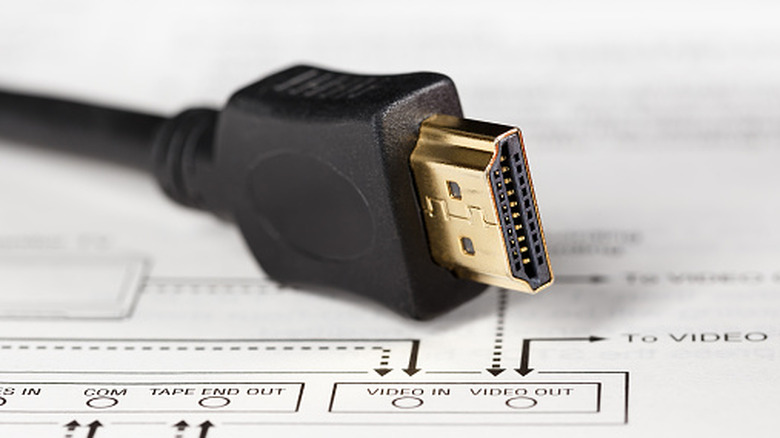
For the longest time, the DisplayPort interface has been technically superior to HDMI thanks to higher bandwidth. Despite that, most smart TVs don't support DisplayPort inputs, and HDMI is the gold standard for virtually all televisions, consoles, and home entertainment systems. The latest DisplayPort 2.1b standard has a maximum bandwidth of 80 Gbps, whereas the competing HDMI 2.1b standard maxes out at 48 Gbps, preventing the latter from transmitting uncompressed 8K content at 60Hz. However, the HDMI consortium is fighting back with the upcoming HDMI 2.2 standard, which offers several improvements over HDMI 2.1, including a maximum bandwidth of 96 Gbps.
The new HDMI interface is expected to arrive with the first wave of compatible devices sometime in 2027, which promise support for 16K at 60Hz, 12K at 120Hz, and 8K as well as 4K at 240Hz. While 8K TVs are admittedly rare, given that all manufacturers except Samsung have discontinued their 8K TV line-ups, HDMI 2.2 can still help gamers run 4K monitors at 240Hz on HDMI cables.
Taking advantage of HDMI 2.2's capabilities requires brand-new HDMI 2.2-certified cables carrying the "Ultra96" label. But even that won't guarantee the full 96 Gbps experience. HDMI 2.2 ports will support all three of the new protocol's speeds, namely 64, 80, and 96 Gbps, and you'll have to dig through the fine print to tell which HDMI 2.2 bandwidth tier you're buying into.
HDMI 2.2 will likely be confusing and practically pointless
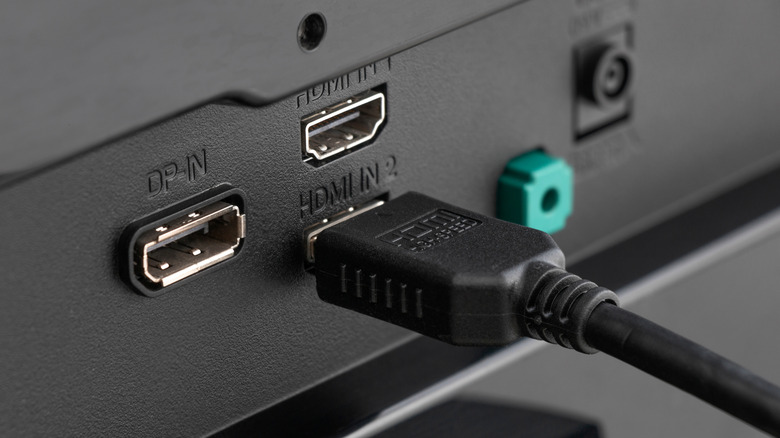
Unless you have an obscenely expensive TV, the HDMI ports on your TV won't all be HDMI 2.1 certified. Most budget televisions — and even some mid-range ones — often have only a single HDMI 2.1 port, with the rest being HDMI 2.0 ports that lack the bandwidth and features required by modern video game consoles like the PlayStation 5. HDMI 2.2 will likely make things worse, fragmenting the protocol into 64 Gbps, 80 Gbps, and 96 Gbps tiers.
Getting the best out of the upcoming standard not only requires investing in new cables bearing the "Ultra96" label, but also a TV that supports the standard's full bandwidth. The "Ultra96" label does not signify the port's bandwidth, and not all HDMI 2.2 ports on upcoming devices are guaranteed to support the full-fat 96 Gbps. A port labelled "Ultra96" could instead cap out at "just" 64 Gbps, stopping it from carrying uncompressed video at resolutions beyond 8K.
The boring truth about HDMI 2.2, though, is the fact that it is more of a future-proofing measure than a practical upgrade to your entertainment experience. The cream of the current generation consoles can only do 4K at 120Hz, which HDMI 2.1 handles perfectly fine. Meanwhile, 8K and 16K content hasn't breached the mainstream yet. Next-generation consoles are expected to take longer to arrive, too, so there's no pressing need to upgrade to HDMI 2.2 this side of hooking up your monster gaming rig to your television set.