

10 Lawn And Landscaping Tools And Kits That Are Almost Always A Waste Of Money
The lawn can be a place of great relaxation and satisfaction. Plenty of tools play a central role in tackling all manner of jobs out in the yard, allowing you to curate the experience you want in the outdoor spaces that surround your home with relative ease. Of course, no outdoor maintenance task is necessarily easy, with the heat, changing weather, and pest issues playing their parts in any job you'll tackle. But with the right tool, it's possible to simplify many of the projects that frequently come across your landscaping to-do list.
Even so, lots of tools you might consider investing in easily fall into the category of gimmicky or frivolous. It's entirely possible to fall for slick marketing tricks that make you think that a new tool can amplify what's possible in the yard, only to find out that the piece of equipment is fairly redundant and really not necessary. Other tools are perfectly well suited to their unique tasks, but when deployed in a residential lawn care regimen, they only really deliver what amounts to overkill, offering a wasteful investment in a tool via a different route. These 10 tools and kits are frequently unnecessary or overpowered for the job of managing your home's outdoor living areas, making them good candidates to skip the next time you're browsing the shelves of your favorite home improvement store for inspiration for your yard.
A lawn mower that's larger than you need
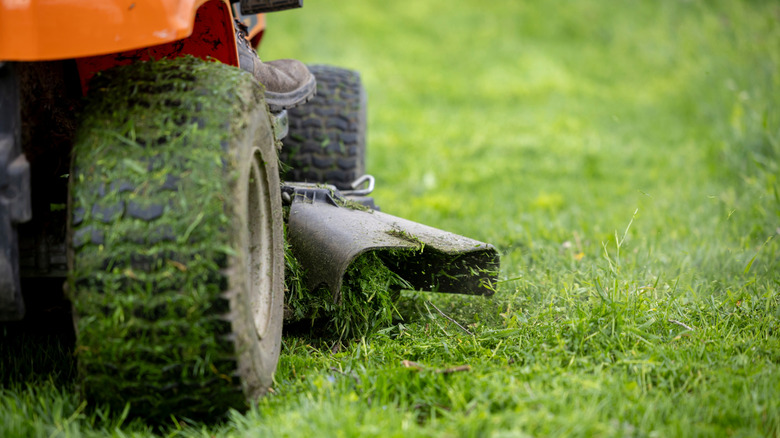
Lawn mowers come in all shapes and sizes. They start at the simple and inexpensive end of the spectrum, with small cutting decks, corded mowers, and even reel mowers that require no power source at all. These tools can be found for fairly low prices, but for that price, you'll have a mower that's less capable of handling the requirements of a large lawn. Every household with a lawn really needs a mower, but not everyone requires a powerful, state-of-the-art tool. There are plenty of good reasons to opt for either a gas or electric mower, and everyone's unique preferences and priorities will be their own. But mowers across the board can offer too much cutting capability or power for your individual household needs, leading to waste when it comes to buying the tool.
If your home has a small yard, a mower with a more slender build can easily handle the cutting tasks you face throughout the growing season. A good starting point for anyone looking for a versatile mowing tool is a tool with a 20- or 21-inch cutting deck. This is a de facto standard for push mowers. Importantly, most homeowners won't require a riding mower to handle routine cutting jobs unless they have a particularly large lawn or mobility issues are at play.
A large chainsaw (18-inch bar or longer)
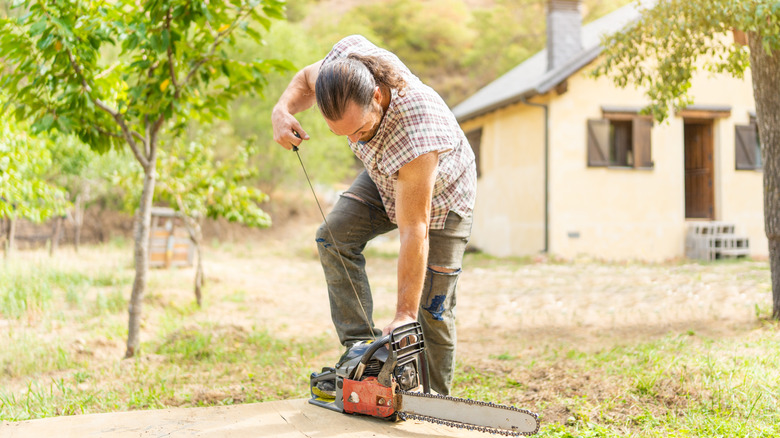
Small- and medium-sized chainsaws are useful tools to have on hand for basic lawn cleanup and for making large cuts through heavy timber. Among some of the more interesting and niche tools you'll find at Harbor Freight is the Hercules Beam Cutter Attachment. It's a chainsaw attachment that links up with a circular saw to power through lengthy cuts that the saw can't handle on its own. This accessory tool adds another wrinkle to the conversation, but it doesn't change the fact that chainsaws are almost certainly the most dangerous cutting implement you'll handle. As a category, chainsaws have one of the worst track records for injuries across the entirety of power tool catalogs.
Chainsaws aren't all created equal, though. True, there are plenty of average and so-so brands within the world of major chainsaw toolmakers, and a lower-quality tool may introduce additional risks that aren't present with a saw featuring faster cuts or enhancements like bucking spikes. But the length of the bar also plays a crucial role in evaluating safety. More importantly for someone looking to buy the right tool, a chainsaw with an 18- to 22-inch bar just isn't necessary. Larger saws are ideal for felling large trees or cutting a heap of firewood into rounds. But basic tasks around the yard benefit significantly from a more mobile saw, and you'll gain cost savings and better safety in the process.
Mulcher/impact shredder
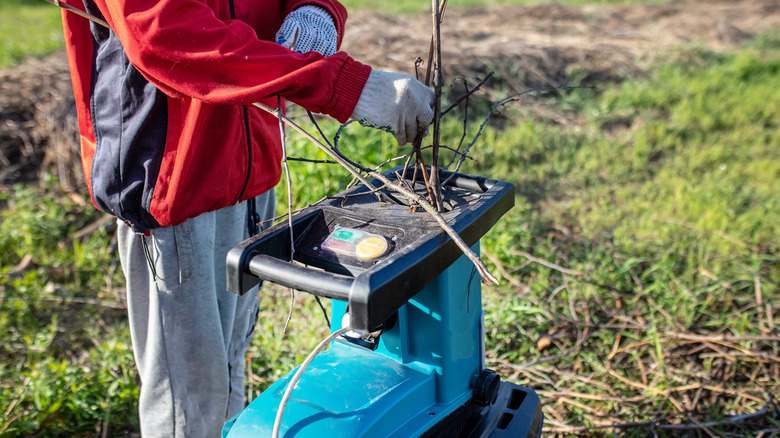
The impact shredder, or mulcher, is a small tool built for residential mulching tasks. The tool is essentially like an office paper shredder, with wider jaws that can handle small tree branches and bush cuttings. Feeding your waste material into the shredder mulches the woody growth, allowing you to bag it up and throw it away more efficiently, or repurpose the cuttings as mulch for your garden beds. The idea is a sound one, but in practice, many people will find that these tools are more work than they're worth.
For starters, in many yards, there just isn't enough material to mulch to provide full coverage for your garden beds. It can act as a nice starting point that reduces your expense when buying mulch, but in most circumstances, you'll still have to make that extra trip to the sawmill or home improvement store and part with at least some of your cash if you want a full layer of this top dressing. Similarly, the effort involved in mulching all the growth you cut away from bushes and trees isn't trivial. Regardless of the end use of the shredded material, you'll spend a lot of time feeding it through the mulcher. It's a neat tool, but one that doesn't fully deliver on the goal that most buyers will be looking to achieve.
Cheap, plastic hand tools
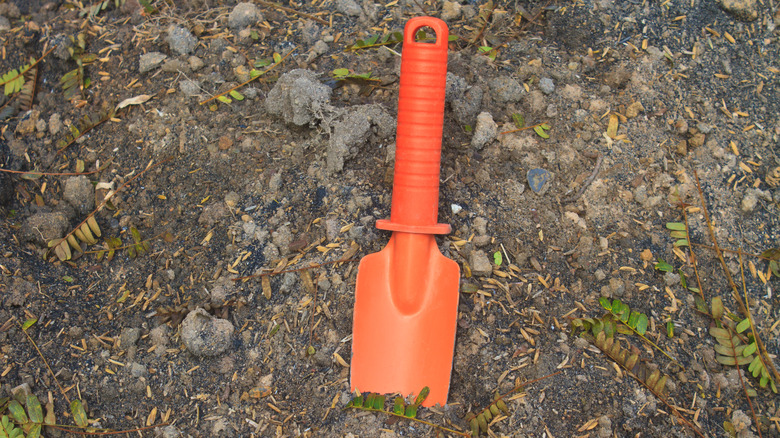
Small, plastic digging tools are particularly egregious when it comes to wasteful spending on lawn equipment. There's plenty of room for a hand rake, action hoe, or spade in any gardener's toolkit. But when those pieces of equipment are made of plastic, you're bound to run into issues sooner rather than later. Plastic digging equipment and other hand tools made from the material should really only be considered toys. They're not capable of standing up to the rigorous demands placed upon them during yard work sessions. Even full-sized metal tools can be broken with relative ease (ask anyone who has had to replace a rake handle or has experienced a cracked shovel head). The yard is full of surprises that frequently come to the surface during digging and planting tasks, including plenty of rocks and sometimes building debris from when the home was originally constructed.
Plastic hand tools are exceedingly easy to break, and after you've mangled your plastic spade or another similar tool, you'll often end up having to make a frustrated trip to the home improvement store for a replacement. Cheap gear is, by nature, not expensive, but the wrong tool for the job can be wasteful no matter how much you paid for it. These pieces of equipment are better left at the beach or in a child's playset.
Moisture meter
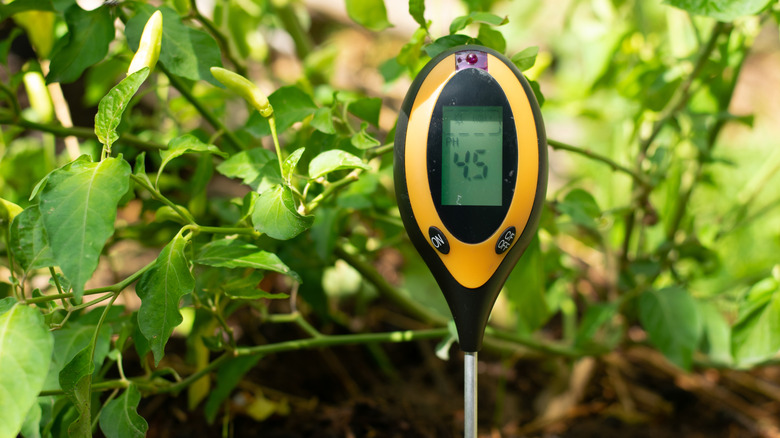
The moisture meter feels like a tool that's worth the cost. It's frequently reasonably priced, and it adds a unique component of scientific knowledge to your gardening pursuits that can be exciting and informative. Moisture meters obviously measure the amount of water present in your growing spaces, and they can give you a clear indication of where your soil stands in this regard.
However, a moisture meter isn't a tool that's actually necessary, especially a unit that doesn't measure other data points as well. Some multifunction tools can tell you a lot about the state of your growing space, from acidity to sunlight and nutrient readings, and of course moisture measurements. But the level of moisture in the soil is often easily gauged with a finger. If you stick your finger in the dirt and it comes out totally clean, you may need to water the garden bed. Similarly, a wet finger returned from the soil means the soil is already moist enough. The look and feel of the earth can tell you a lot about its condition, and a moisture meter is just a fancy way to add numerical values where intuitive and traditional knowledge serve their purpose just fine.
Seed dibblers
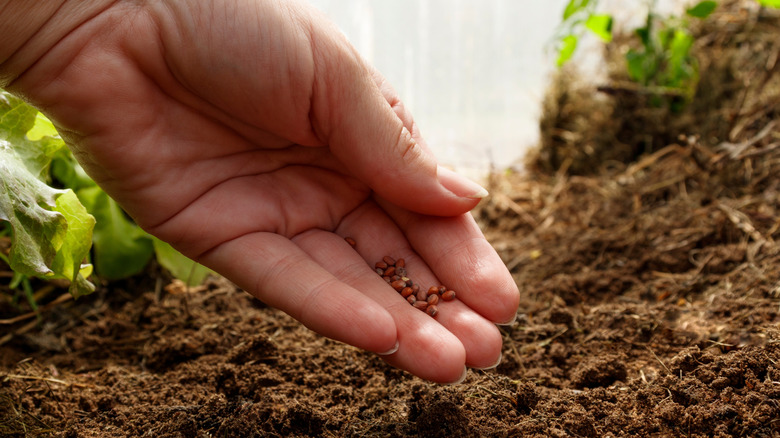
A seed dibbler is a tool that helps make planting a new crop of vegetables, flowers, or other plants easier. This is essentially a handheld spike with a tapered end. It allows you to press into the soil to create a hole for your seeds. Seed dibblers aren't very expensive, considering that they feature no moving parts and are typically made of plastic, wood, or sometimes forged metal. However, even cheap tools of this nature are ultimately unnecessary. The seed dibbler replaces a perfectly good finger that offers more robust feedback and additional sensory cues as you prepare the ground for new seeds to start their journey. Pushing a seed hole into the soil with your finger is just as easy as using a seed dibbler, making this a tool that is wasteful and unnecessary in the same vein as the moisture meter.
The key promise of the seed dibbler is keeping your hands cleaner as you go about gardening tasks. However, it's virtually impossible to keep dirt off your hands while gardening, even when using hand tools for much of the work. You're almost certainly going to end up with a healthy coating of dirt anyway, and if you want a support tool to help create seed holes, there are other options that outclass the dibbler. These include tools like digging trowels and gardening blades that can perform this function as well as a host of others, giving users a variety of ways to replace the singular and relatively redundant functionality of this piece of equipment.
Aeration shoes
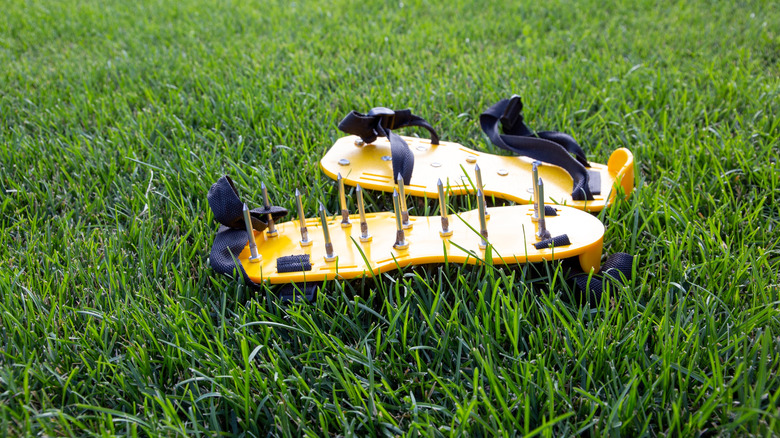
An aerator is a great tool to have in your shed or garage. This tool helps promote healthier growth throughout the lawn by creating access channels for oxygen, water, and soil amendments to penetrate down to the root layer with ease. There are lots of options when it comes to aeration tools, and long-handled spike aerators are among the products that many home improvers may not have realized existed. Aeration shoes are another choice, but these frequently fall short in terms of reliability and effectiveness.
Many lawn maintainers may have seen this attachment tool floating around online before. The basic framework of the tool operates in much the same way as snowshoes or climbing crampons. The aerator spikes are attached to a plate that attaches to your shoes. Once situated, users walk around the yard, producing the aeration holes they require across the lawn. The spikes on these tools are typically much thinner than the aeration tines found on traditional alternatives, and you're unlikely to find hollow tines on them, limiting them to only one type of aeration method. Both powered and classic handheld aerator tools are readily available from many home improvement stores, and they're both good options for improving your lawn conditions. The spike shoe option, however, really isn't.
Large greenhouse kits
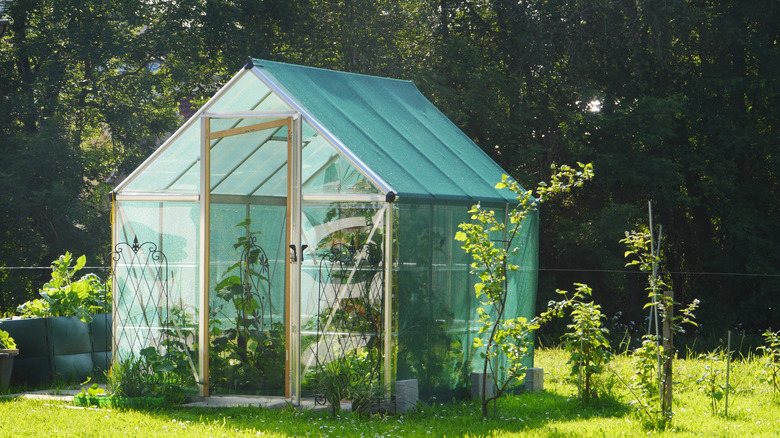
Greenhouses are frequently high on the list for aspiring growers. Adding a greenhouse or even a cold frame to your yard allows you to extend your functional growing season long into the colder months when standard outdoor growing is no longer viable. Greenhouses offer the ability to continue producing fruits and vegetables throughout the year, giving you the freedom to plant new crops or cultivate flowers and ornamental plants without having to worry about the time of year or the weeks remaining in a target season.
Among the more expensive options, many people considering a greenhouse will undoubtedly have considered a kit from their nearby hardware store or an online retailer. Kits typically come with prefabricated segments and instructions for putting the pieces together at home. But they're significantly more expensive than they probably should be, given that you'll still have plenty of work to do before you can start growing. Similarly, buying a kit limits your choices to the sizes available from a catalog. Instead, you can build your own greenhouse to fit your space precisely for a massive price reduction. Greenhouses can be built with basic materials, including PVC or timber frames and plastic sheeting. You can make your greenhouse as elegant or simple as you desire while creating exactly as much growing space as you need and keeping the costs to a minimum.
Stand-up weeders
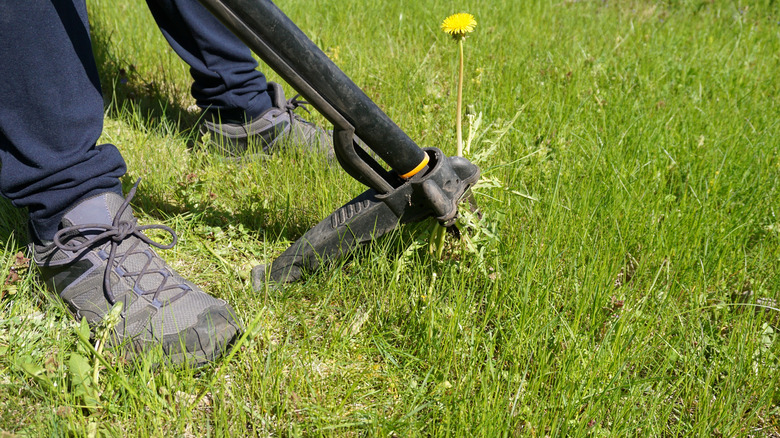
Stand-up weeders are admittedly a valuable tool in certain circumstances. These tools feature weeding heads attached to the end of a long- or medium-length pole. This allows the user to pull weeds while standing up instead of having to bend down to tackle unwanted growth. One option for this sort of tool can be found for around $50 at Home Depot, and it's a tool that utilizes a rocking motion to cut, grab, and pull weeds out from deep beneath the surface of your grass layer. Lawn care can be a painful chore for those with mobility issues or trouble bending down, so this tool can be a valuable addition to many garages. However, those who don't need the added reach to help protect their back and knee health can do without the added expense.
Importantly, the tactile feedback you receive when grabbing and tugging on a weed's stem helps you apply the right amount of pressure and pull in the right direction to remove the weed completely. You can't get this same feel while holding a weeding tool, meaning it's often impossible to know for sure that you've extracted the whole thing. As a result, weeding tools are generally less efficient than pulling weeds by hand. As an added bonus, your hands are free, making any tool you choose to invest in for this task more expensive than the classic alternative.
Raised garden bed kits
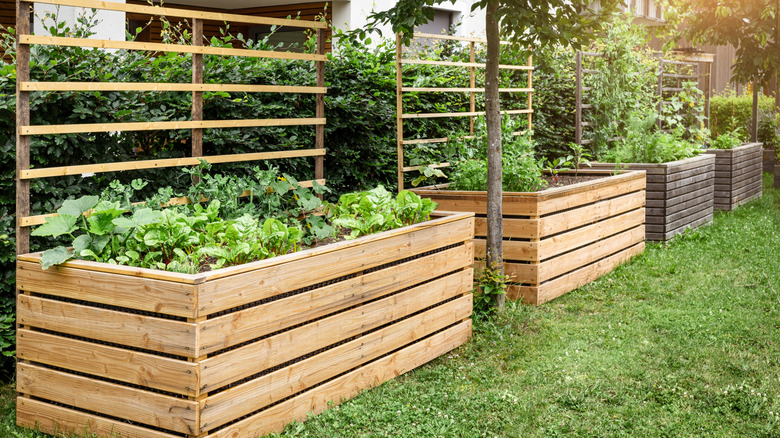
The raised garden bed is another yard staple that can be purchased as a kit for a fairly decent chunk of change, or built yourself at a nice discount. These growing structures are unique since they can be built from just about anything. Old scrap wood is a favorite for many gardeners working on a budget, and a classic example of this involves repurposing old pallets. Industrious upcyclers can frequently find pallets in their local area for free, meaning it's possible to make the growing spaces you desire for just the cost of the screws that will hold the structure together.
Old steel troughs are another common sight when it comes to raised growing areas, and for a bit of added visual flair, you might consider timber sleepers. This building material will cost a little more than some other options, but it's thick enough to make the construction process truly foolproof and requires little to no support beyond your chosen fasteners to tie each piece together firmly. More importantly, by ditching the kit approach to this staple of the outdoor growing area, you can customize the sizes of your raised beds to fit the exact needs of your lawn, giving you complete control over the build from start to finish.