

3 Tundra Engines You Should Steer Clear Of
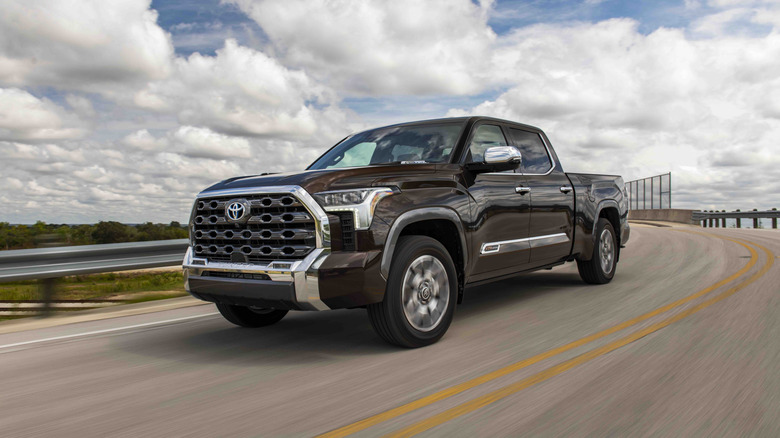
There are plenty of examples that show how durable the Toyota Tundra can be. Various studies name the full-size truck as one of the most reliable you can buy full stop, helping to uphold the manufacturer's outstanding reputation for dependability overall. But while a lot of Tundra pickups may never face any major problems, the engines in some of these Toyota vehicles over the years look to be more troublesome than others when looking at the data and complaints submitted by owners.
Instead of constantly switching out the engines every time the truck gets updated, Toyota has historically retained the same powerplants for long periods of time, instead improving them and ironing out faults as the years go by. Subsequently, a lot of the issues we'll cover here revolve around the early iterations of engines used in specific Tundra model years. Here's a closer look at three that should be avoided if possible, based on owner feedback from owners and data from the NHTSA.
2005-2008 4.7L V8
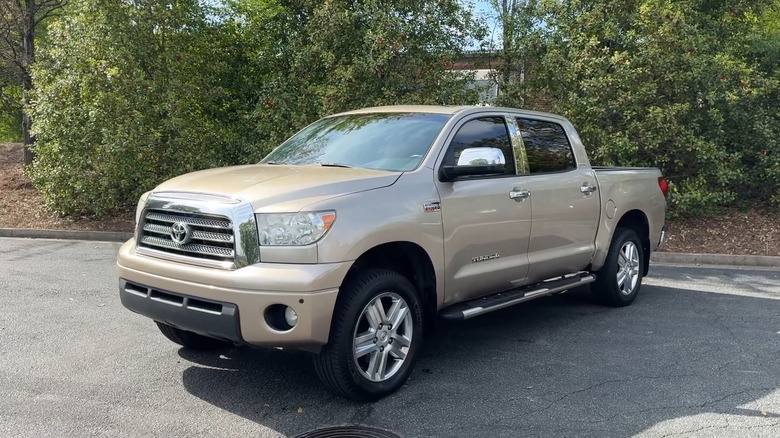
Updated for the 2005 model year, this specific version of the 4.7L V8 available with the late first-gen and early second-gen models is a mixed bag. On one hand, there are quite a few examples of this engine lasting for thousands and thousands of miles through proper maintenance (including the million-mile example), so the issues that we'll cover here most likely won't affect every Tundra that is motivated by the 4.7L V8. However, on sites such as Car Complaints and the NHTSA's website, there are still a few things certainly worth noting.
In particular, Tundras between 2005 and 2008 are the ones that receive the most negative attention when they come with the 4.7L under the hood. And the most commonly reported issue is the secondary air pump failing. Owners report their trucks going into limp mode, accompanied by the standard whining noise that air pumps tend to make when they're on the way out. In the Tundra's case here, it can cost thousands of dollars to get it fixed. There was never a recall for this, and Toyota didn't cover earlier models under the extended warranty after complaints started piling up.
2010-2012 5.7L V8
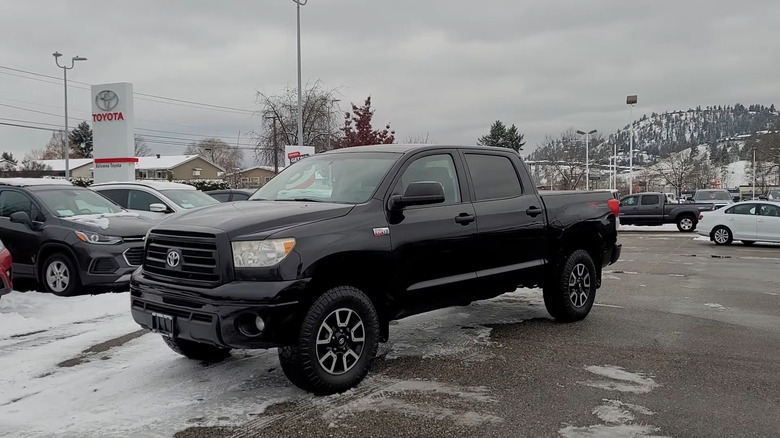
By 2010, Toyota had phased out the 4.7L in favor of a new 4.6L V8 for the 2010 model year. And alongside the new option, the 5.7L V8 that was introduced a few years before that remained in the lineup as the main option. As a first-gen engine at its core, the 5.7L also had a fair few complaints about air pump issues, and while it's not as commonly reported as with the mid-2000s 4.7L engines, it's still worth looking out for. Similar to the 4.7L, this can also be quite expensive to fix. On Car Complaints, there are also reports of owners needing to replace the ECU after sudden shutdowns of the engine.
Another issue that often left owners initially confused is how fast the 5.7L V8 would drain through quarts of oil much quicker than normal. More often than not, the root cause is a leak somewhere. These leaks can often be found in the cam tower and cylinder head. While noticing and diagnosing the leak can save you a little bit of money, some owners do report the leaks causing complete engine failure, which is far from affordable to resolve. Upwards of $10,000 isn't uncommon for a full, new replacement. For these issues, model years 2010 to 2012 look to be the ones to avoid.
2022-2024 3.4L i-FORCE V6
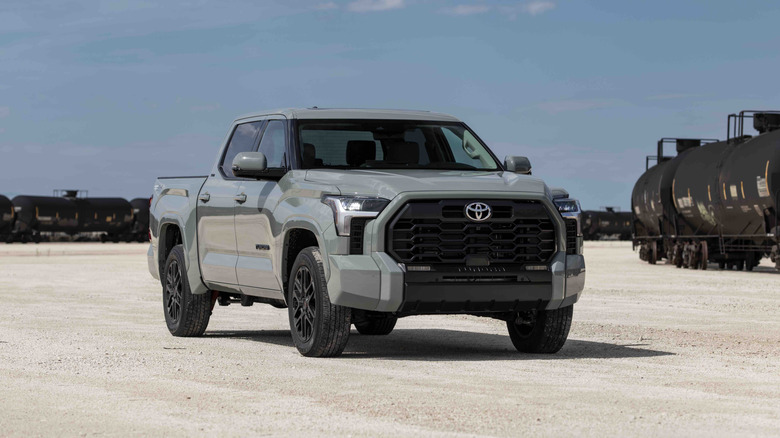
Tundras built in the 2020s aren't short of recalls to say the least. And despite being newer than the other engines on this list, the 3.4L i-FORCE V6 engine may be the most troublesome out of the lot here. The problems that this engine still face are also a little different from the prior ones due to it not usually being down to individual parts failing by themselves, but rather a widespread manufacturing error leaving debris within the engine that can subsequently cause various parts to fail, with the main bearings being the primary victim.
Toyota has put out a few recalls for models between 2022 and 2024, with some Lexus SUVs like the GX also having to be brought back in due to using the same engine. However, some engines still haven't been sorted out well into 2026. Outside of the manufacturing recalls, there are still some isolated reports of more specific problems as well. On the NHTSA's website, some owners say that one, if not both, of the non-hybrid i-FORCE's turbochargers fail, with the issues being traced to faulty wastegate actuators on the turbos. Even worse, full engine failures are also reported, sometimes without knowing the root cause beforehand.