

What Is The 35-Foot Rule For Hot Work & Why Is It Important?
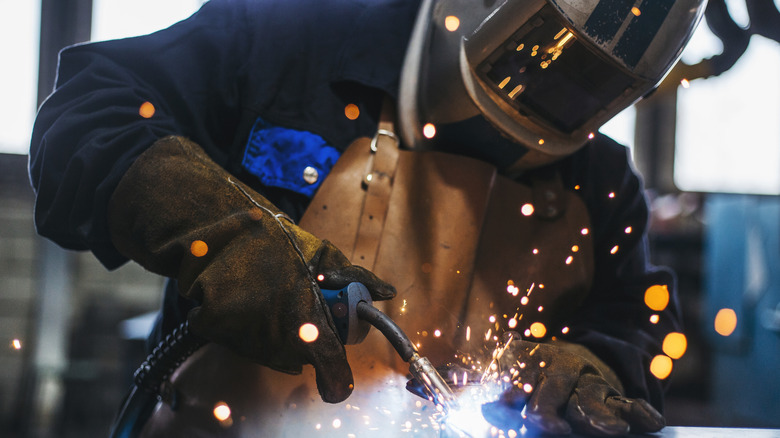
There are some simple rules that tradespeople have to remember, such as the 90-minute rule with concrete. In hot work, essentially any job that requires an open flame or creates a risk of flying sparks like welding, there are some rather comprehensive safety measures that need to be adhered to, including the 35-foot rule.
The 35-foot rule is a way of ensuring that volatile objects or pieces of equipment that may be in the vicinity are at a safe-enough distance when the work is being done. Specifically, they must be at least 35 feet away from the source of flame that is being worked with. The U.S. Department of Labor's Occupational Safety and Health Administration (OSHA) states that there are also certain conditions in which fire watchers are also necessary when cutting or welding, including when working with "appreciable combustible material" in construction contexts within 35 feet. This is also the case with certain combustibles that are further away than this but are at risk of igniting from flying sparks.
The frequency of fires, as the U.S. National Fire Protection Association makes clear, demonstrate just why this is so important. Between 2017 and 2021, just short of 4,000 U.S. structural fires associated with hot work were reported, with approximately 19 lives per year lost across the country. The more stringent and comprehensive safety measures are made, and the more universally they're employed and enforced, the more protection professionals have while performing hot work.
Why a 35-foot rule is so important
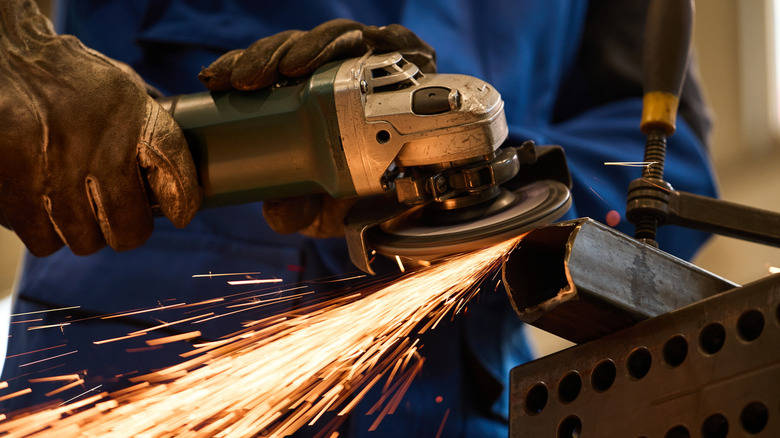
A hot work permit is typically required for professionals in these areas, determining exactly the type of work being done and the means by which to do it. Risk assessment work must be completed, for example, to protect the vision of welders while working with their equipment, or electricians from any electrical hazards.
The U.S. National Fire Protection Association has a series of provisions known as NFPA 51B, which is its Standard for Fire Prevention During Welding, Cutting, and Other Hot Work. It details the 35-feet rule, as well as some other official measures it employs to reduce the risks of fire across U.S. workplaces and homes.
There are several other crucial means of protecting oneself when completing this kind of work. They include, of course, personal protective equipment (PPE), checking for and eliminating any loose wires or other dangers in the vicinity, and ensuring that the work area is sufficiently ventilated. It isn't always possible to remove every danger that a team may face on the work site to an appropriate distance, which is why there are exceptions and alternative measures to mitigate the danger as best possible.
How the 35-foot rule is adapted to particular situations
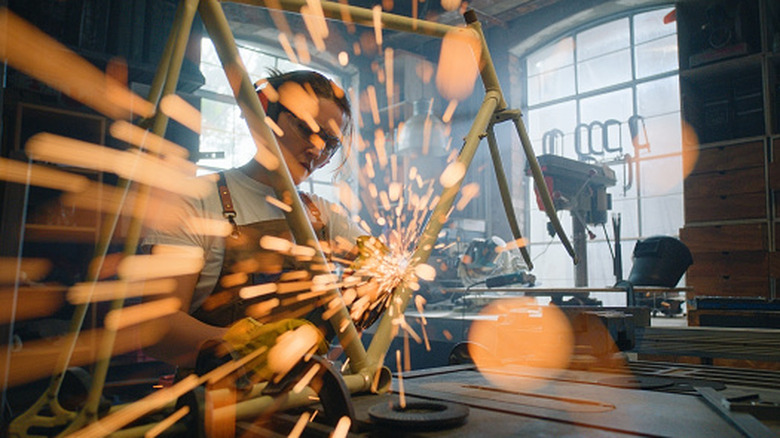
The nature of the work and the placement of a given obstacle might mean that there's no choice but to "break" this well-established safety rule. OSHA, along with its basic safety rules for different types of tools, shares that alternative measures can be used instead. Cornell University notes that, beyond always having the correct class of fire extinguisher in hand (and the presence of a Fire Watch where distance can't be maintained), other critical measures like covering a nearby combustion risk in an appropriate material can be taken. "Protect combustibles by a listed or approved welding curtain, welding blanket, welding pad, or equivalent," Cornell explains.
When it comes to fire, it's also vital to remember that it can break out after you think the danger has passed. Because of this, it's also required to maintain a Fire Watch for no less than one hour after the work is completed, lest blaze develop from overlooked embers.
Fire Watchers are also the people who monitor the work as it's being undertaken and, where possible, are the first line of defense for putting out any sparks before they have a chance to grow. The Fire Watch role is far from simply passive: They can stop the work they're overseeing if they deem it contrary to regulations or liable to become so.