

4 Common Problems With STIHL Leaf Blowers
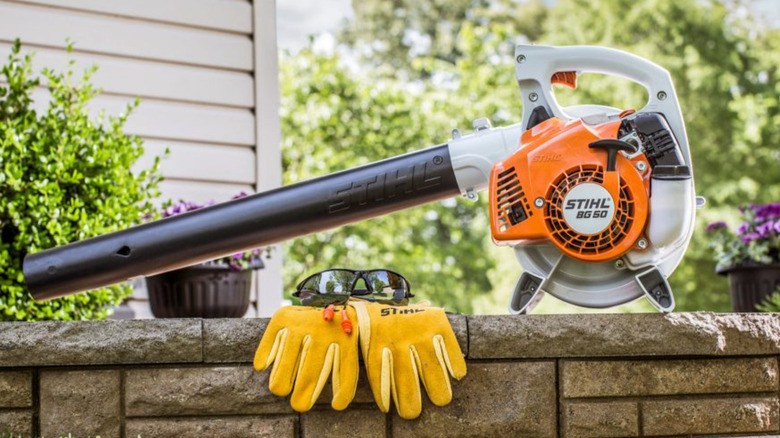
Stihl may be best known for chainsaws, but its leaf blower lineup is nearly as broad, ranging from compact handheld machines to powerful backpack models built for large properties and commercial crews. It includes both battery-powered tools and gasoline models from the BG and BR families, with the latter relying on small engines designed to run at high speed for extended periods. Leaf blower use cases are not limited to a few weekends of clearing autumn leaves, either — homeowners have found many practical uses for a leaf blower throughout the year, from clearing grass clippings off patios and driveways to drying cars and moving light snow.
Stihl blowers are often expected to handle years of work, but when something begins to go wrong, the first signs are not always obvious. A small change in the way the machine starts, runs, or sounds can point to a much larger problem developing inside. More often than not, power-tool problems come down to poor maintenance, user error, old fuel, or normal wear. However, the four problems on this list have appeared often enough in owner discussions to warrant a closer look at what fails, how it shows up, and what may be causing it.
Starting problems with gas-powered Stihl blowers
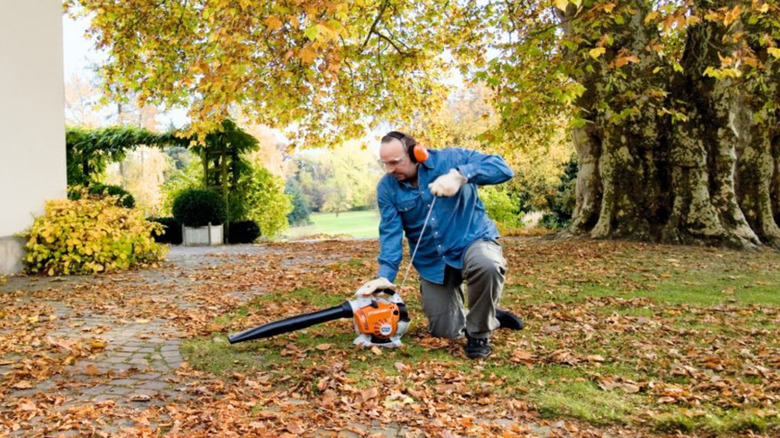
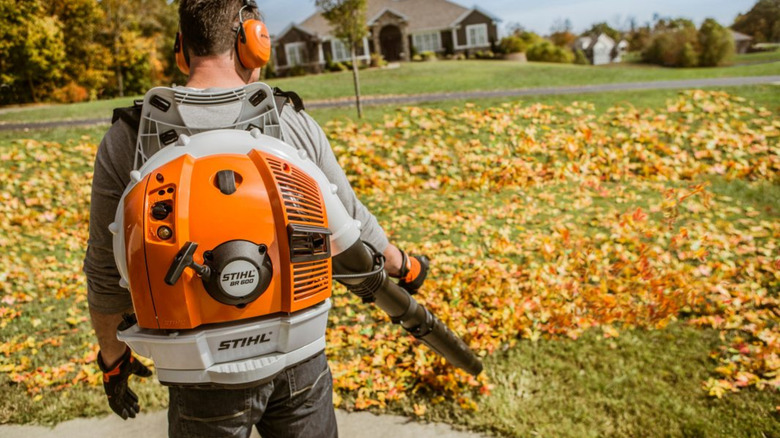
Starting trouble seems to be one of the most common problems with Stihl's gasoline-powered leaf blowers, especially the handheld BG-series machines and larger backpack models such as the BR 600 and BR 800. The problem starts with these Stihl leaf blowers going from firing in one or two pulls to requiring several minutes of repeated pulling. Some owners on Reddit report their Stihl blowers needing repeated priming before they fire, while others say theirs start on full choke but stall as soon as the choke is opened. The primer bulb itself can also become part of the starting struggle, barely filling, pulling in mostly air, or failing to move fuel at all. This can leave the blower unable to start, or allow it to fire only briefly before shutting off again.
Some cleanup jobs require a blower to be switched off and restarted several times as the operator moves between sections of a property, but owners report certain models like the BR 800 may run normally for 15 to 20 minutes and then refuse to restart after even a short break. Cold starts can be just as troublesome, with the engine surging or stalling at idle and refusing to restart unless the throttle is held fully open. Old fuel is often the first suspect, as gasoline can begin deteriorating within 30 to 60 days. Meanwhile, Stihl also warns that fuel with more than 10% ethanol can damage the system. The company also mentions that, even with fresh fuel, the engine can still struggle if the fuel filter is clogged, the air filter is dirty, or if the choke is left engaged after the engine fires and floods the engine.
Power loss
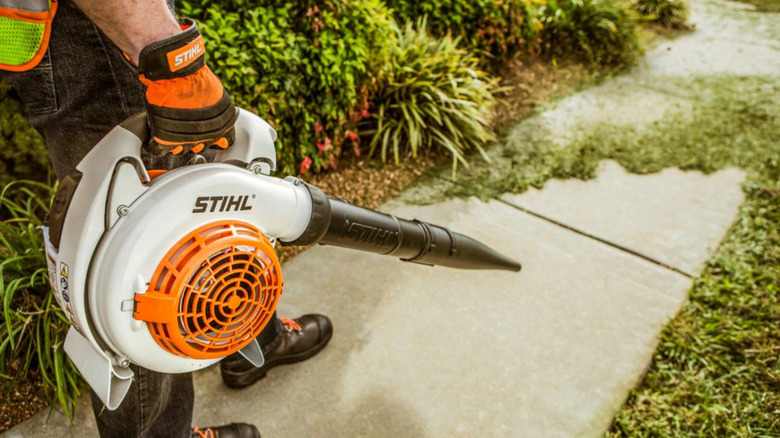
Stihl leaf blowers use a spark-arrestor screen — a fine metal mesh fitted inside the muffler to catch hot carbon particles before they can leave the exhaust and ignite dry leaves or grass. The problem is that the same mesh can gradually collect soot and carbon particles that are too big to pass cleanly through its tiny openings. As the buildup spreads and clogs up the screen, exhaust gases have less room to escape. The issue is that the engine may still idle with little complaint because it produces relatively little exhaust at low speed. But once the throttle opens and rpm rises, the greater volume of exhaust cannot flow out freely, causing the blower to bog down and lose power.
Some owners are reporting their Stihl leaf blowers losing enough power gradually that the machine can barely move any air, while some may struggle to spool up, surge or stall under full throttle. Severely blocked machines may eventually refuse to run properly at all. According to owners on Reddit, the problem often involves the BG 86, which is otherwise considered one of the best Stihl leaf blowers for home use. Because these symptoms closely resemble a fuel-delivery problem, the spark arrestor is sometimes overlooked while the fuel, filters, spark plug, or carburetor are checked first. When the clogged screen is the main issue, cleaning it can restore full-throttle operation almost immediately. If it makes no difference, a dirty air filter or a worn spark plug are the other likely causes.
Valve problems
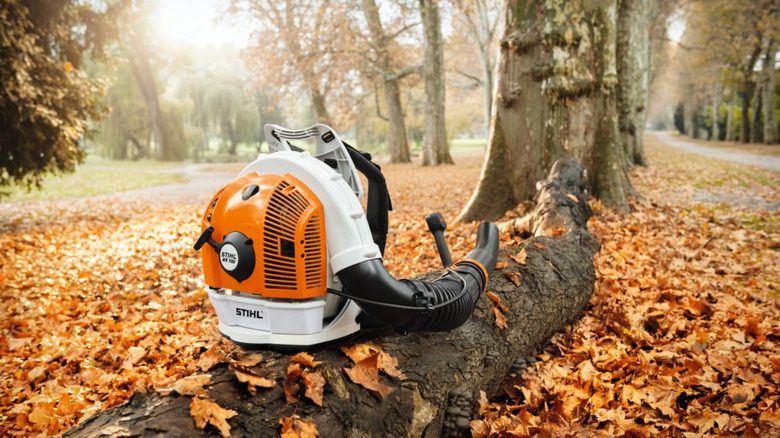
While Stihl's 2-MIX two-stroke engine powers the most powerful modern chainsaw, the brand's 4-MIX engine features in its BR 600, BR 700, and BR 800 leaf blowers. It burns the same gas-and-oil mixture as a two-stroke, but works as a four-stroke, with valves opening and closing to control how the engine breathes. A cam, pushrods, and rocker arms control those movements, opening the valves to let the fuel-air mixture in and exhaust gases out. In some of Stihl's 4-MIX-powered leaf blowers, valve clearance can become too tight or too loose, causing a bunch of problems.
The first signs of a valve problem can include an unusually hard pull-start, an idle that surges or will not settle, and weaker performance as the engine struggles to breathe properly. Some blowers with valve issues may also develop an unusual ticking or clattering noise from the engine. In more serious cases, repairers have found carbon buildup around the valves.
Possible causes can include wear in the cam, rocker arms, or pushrods, which can reduce valve lift and prevent the valves from opening as far as they should. Carbon collecting around the valve faces and seats can create the opposite problem, preventing the valves from sealing tightly enough to maintain compression and leaking air as a result. According to Stihl, poor-quality or incorrectly mixed oil can make those carbon deposits worse, and continuing to run the engine in that condition can gradually worsen wear throughout the valvetrain.
Flywheel and loose screws
Flywheel-related complaints appear less common than fuel and valve problems, but they seem to affect both Stihl BG handheld and BR backpack blowers. Mounted to the crankshaft behind the starter housing, the flywheel helps keep the engine rotating smoothly while its magnets work with the ignition module to produce spark. Because it spins at engine speed with little clearance around it, even one loose screw can open a whole new can of worms.
On some BG handheld models, a screw beneath the flywheel can back out and contact the spinning assembly. The blower may first develop a rattling sound before the screw damages the fins or jams the flywheel, leaving the starter rope too hard to pull and the flywheel completely locked. Some BR backpack blowers can suffer a more destructive failure when loose hardware sticks to the flywheel and is carried into the ignition coil. The impact can break the coil mount or crack the engine housing, sometimes requiring a new crankcase or complete engine assembly.
In several Stihl blowers like the BG 86, BR700, and BR380, the flywheel key can also shear off, allowing the flywheel to slip out of position and disrupt ignition timing. The engine may refuse to rev or backfire and fail to start even when fuel and spark are present. Repair shops have traced the problem to vibration gradually loosening fasteners behind the flywheel, especially when they were not tightened properly to begin with. On some BR models, mounting grommets can reportedly also wear their holes larger and fall into the flywheel area. Flywheel keys can shear when the retaining nut loses its clamping force, allowing the flywheel to shift on the crankshaft.
How we sourced this data

To find the problems Stihl leaf blower owners encounter most often, we reviewed discussions across Reddit and outdoor-power-equipment forums covering handheld BG models and larger BR backpack blowers. We looked for the same complaint appearing across multiple posts and machines. However, similar symptoms do not always mean the same thing. A blower that had trouble starting could be struggling to draw fuel, while another may have a loose fastener jamming the flywheel and preventing the starter cord from moving. We therefore traced each report back to the component involved before grouping related complaints together.
Finally, we checked Stihl's manuals, product information, and maintenance material to verify how the affected parts are supposed to work and what can cause them to stop working properly. Where Stihl offered little public guidance, such as with loose fasteners behind the flywheel, we relied on independent repair discussions and diagnostic reports to understand the failure.