

Insta360 Luna Ultra Vs DJI Osmo Pocket 4: Which Brings The Best Footage For Your Buck?
We may receive a commission on purchases made from links.
Integrated-gimbal hand-held cameras are something of a nascent phenomenon, one which has been slowly growing in popularity since the original DJI Osmo launched way back in 2016. That was a large, clunky device by today's standards, but it truly was a herald of things to come. These cameras didn't really hit the mainstream until DJI launched the Osmo Pocket 3 a few years ago, finally achieving a key sweet spot between portability and image quality.
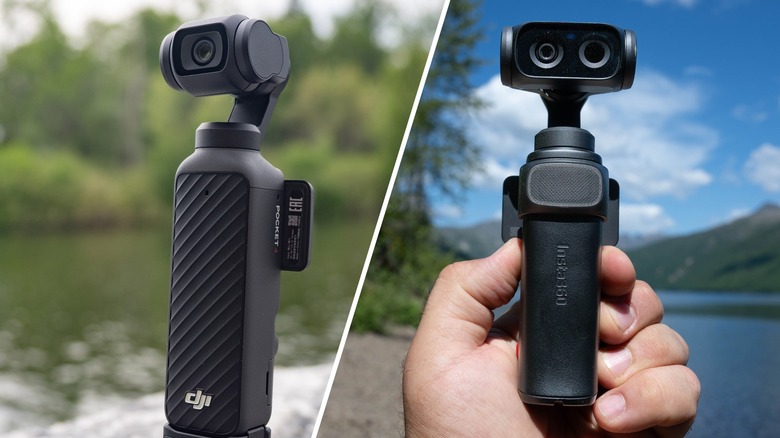
Fast-forward to 2026, and DJI finally has some competition. The Pocket 4 now packs an even larger sensor than the Pocket 3, making it a worthy (if somewhat pedestrian) upgrade to its predecessor. However, DJI no longer rules the roost in solitude, as fearsome competition now exists in the form of the Insta360 Luna Ultra. The Luna Ultra really ups the game with a secondary telephoto camera, and a detachable remote control. It's great to see another manufacturer enter the space with an innovative product.
Both Insta360 and DJI provided products for the purposes of testing. DJI also covered travel expenses for me to travel to Canada for the opportunity to thoroughly test the Pocket 4, due to the current difficulties preventing DJI from shipping to the U.S.
Insta360 delivers the best image quality
Both the Insta360 Luna Ultra and the DJI Osmo Pocket 4 feature 1-inch sensors, and produce extremely high quality video as a result. However, the Luna Ultra has a major advantage over the Pocket 4 in that it is also equipped with a second camera featuring a telephoto lens. This takes the Luna Ultra from being just another wide-angle vlogging camera, and turns into an incredibly versatile video tool. While the secondary telephoto camera in the Luna Ultra isn't as good as the primary camera with its larger sensor, it still produces a very nice image. More impressive still, the Luna Ultra has a digital zoom functionality that is shockingly high quality. Even at its maximum 12X range, the digital zoom still produces a level of quality that, in the right lighting conditions, is good enough to be something I regularly use.
The Pocket 4 still produces good image quality, and some users may prefer the color science of this camera to that of the Luna Ultra. However, after recording a ton of test footage from both cameras, I have to say I do prefer the footage I get from the Luna Ultra to that of the Pocket 4. Both cameras provide a LOG profile for greater post-processing flexibility, but the Pocket 4 does surpass the Luna Ultra in terms of slow motion, being able to record 4K at 240fps, compared to the 4K 120fps maximum of the Luna Ultra. However, the Luna Ultra can film video at up to 8K resolution, while the Pocket 4 is limited to 4K.
DJI has the more sophisticated software
On the software side, the Luna Ultra is definitely a first generation, at least compared to the Pocket 4. The lack of a programmable motion-timelapse feature in the Luna Ultra is a severe limitation for a camera with an integrated gimbal. While Insta360 is working on implementing this feature, it's not there yet, so as of this writing, the DJI Osmo Pocket 4 does get a distinct advantage in this regard.
That's not surprising given how much time DJI has had to develop software for this type of camera. If you consider that integrated-gimbal handheld cameras are basically drones without the propellers, then it is reasonable to say that DJI has been working on related tech for a very long time indeed. It should come as no surprise that they can do a bit more in this regard than Insta360 in this particular genre. With that said, Insta360 isn't as far behind as you might expect in software design for integrated gimbal-cameras. Outside of motion-timelapse functionality, the Insta360 Luna Ultra has a robust feature set, and I actually prefer the on-screen interface they've developed to that of most other camera manufacturers.
Integrated remote control gives the Luna Ultra an extra layer of versatility
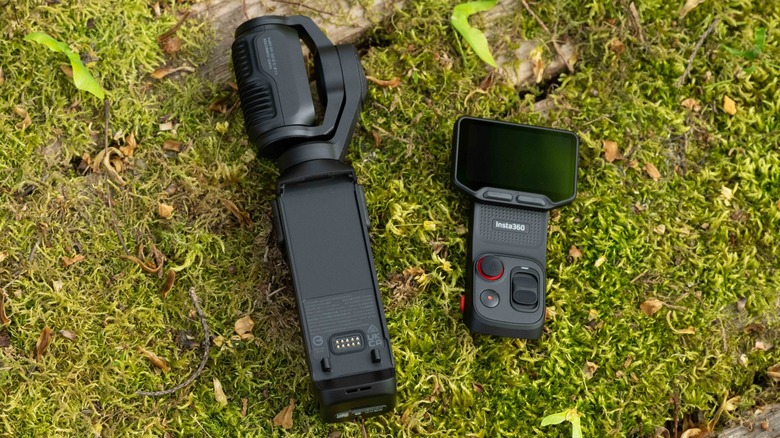
Beyond the dual lens design, another key innovation of the Insta360 Luna Ultra is its integrated remote control. The entire screen and control panel of the Luna Ultra detaches, enabling seamless remote viewing and control of the camera. I used this for a professional video shoot, and it enabled me to control the camera and use the digital zoom function in combination with subject tracking to get a tight headshot from an angle that would otherwise have been impossible to access while the event was occurring.
A caveat here is that the detachable modular design of the Luna Ultra does come with some inherent durability concerns. I have on several occasions seen onscreen warnings telling me that the contacts between the camera and the remote control module were dirty, requiring me to detach and reattach the remote before I could continue using the camera. This vulnerability to dust also potentially indicates a higher level of vulnerability to water ingress. Additionally, the remote does represent a battery drain to the camera itself. That's not a problem for the camera, given that it has plenty of battery life, but the battery life of the remote control itself is very limited while it is detached.
I have a fair amount of confidence in the durability of the Pocket 4 by contrast, given all the crazy adventures I've dragged its predecessor (the Pocket 3) on. Neither camera is meant to be truly rugged and durable, but I have more confidence in the Pocket 4 when it comes to more hazardous and dirty situations.
U.S. restrictions make obtaining DJI products difficult in the states
Absurdly, the U.S. views DJI products as a threat to national security. Speaking as someone who has been testing, reviewing, and using these products on a daily basis for over a decade, that is obviously ridiculous. The true motivation for what amounts to a ban on DJI products is difficult even to speculate on, as there seems to be no real advantage to any party involved in the situation. The upshot, however, is that obtaining the latest and greatest gadgets from DJI isn't easy, and it's definitely not cheap.
 Andy Zahn/SlashGear
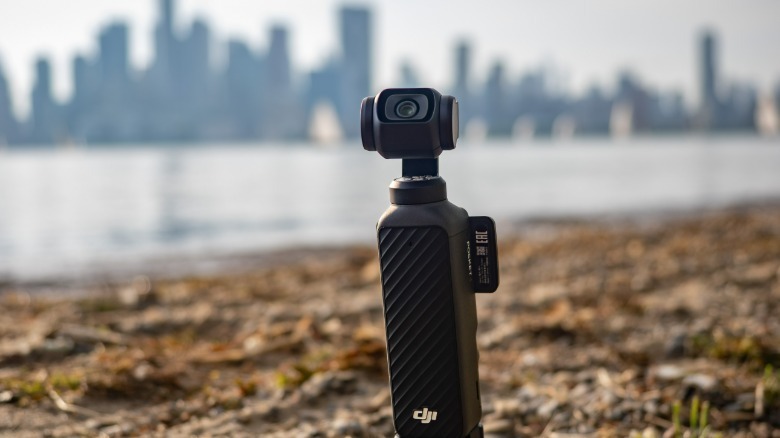
As of this writing, the Pocket 4 is seemingly only available through third party sellers at a significant markup. The best deal I've seen so far is $659 for the DJI Pocket 4 on Amazon, which is nearly $200 more than what it should cost.
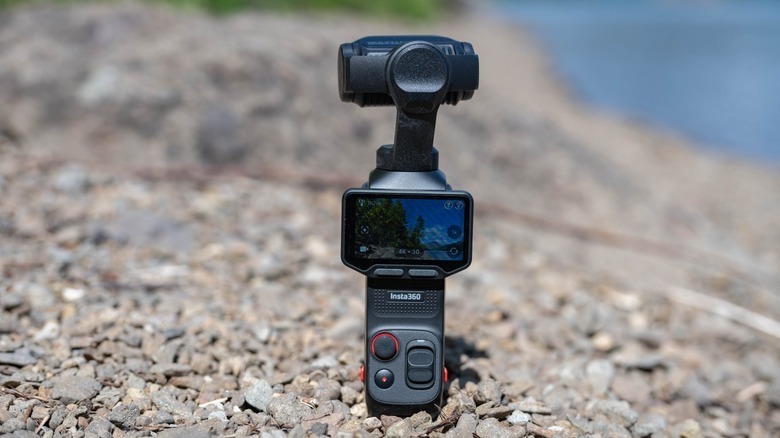
By comparison, the Insta360 Luna Ultra starts at $769 available directly from Insta360. At only $110 more than the Pocket 4 (for those in the U.S.), the Luna Ultra is clearly the better value due to the zoom function and integrated remote control. However, if you are somewhere where the Pocket 4 is available for its MSRP of $499, there is a definite argument to be made for the Pocket 4 as a comparative budget option.
 Andy Zahn/SlashGear
If you're OK stepping beyond the retailers most people are used to, it appears that the Pocket 4 is available on AliExpress for $545, though even at that the comparative value of the Pocket 4 to the Luna Ultra is degraded. However, I advise caution if you plan to try purchasing a Pocket 4 in the U.S. The restrictions on these devices, the lack of official availability here, and the potentially sketchy nature of the sellers listing them are a risk I personally would hesitate to take.
Conclusion
Even if U.S. restrictions hadn't thrown a spanner in the works, I would probably recommend the Insta360 Luna Ultra over the DJI Osmo Pocket 4. Thanks to its secondary telephoto camera and its detachable screen, it is a much more versatile device, one which breaks the mold of what a pocket-size camera is capable of. If I could own and use only one camera, then I would probably choose the Luna Ultra, simply because it's the only device that can do everything I need it to without significant compromises.
This is not to say the DJI Osmo Pocket 4 is at all a bad camera. Far from it. The Pocket 3 was for years the camera which was always by my side, more so even than my Nikon Z8. The Pocket 4 is a refinement of what is already a well proven winning formula, and you can't really go wrong with it.
Ultimately, two factors will likely make your decision of which camera to choose. If you live in a country where the Pocket 4 is available at MSRP from a reputable seller, then the lower price tag is certainly compelling. If you're in the U.S., then I would highly recommend spending a little more to buy the Luna Ultra.