

5 Car Brands That Are Bringing Back The V8 Engine
Not too long ago, the entire car industry felt a massive shift toward electrification. At the time, it seemed like the days of the internal combustion engine were numbered, with EVs and hybrids poised to take over. That belief had backing: the European Union set a target for zero CO2 emissions from all new cars and vans sold from 2035 onward, effectively banning the sale of new gas and diesel cars by that date.
Still, the EV transition didn't play out the way the EU hoped, and the bloc has since walked that promise back. The European Commission now wants to scale the requirement down to a 90% emissions reduction rather than a full 100% cut — a softening automakers lobbied hard for and environmental groups have sharply criticized, saying it undermines climate goals.
Either way, the push toward an all-electric future has made automakers adjust course. Mercedes-AMG, for one, swapped the C63's V8 for a turbocharged four-cylinder plug-in hybrid, and the new car ended up roughly 882 pounds (400 kilograms) heavier than its predecessor, all while lacking the V8 character that made the C63's name.
When talking to Motor1, one Mercedes-AMG representative admitted the new powertrain "failed to resonate with our traditional customers." It's just one example, but it captures a broader mood: enthusiasts want their power the old-fashioned way, and some automakers are listening.
Mercedes AMG and luxury sedan V8
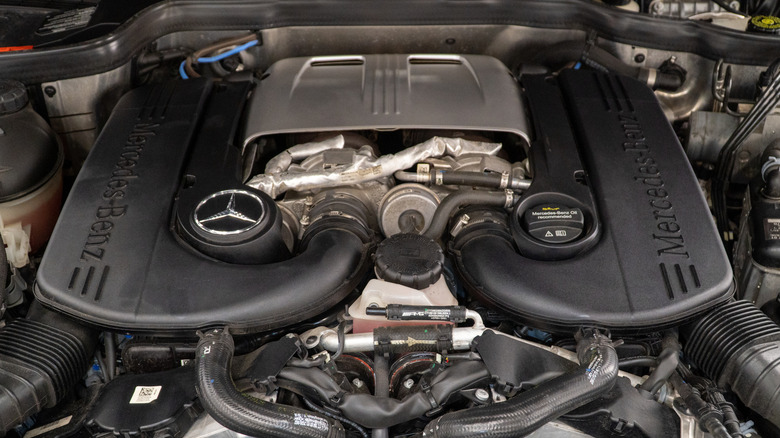
When we looked at whether Mercedes is bringing back the V8 last year, it seemed like the CLE63 would be first in line, debuting before the end of 2025 and then spreading to the E-Class lineup and a future G-Class. That timeline didn't hold. The V8's actual debut is going to the S-Class instead, with a flat-plane-crank M177 arriving in the 2027 S580.
The old S580 used a cross-plane version of the same 4.0-liter twin-turbo V8, and the switch is meant to sharpen throttle response and push the redline higher. In the mild-hybrid S580, it produces 573 horsepower and 553 lb-ft of torque, and the CLE63 is expected to be one of the first AMG models to receive it after that.
The bigger signal came directly from Mercedes-Benz. In a February 2025 investor and strategy press release, the company confirmed that Mercedes-AMG's future lineup will include "a next-generation, high-tech electrified V8" alongside dedicated high-performance EVs. Mercedes-Benz also confirmed in that release it already has a full slate of "future-proof EU-7 ready engines and transmissions," ranging up to eight cylinders. Mercedes even said it will continue offering V12s in certain markets.
However, there's no indication the C63 itself is getting the V8 back — instead, it's set to be replaced entirely by a six-cylinder C53. The C53 will rely on the same 443-hp turbocharged inline-six found in the CLE 53. In simpler terms, the six-cylinder CLE53 is now getting a more powerful V8 CLE63 treatment, while the four-cylinder C63 is now becoming a six-cylinder C53.
Ram V8 renaissance
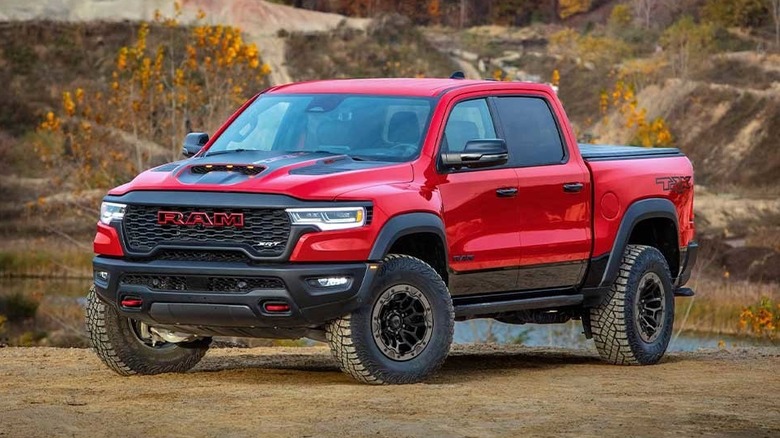
Ram pulled the 5.7-liter HEMI from its 1500 lineup back in 2024, replacing it with the twin-turbo 3.0-liter Hurricane inline-six, offered in a 420-hp tune and a 540-hp high-output version. The backlash was immediate enough that Ram confirmed the HEMI V8 would return for the 2026 Ram 1500, just one model year later.
Motor1 covered Ram brand CEO Tim Kuniskis commenting on the reversal, stating that "Ram screwed up when we dropped the HEMI." The returning 5.7-liter HEMI produces 395 hp and 410 lb-ft of torque, paired with Ram's eTorque 48-volt mild-hybrid system. Notably, Ram isn't ditching the six-cylinder — the Hurricane stays in the lineup as the standard engine.
The brand is now pitching it alongside the V8 as a matter of buyer choice, rather than a straight replacement. Orders for the 2026 Ram 1500 opened this year, with deliveries beginning this summer. It's a similar case to AMG, where the automaker publicly admits it misjudged things, but Ram reversed course quite a bit faster.
Ram is going even further at the top of the range: the 2027 Ram 1500 TRX SRT is returning with a 6.2-liter supercharged HEMI V8 making 777 hp and 680 lb-ft of torque, a 75-horsepower jump over the previous TRX generation. This should do it to fully cure the "no V8" Ram disease.
Jeep Wrangler HEMI V8 comeback
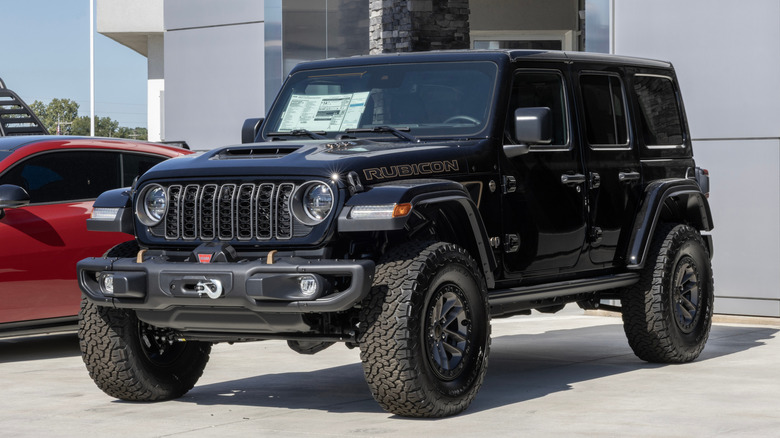
Jeep's 6.4-liter HEMI V8 has looked finished more than once. The engine was slated to end after the 2024 model year, then got a "Final Edition" farewell for 2025 — and it was pulled from Canadian Wrangler order books before the 2025 model year even began. However, now it seems the 6.4 is going nowhere.
Besides the aforementioned Ram 1500, the Wrangler Moab 392 is also one of 2026's car models getting a Hemi engine. This one is rated at 470 hp and 470 lb-ft of torque, and priced over $20,000 below the outgoing 2025 Rubicon 392. Jeep CEO Bob Broderdorf didn't dress up the reversal. Mopar Insiders covered him saying "Our community made their voices heard, and we listened."
The Moab 392 kicks off Jeep's "Twelve 4 Twelve" campaign, which will see a special-edition Wrangler released on the 12th of every month through 2026 to mark the brand's 85th anniversary — and it wasn't the last V8 edition, either. Jeep followed with the Wrangler Willys 392, pushing the price of a V8-powered Wrangler down under $70,000.
However, not every Jeep model is getting the same treatment. The V8 hasn't returned to the Grand Cherokee, and the Wagoneer and Grand Wagoneer are sticking with the twin-turbo Hurricane six instead. For now, the HEMI's comeback is a Wrangler story specifically, not a brand-wide one.
GM goes all out on the V8
Unlike the other brands on this list, GM never actually killed the V8, but it came close. In 2021, the company set a target of selling only zero-emission light-duty vehicles by 2035, leaving no room for gas-powered trucks or SUVs past that date. That shifted in May 2025, when GM announced an $888 million investment in its Tonawanda Propulsion plant, where GM is set to build its new V8. This is the single largest sum GM has ever put into one engine facility, to put things in perspective.
The sixth-generation small-block family is already rolling out, too. The Corvette got a related 6.7-liter LS6 version, and the 2027 Chevrolet Silverado redesign carries two more variants, a 5.7-liter and a larger 6.6-liter, both naturally aspirated.
A turbocharged four-cylinder and a diesel inline-six round out the rest of the lineup. The same underlying architecture powers the GMC Sierra, Chevrolet Tahoe and Suburban, GMC Yukon, and Cadillac Escalade, so the new engine's reach extends well past one truck. GM's timing wasn't subtle.
As Caleb Jacobs over at the The Drive pointed out, the investment landed just as Ram was working to win back the customers it lost by cutting the HEMI. Where Ram, Jeep, and Mercedes-AMG all had to walk back a decision they'd already made, GM's approach was to just not make it in the first place — and to spend nearly $900 million making sure it wouldn't have to.
Porsche doubles down on the SUV V8
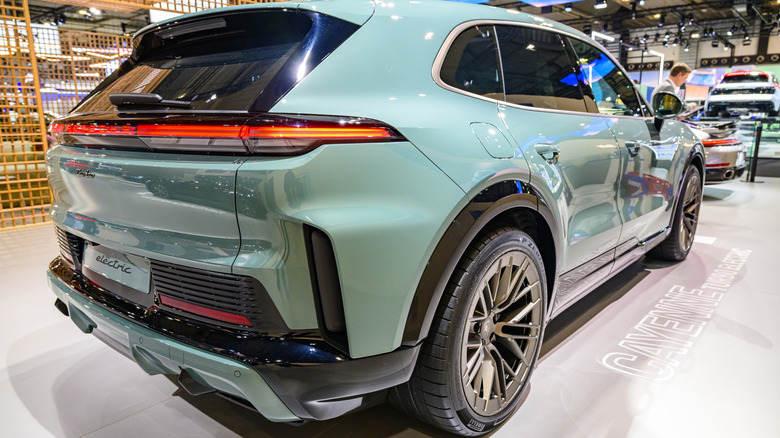
Porsche's flagship SUV was supposed to prove the brand could go all-electric at the top of its range. However, when we looked at the 2026 Porsche Cayenne Electric, we noted its lack of character and difficult-to-justify price. Now, the brand's newest flagship is changing course.
The upcoming Porsche K1, a three-row SUV slated to sit above the Cayenne, was set to be Porsche's first EV-only nameplate, built on Volkswagen Group's dedicated electric architecture. Instead, the K1 is switching to VW Group's Premium Platform Combustion architecture, the same platform underpinning the upcoming Audi Q9, and gas power is now the plan at launch: a twin-turbo eight-cylinder and a six-cylinder, each available with plug-in hybrid assistance.
This shift happened for a couple primary reasons: the platform's software wasn't ready in time, and EV interest is cooling across the market. Porsche hasn't abandoned the electric version entirely — it's still planned for a later date — but the combustion K1 is now set to arrive first, roughly a year after the Q9. Porsche has been consistent about why gas power still matters to the brand.
Speaking with Edmunds, SUV drive systems manager Timo Henn said a V8 option "is maybe important to some customers," pointing to the more mechanical feel some buyers still want from the drivetrain. It's a quieter reversal than Ram or Jeep, but the direction is the same: an automaker that planned to leave the V8 behind, choosing instead to build its newest flagship around one.
How we made the list
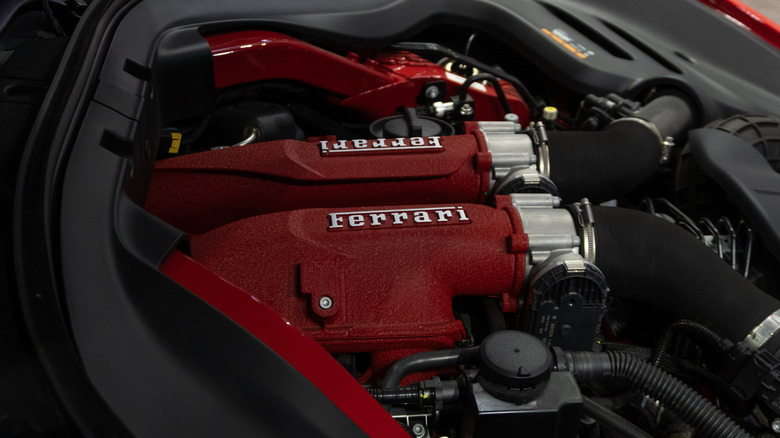
These brands aren't the only automakers bringing V8s back — Porsche's rivals at BMW never abandoned it, and Toyota and Nissan are still holding out on their own reversals. We picked these five because they represent the clearest and most publicly documented cases: a brand cutting the V8, facing real backlash, and reversing course on the record, whether through a CEO's own words or a formal engineering announcement.
It's also worth remembering that none of this is permanent. Emissions targets shift constantly — the EU's own 90% proposal could change again before it's finalized — and hybridization is only going to get more common as automakers try to keep V8s alive under tightening rules. The V8 clearly isn't dead yet, but nobody, including the automakers themselves, seems to know exactly how long it will last.
To keep this list grounded in verified reporting rather than speculation, we relied on primary sources — official statements and press releases from Mercedes-Benz, Ram/Stellantis, Jeep, GM, Chevrolet, and Porsche — wherever possible, along with reporting from publications like Autocar, Motor1, Car and Driver, Hagerty, The Drive, Mopar Insiders, Edmunds, Auto123, and Autoblog, as well as the European Parliament's own documentation on emissions policy.