

These Cars Were Everywhere In The '80s – You'd Be Lucky To See One Today

Some cars capture the zeitgeist of an age; others are record-breaking performers. Others still become classic by dint of their design and engineering. These cars get plenty of press. People spend millions of dollars each year restoring the greats. The classic Camaros, historic Ferraris, and museum-piece Benzes all get their glory and record-breaking auction prices, with millions of hours (not to mention dollars) poured into restoring or conserving them.
This article is not about those cars. It's about the others — the ones that, despite some with production numbers in the millions, are nowhere to be found on today's public roadways. It could be because they rusted to pieces, were considered disposable, or were even beloved demolition derby contestants. Whatever the cause, more cars have dissolved into the ether of automotive history than have been preserved for posterity. We take a look at one of the most iconic eras in recent history –- the 1980s -– at the cars you used to see at every stoplight that just aren't around anymore.
Hyundai Excel
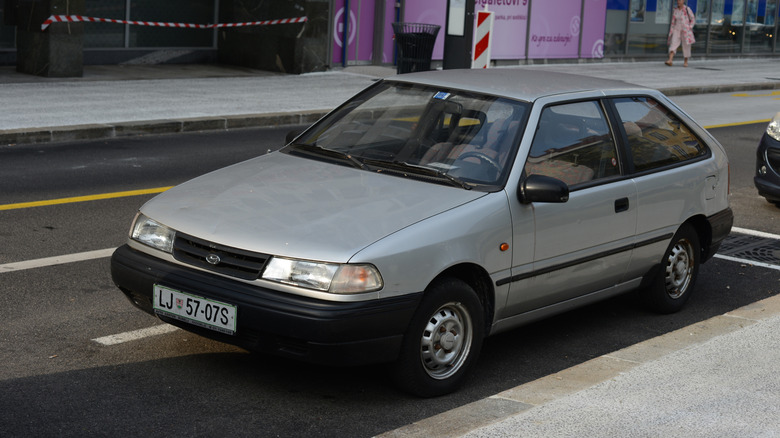
It's hard to believe Hyundai's origins are in construction; the Korean corporation has only been making vehicles since 1967. Its big swing at North America came in 1986, with the introduction of the versatile subcompact Excel in two- and four-door hatchback and sedan varieties. It was the second-cheapest car on the market that year, $4,995 to the Yugo's $3,990, and its relatively reliable affordability broke sales records, with 169,000 units out the door in its first year and 250,000+ the following. By the dawn of 1990, nearly a million Excels had hit the roadways of America.
Yet you'd be hard-pressed to find an Excel today. Hyundai used-car searches yield gleaming models with the latest tech and fleets of affordable analogs. Never mind that the Excel was in production until 1994, with even more shipped to market in the years after the '80s ended. Over a million served as family hatchbacks, grocery-getters for single parents, commuters for college students, and first cars for people like this millennial, until he crashed it into a guardrail.
So what happened to all the Excels? Why can't I relive my youth in a classic '94 five-speed hatchback, purchased cheaply and lovingly restored? In a word, disposability. The Excel was the second-cheapest car on the market, not the longest-lasting. Ignorant and uncaring owners drove them into the ground and walked away. Young drivers crashed them into guardrails, trees, each other, and everything else. They burned, splintered, sank, rotted, rusted, and disintegrated. Hyundai moved on, lessons learned and applied. Once in a while, a Redditor posts a photo of an Excel like it's a UFO sighting, and we wonder if perhaps they've left to live among the stars.
Chevrolet Citation
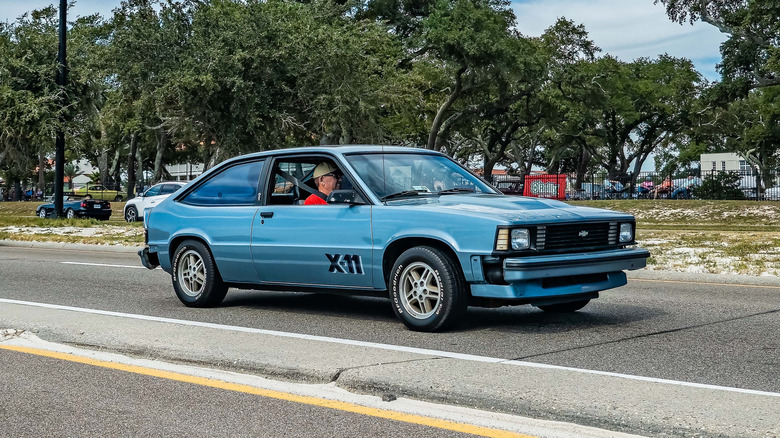
The Chevrolet Citation is a tale of woe marked by defective automobiles, massive recalls, and federal lawsuits. A part of Chevrolet's X-body strategy aimed at tackling front-wheel-drive imports, the Citation sold in big numbers — over 800,000 in 1980 alone — but it didn't take long for things to fall apart.
The Citation may have sold like gangbusters, but it was a mechanical disaster. Brakes locked. Defective hoses broke. Power steering failed. The NHTSA unsuccessfully sued General Motors, and Chevy felt it in the market. Sales halved, then halved again. Still, over a million Citations were out there, not including other GM models that were Citation clones. The Buick Skylark, Pontiac Phoenix, and Oldsmobile Omega were also X-bodies that sold during the 1980s.
By sheer numbers, there should be thousands of these vehicles left, but when's the last time you saw a surviving X-body? It wasn't necessarily because they wore out at 100k miles and went to the boneyard. The failure of the Citation was so spectacular it generated landmark legal cases; its NHTSA recall record reads like a rap sheet. The ones that didn't die on the streets rotted in junkyards because, as the '80s wore on, people learned Chevrolet did not yet have the front-wheel-drive economy game in hand. The Citation's birth marked its zenith. It was all downhill from there until, today, spying an operating Citation is a rare treat indeed.
Honda CR-X
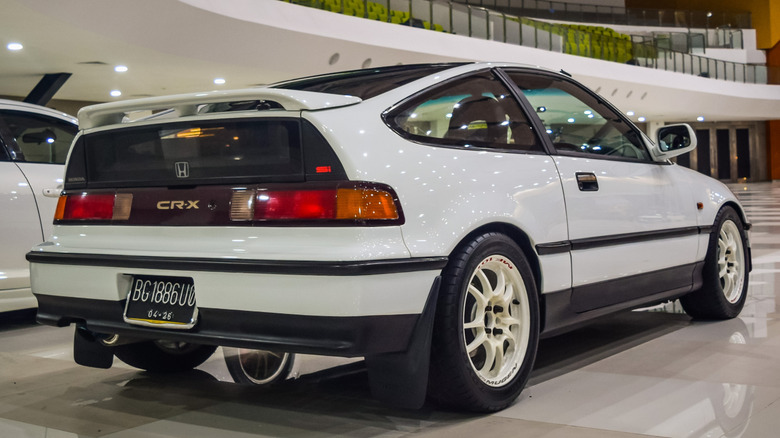
The modded boy-racer has been a thing since youngsters began chopping up the '32 Ford, and this street racer in hatchback clothing is no exception. Between 1984 and 1991, the Honda CR-X was the lightweight, affordable sports car of the masses. Honda had incubated its high-revving VTEC technology in the JDM Integra, then unleashed it in a featherweight 150-horsepower hot hatch that weighed just 1,800 pounds.
To say it upended the industry would be an overstatement; the CR-X more than found its niche, selling 220,000 units by 1987, when Honda embarked on a second generation. They were everything from zippy commuters to modified street racers. The CR-X formed a core of Honda's performance development in the '80s, with the automaker learning to wring every ounce of power from small-displacement engines. The CR-X earned Si badges and spawned the targa-topped Del Sol offshoot. Four decades later, it is a bigger piece of the automobile history puzzle than some, yet we rarely see them outside local Cars and Coffee meetups and posts on fan forums.
The CR-X is a rare sighting today due in part to its lifestyle. Amateurish drivers and mechanics modded them poorly and drove them hard. Moisture accumulation, exacerbated by poor drainage, led to severe rust over time, leading even those that survived track weekends and high-school misadventures to rust away until they were unsafe to drive. After that, it was off to the dump for the lucky ones that didn't meet their end wrapped around a telephone pole.
Oldsmobile Cutlass
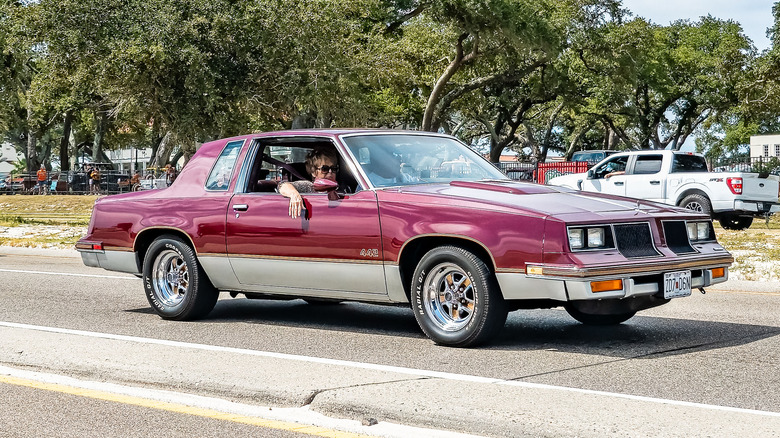
Oldsmobile's 1897 founding puts it amongst the older car-building names in history. Best remembered as a major arm of the General Motors family, the brand was axed in 2004, but not before its Cutlass made history. The vehicle was one of Oldsmobile's most successful and popular models, with millions built in two-door and four-door hardtop and convertible styles. By the 1980s, the versatile nameplate represented comfort in style in its G-body form.
The G-body was a GM brainchild molded into the Pontiac LeMans, Bonneville, and Grand Prix; the Chevrolet Malibu, Monte Carlo, and El Camino; and the Buick Regal and Oldsmobile Cutlass. Affectionately known as the "Old G," the '80s Cutlass had boxy dimensions and a stately footprint, and it came with a range of engines and all the build quality of '80s American auto industry. With nearly 40 years since the last Cutlass rolled off the production line in 1988, we expect to lose some to the usual culprits — rust, accidents, disintegration — but with over 1.5 million Cutlasses put out in that era, surely there would be more of them around.
The '80s Cutlasses are coming back into their own as classics, but if you set out to score one of your own, you might find it harder than you anticipated. Aside from the vagaries of fate and salted roads, the Cutlass was also coveted as a platform for demolition derbies –- a fact that did not increase its survivability.
Ford Tempo
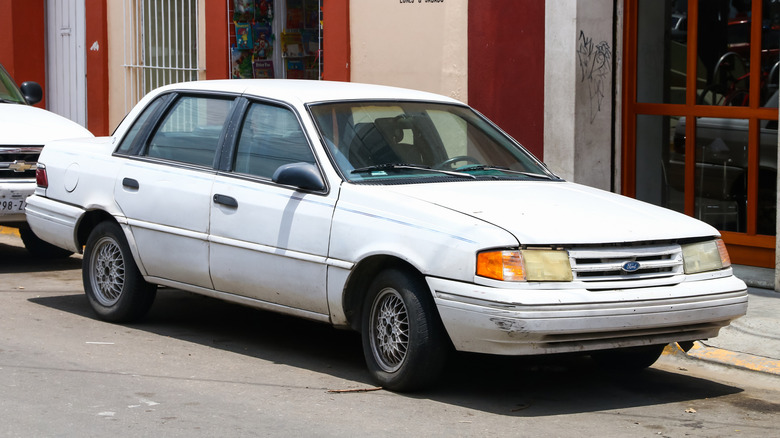
The Ford Tempo is seared into all of our memories as our high school girlfriend's first car. Wait –- that's just me. The Tempo served as an all-time commuter in the days when the sedan still ruled. Between 1984 and 1994, Ford put 2.7 million Tempos on the road.
Despite a decade-long career and impressive production numbers, there aren't many Ford Tempos left in the classics section of Auto Trader these days. Part of the reason was recurring mechanical and safety issues that prompted owners to give up on them. Even by 1994, the final year of development, the Tempo was prone to serious issues, including failures of the head gasket and ignition module. Perhaps even more devastating was the transaxle's poor performance.
The Tempo was a dull, everyman commuter that would technically get you there if you were lucky, but not very quickly. Its 12-second zero-to-60 time didn't inspire anyone to get to tinkering for track weekends. Combined with rust, accidents, breakdowns, and bland design, the Tempo became a relic of the past almost as soon as it disappeared from the market. For a car with nearly 3 million units produced, that's not particularly impressive.