

6 Luxury Cruisers From The '60s That Look Even Cooler Today
The 1960s was the last decade when American automakers built cars as though restraint were a foreign concept and as if fuel were free. The gas crisis in the following decade would kill our horsepower and show us as a country that had to pay the price at the pump in more ways than one. However, for that glorious decade when Detroit was the home of the U.S. car industry, we got luxury land-yacht cars that were slathered in chrome -– and not a single one of these vehicles made any apology for either its substantial acreage or its even more ravenous fuel appetite.
Today, these venerable cruisers now command a sense of respect when you see one on the road, not least because modern vehicles have all sort of merged into one another, with every brand looking more similar to the last one. Perhaps that explains the uptick in prices we've been seeing in American luxobarges –- including the ones on this list -– in the past few years; people are slowly realizing what we've lost. While every single car we're going to talk about would be a nightmare to live with on the daily, those who can afford one will certainly pay a premium to do so –- even just as an eye-candy driveway ornament. For example, a Buick Electra 225 remains one of the most imposing cars ever made, and a Caddy 62-Series cruiser will still turn heads on any interstate. With all that said, here are six luxury cruisers that look better today than when they were designed.
Buick Electra 225
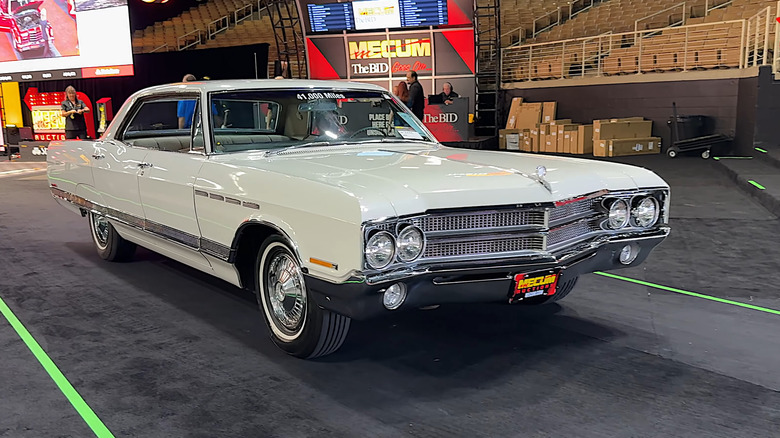
Let's start with the first car that we mentioned. The Electra 225 was introduced as Buick's range-topping money-no-issue 1959 modelto much fanfare. You'd be forgiven for thinking that the 225 in the model's name referred to the displacement in cubic inches of the engine, but you'd be wrong. Buick wouldn't put a paltry 225-cubic inch engine in such a behemoth; it was the era of "no replacement for displacement," if you recall.
The 225 in the name was actually representative of the overall length of the car, which stood at about 225 inches. That's almost 19 feet in tip-to-tail length, which is quite a "feet" today. Just for reference, a 2026 Cadillac Escalade ESV comes in at 226.9 inches in total length, which is just a hair longer than the Buick. As for the powerplant in the car, the base engine was the legendary big block "Nailhead" from Buick's lineup that displaced 401 cubic inches, made about 360 hp, and featured a single quad-barrel carb. However, Electra 225s from 1970 onwards could also be had with a massive 455 ci V8 unit making 350 hp and 510 lb-ft of torque, along with a couple other smaller-displacement engines thrown in as optional upgrades. The first generation of the Electra 225 got the moniker of "a Deuce and a Quarter", with the 2 being a "deuce" and the 25 a "quarter" in street slang at the time.
Chrysler Imperial Convertible
It can be claimed without opposition that the 1960s was the heyday for the Chrysler corporation. At the time, it was churning out legendary models like the Town & Country, New Yorker, and Newport, among others. Today, Chrysler makes just a paltry two models, both minivans, in the way of the Pacifica and the Voyager. While these are highly regarded, functional, and well-loved for what they do, the fact remains that Chrysler, once a bastion of American automotive production, has fallen a long way from the highs of the 1960s.
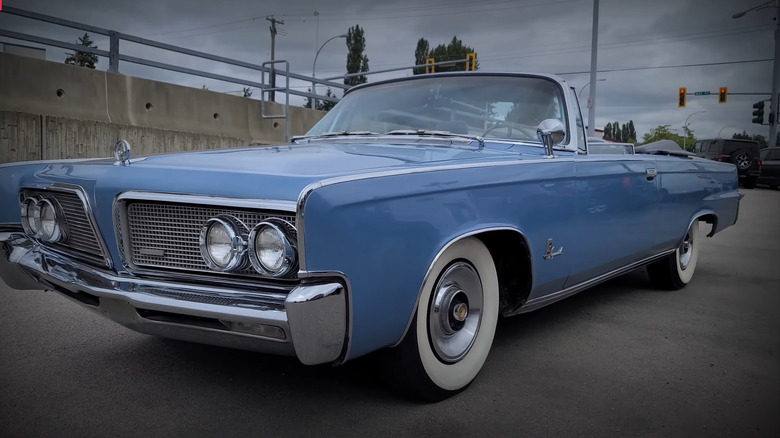
And if we had to choose a single car to define the excesses of that decade it would be the Chrysler Imperial, with the nameplate dating back to 1926. The early 1960s convertible model featured a massive 413-cubic inch V8 engine that made 340 hp and was paired to a three-speed gearbox, all of which would be needed to move the heft of this 5,500-pound behemoth. Later in the decade, the engine would be upgraded to the 440 ci V8 making about 350 hp and 480 lb-ft of torque, but the fact remains that this thing was never going to be a sports car. It was a luxury cruiser built to make you feel important and ferry you around — which it did with pretty decent pomp, given the overall length of about 228 inches for 1965 models. There were also some rare coachbuilt models that reached 245 inches in length.
Buick Riviera Gran Sport
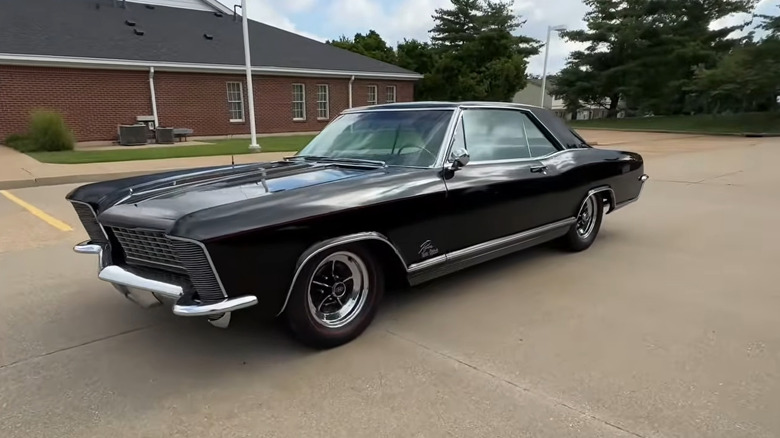
You should think of the Riviera Gran Sport as the car that one bought if you wanted an Electra 225, but wanted to turn even more heads. Launched in 1965, the car featured blocky, sharp angles, and it's honestly a crime that it wasn't more popular; the vehicle is still actually quite underappreciated today. You can nab a decent-condition example for about $50,000 on the used market at the time of writing, so it could be a brilliant weekend project car to have sitting in the driveway.
In terms of engines, the Gran Sport had to have something punchy given the "Gran Sport" in the name, and boy, did Buick deliver. The motor was also from the Nailhead family of V8 engines that were used in the Electra 225, but this one was dubbed the "Super Wildcat" and displaced a total of 425 ci.
However, the engine punched slightly above its weight compared to other low-400 ci displacement engines of the time, putting out a grand total of 360 hp along with an eye-watering 465 lb-ft of torque. This engine gave the 1965 Buick Riviera Gran Sport a standing-to 60 mph time of about 7.2 seconds and a top speed of about 130 mph, according to estimates. The car could also sprint the quarter-mile from zero in an approximated 15.4 seconds, at the end of which the speedo would read somewhere in the range of 92 mph –- figures that would impress even decades on.
Cadillac Coupé Calais
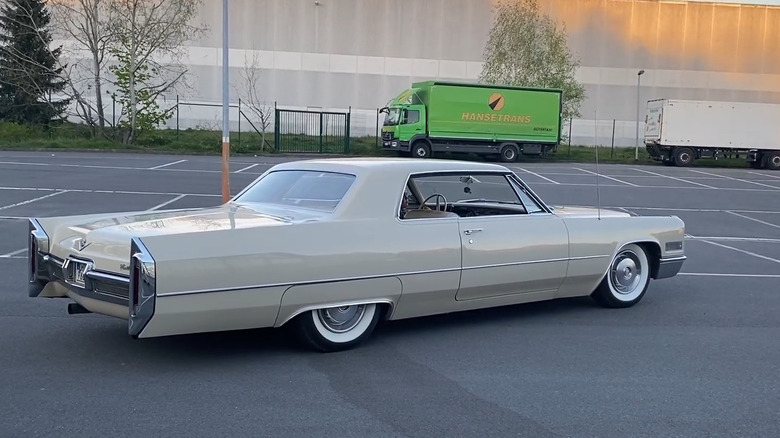
While it was built to define the luxury cruiser segment (and it arguably did), not many people actually remember the Coupé Calais, which is nothing short of a tragedy. Coming in at 224 inches in length and tipping the scales at an elephantine 4,600 pounds, this cruiser had a presence unlike anything else on the road. Yet despite weighing the same as a small boat, the car boasted a 0-60 mph time of an approximated 8.5 seconds. In addition to that acceleration –- which was pretty decent for the time period -– the car also had a top speed of 122 mph, which would have been perfect for prowling the ever-burgeoning number of motorways and interstates that had begun to connect American cities.
The biggest engine available with the Calais would be the 472 ci V8 paired to a three-speed transmission, though earlier models of this entry-level Caddy did come with a smaller, 429 ci V8 engine making 340 hp and 480 lb-ft of torque. The Caddy's larger, later powertrain made a whopping 375 hp and 525 lb-ft of torque in total, making it pretty competitive on all fronts with other American-manufactured luxury cruisers of the time. However, readers will rejoice to know that the Coupé Calais has eluded the investor market thus far and so remains priced in the realm of sanity. However, we'd caution readers against getting non-running examples since 1960s models don't seem to show up too much on the used market.
1965-1969 Pontiac Grand Prix
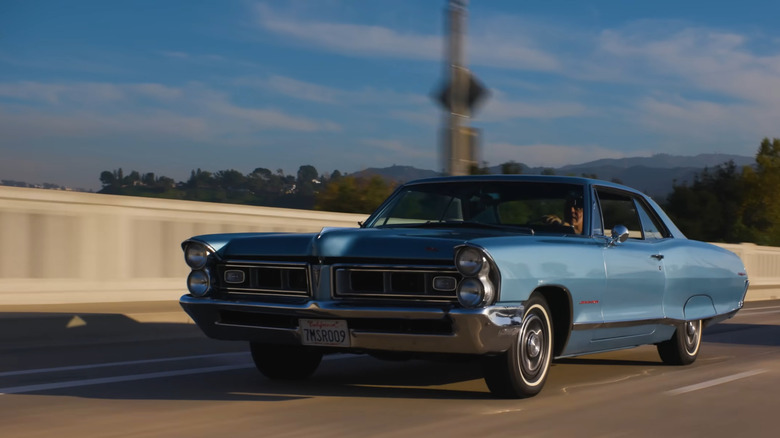
The Grand Prix is both a perfect example of Pontiac's highs as well as the brand's lows. Brought to market for the first time in 1961, the car measured 215 inches in length during the late 1960s, and that generation has since become quite a collector's model. The engine in models from the second half of the decade was a 389 ci V8 motor that came paired to a three-speed transmission and put out 325 hp –- a 376 hp, 421 ci engine was an option, making this limousine-esque 60s cruiser quite enjoyable to drive when you gave it a bit of the beans.
And credit where it's due, Pontiac absolutely nailed the Americana-ness of the vehicle with the styling, as it was absolutely a poster car of the time. Sadly though, the Grand Prix would also eventually end up falling victim to the dual gas crises of the 1970s; the model would frankly never be the same again. Later, Pontiac would also attempt (poorly, might we add) to turn the Grand Prix into a cash grab by giving the model Japanese econobox styling in the late 1990s. This generation of the Grand Prix impressed no one, drawing criticism for being poorly designed, awkward to drive, and cramped inside despite being huge. That farcical model is all the more reason to appreciate the Pontiac Grand Prix that ran from 1965 to 1969, as it was arguably among the best cars that money could buy at the time.
Cadillac Series 62 Convertible
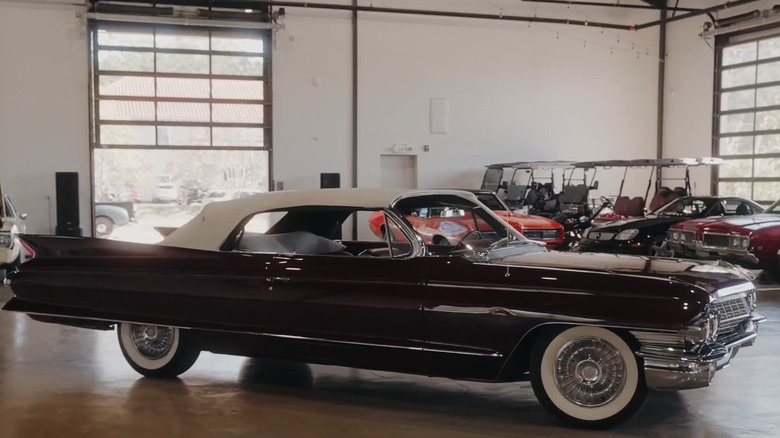
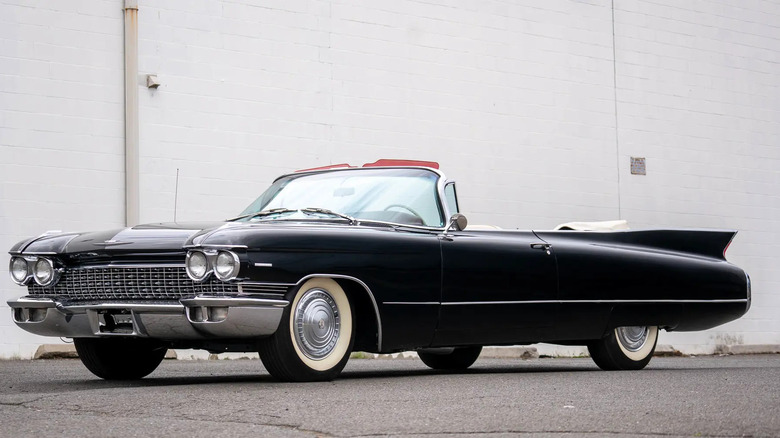
Finally, our personal favorite 1960s cruiser has to be the Series 62 from the likes of Cadillac –- specifically the convertible, open-air body version. It had quad front headlights, quad front fog-lights, and an extremely wide hood with a blocky, angular front fascia that was neither aggressive nor muted; the whole package was just right. The rather curved, short windscreen lent the car an air of sportiness but also refined luxury.
The side of the vehicle was defined by a body accent line that spanned the length of the car. The rear fenders tapered off, flowing into almost a point at the end, and the taillights were the same bullet-shaped design as the ones on other famed Caddy models like the Coupe De Ville and Eldorado from the late 1950s. With regards to the engine in the series 62, early 1960s models made do with a 390 ci V8 engine making 325 hp, while those from the latter half of the decade got the larger 429 ci V8 motor that churned out 340 hp and 480 lb-ft of torque.
It's also important to distinguish between the Cadillac Series 62 and the Cadillac Coupe Calais that we just looked at above; Cadillac officially rebranded the Series 62 as the Calais from 1965 onwards. Our best estimate at the time of writing is about $50,000 for a good-condition, well-restored Cadillac Series 62 convertible. That's about half the price of a fully decked out 2026 Escalade while easily being twice as cool.