

6 Audi Engines You Should Steer Clear Of
Design, performance, comfort, convenience – Audi makes fantastic cars that have it all. It was the first of the big three Germans to make a proper supercar in the R8. However, the company does have its flaws. During my junior year, I started an apprenticeship in automotive repair, where I would eventually specialize in the Volkswagen Auto Group brands, including Audi. Interestingly, it was about that time that the relatively new MLB Evo platform was coming into its sixth year – in other words, just out of warranty or extended warranty for many. Of course, unlike Nissan's disastrous CVT, which got the company sued in a Tennessee court, properly maintained Audis gave owners little to worry about.
Not all engines paired to the new-ish platforms were made equal, though, and I did run into several more than I wanted to. Cut to today, and I am a valuations expert for several car showrooms in Dubai, specializing in — you guessed it — the Volkswagen Group. Though I have since eschewed my grease monkey overalls for a pressed suit, researching this article brought back some fairly recent memories of digging about in assorted VW engine bays. I can't speak to much of the newer generation models since we don't have the data for it — most repairs would be in warranty at the moment — but there are definitely some particularly bothersome engines I would avoid, unless you really like the car and know what lies ahead.
What is FSI and TFSI
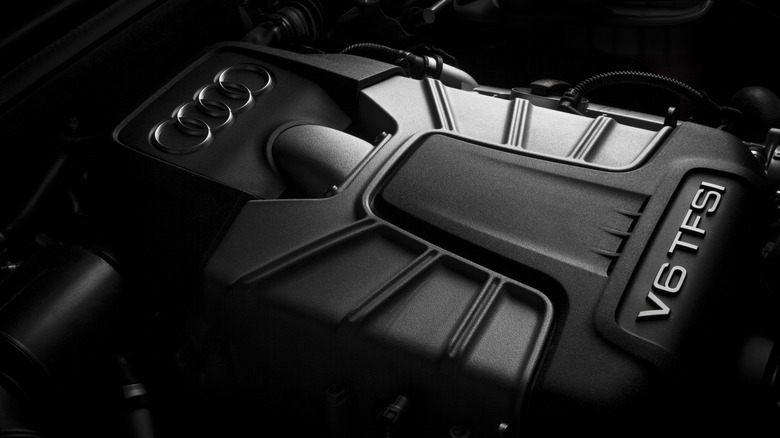
The naming conventions for some of these engines can be confusing for non-technical buyers, so let's go over them before getting into the list in earnest. The words FSI or TFSI are found behind every single gasoline-powered Audi on the market today.
First, fuel stratified injection (FSI) is a fancy way of saying that the engine features gasoline direct injection. This design has the benefit of improved cooling (among other things) over non-FSI engines, which could could have "hot spots" — areas of higher temperature that could cause fuel to randomly combust out of place. This phenomenon, known as "knocking" is reduced to a great degree in FSI engines, as the (relatively) cool fuel regulates the temperature inside the engine's combustion chamber.
The "T" in TFSI simply indicates an FSI engine that features forced induction. As a matter of fact, Audi was actually the first ever car company in the world that combined FSI with a turbocharger (where the T comes from), back in 2004.
As of 2009, every gas Audi was an FSI engine, with a great many being turbo units. In fact, five of the engines that follow are TFSI units.
2.0 TFSI EA888
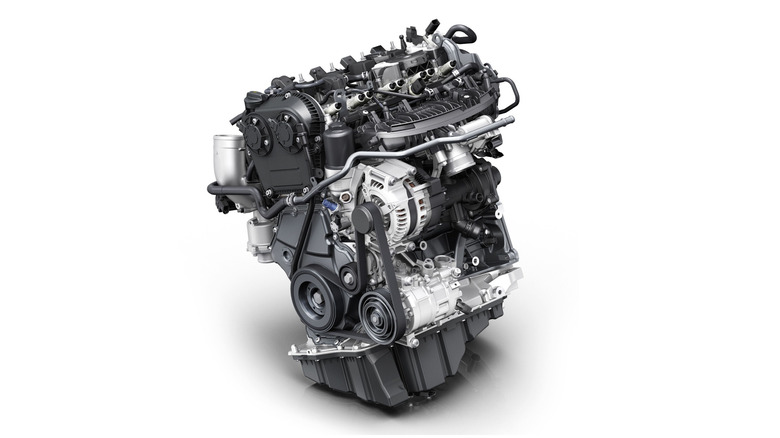
First up, we have the 2.0 TFSI, known through its model code of EA888, which would get a mid-cycle refresh after a few years. The motor itself was a 2-liter inline-four unit that was available in the A4 and A5 B8s, the Q5 8Rs, and the A3 8Ps from around 2005 to 2015. A middle ground in terms of power would be the 2012 A4, which made 211 hp and 258 lb-ft of torque. The issues that plagued this engine were extreme oil consumption (in some cases as high as 1 quart per 1,000 miles on the upper end) as well as timing chain failures. The tensioner is a problem on most Audi engines from this era, whether the root cause is the flywheel/firewall-adjacent placement of the chain during servicing.
The root cause of the high oil consumption problem (especially on early gen 2.0 TFSI engines) is widely agreed to be thin, poorly designed and sometimes defective piston rings that were prone to microscopic leaks. These leaks would compound and cause the oil to drain out much faster than was normally expected or acceptable. The issue got so bad that a class action lawsuit was filed in New Jersey in 2026 to remedy the issue. Additionally, the water pump on the early (2006 until about 2012) 2.0 TFSI four-cylinders is also prone to failing. All of that is in addition to the standard wear and tear a high-maintenance German car of this age typically faces.
1.8 TFSI EA888
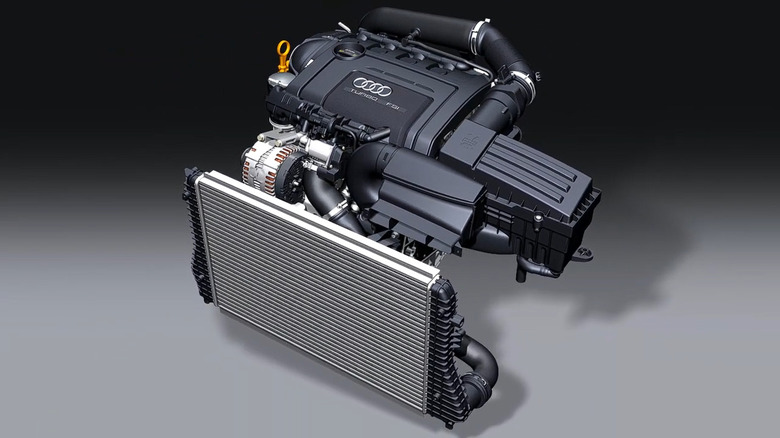
Next up, we have an engine best described as the younger sibling to the 2.0 liter TFSI above: the 1.8 TFSI EA888. As the name suggests, this was a four-cylinder unit featuring a turbocharger and direct gasoline injection that displaced 1,798cc via a bore of 82.5 millimeters and a stroke of 84.1 millimeters. It was remarkably similar to the 2.0 TFSI, though it was offered in the A4 and A5 on the B8 chassis, where it made about 170 hp in total. The main issue with this engine continued to be shoddy piston rings with improperly sized drainage holes that led to high oil consumption.
For some reason this engine also absolutely loved to gobble up its timing chains prematurely, and cold starting your car could frequently lead to the dreaded rattle-rattle-rattle that was so common on these second-gen architecture EA888s. We specifically want to point out that these issues did indeed lie with the B8 chassis in particular — not because the chassis had anything to do with them — but because the newer B8.5 chassis with the third-gen EA888 did remedy these to a large extent. That's not to say that a B8.5 chassis with the 1.8 TFSI is without its problems; no 15-year-old German car will be, so don't take that as a buying endorsement.
4.0 TFSI V8 EA824 CEUC and CTGE
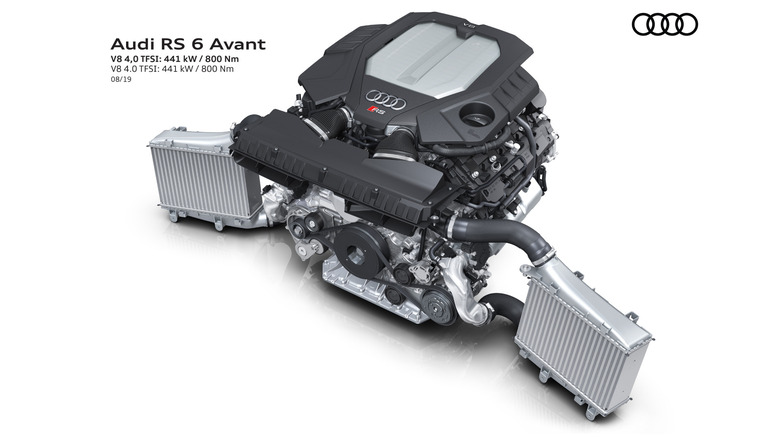
Now, the reason we had to include that alphanumeric soup in the engine name is because Audi has built more than its fair share of 4.0-liter V8 engines over the years, and we needed to be specific — not all of its V8s were bad, after all. Let's break down the name first. You already know what TFSI means, and EA824 is the engine family. CEUC is an internal naming system that Audi uses for subdividing its engines, and specifically, the CEUC V8 was used on the C7 family of cars. This family consisted of the Audi S7, S7, RS6, and RS7 for that particular generation, which ran until about 2016, which is when the successive EA825 engines came out.
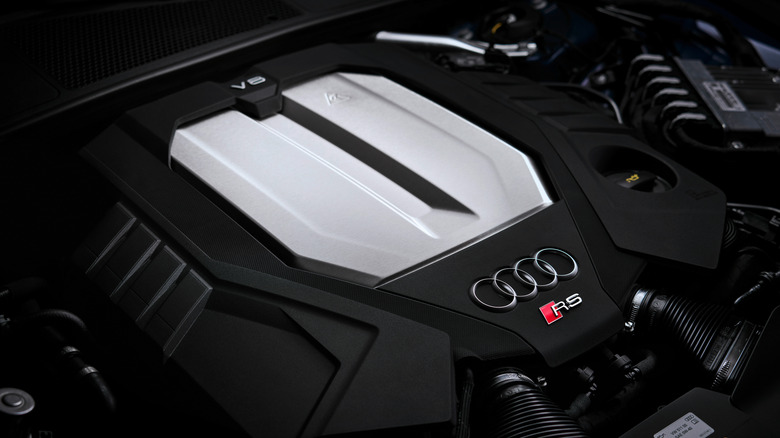
For all intents and purposes, the CEUS can be considered the "first" generation, while the EA825 (known as the CTGE, pictured above) is the "second" generation, helped along by Porsche's engineers. Performance on the first-gen CEUC V8 was great, pushing 605 hp and 516 lb-ft of torque in the 2017 Audi RS7, but the turbos would face oil starvation, bits would chip off due to friction, and metal shavings could (and did) enter the internals and wreck the turbo and engine. Being a luxury German brand, repairs were never cheap, especially not "engine out" ones. Other problems included issues with the starter motor and coolant leaks, though this was more up to the owners not doing preventive maintenance in our opinion.
4.2 FSI V8 (B series)
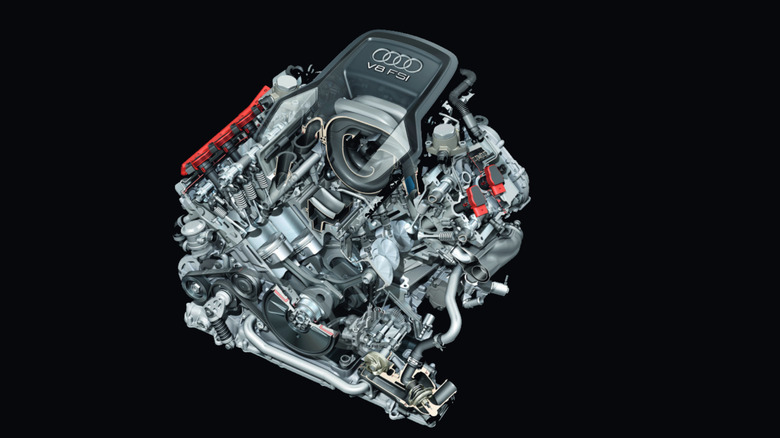
This engine is not to be confused with the legendary 4.2-liter naturally-aspirated V8 that was found in the now-discontinued Audi R8, even though the displacement and layout was the same. Audi actually made two separate (roughly) versions of the 4.2 FSI V8 engine, with differing use cases. The BNS engine code was more performant because it revved higher and had slightly different internals, such as adjusted camshafts and chain layouts.
This series of engines could be found in models like the RS6, RS5, and RS4. Then you had the lineup of the 4.2 V8s that had a lower redline, more geared towards daily applications. The most prominent engine code from this family was the BAR, though there were others, and could be found in models like the Q7 and A8. Now to be clear this one is not a ridiculously unreliable motor like the others on our list.
The problem is that when time for even a teeny repair comes, the layout of the engine is so bad that labor alone will bankrupt you. Similar to the early 2000s Bentley problem of having to have the engine out of the bay for basically anything. Examples on the 4.2 V8 are rear-mounted timing belts, engine mounts going, issues with the suspension and carbon buildup, engine intakes going, and more. The problem is that the V8 4.2s are found in enthusiast cars from the late 2000s to the early 2010s, so it's something to definitely be aware of.
1.4 and 1.2 TFSI EA111 specifications
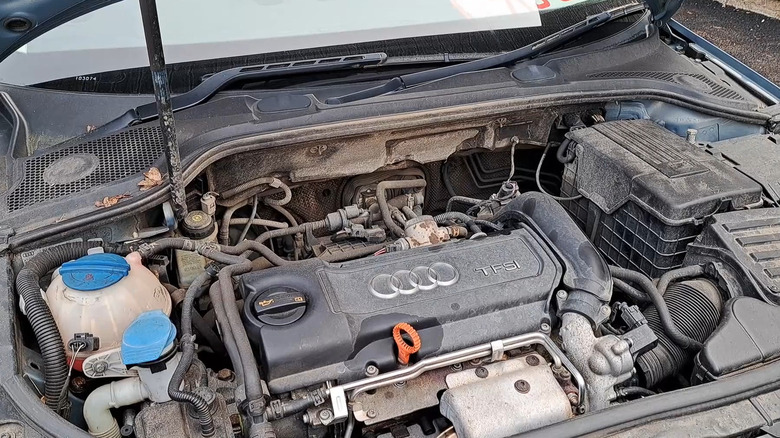
For these engines we're taking a slightly different structure, because talking about the two engines in question together makes more sense, given their similarities. For those who don't know, Volkswagen owns a number of car brands, including Audi and Skoda. The EA111 family of engines includes two very popular models, the 1.4-liter TFSI and its smaller sibling, the 1.2-liter TFSI.
As far as Audi models go, this engine family featured on the A1 and A3 compact cars — specifically the ones that used the 8P at the time. However, the Volkswagen Golf also used both of these engines for a very long production run, though the current Golf lineup consists of a 1.5 and a 2.0-liter option only.
The horsepower figures were quite similar between the two brands, with the 2012 Audi A3 making a decent 120 hp and 148 lb-ft of torque, while the 2011 Volkswagen Golf ended up with up to 158 hp and 177 lb-ft of torque. And yes, for those wondering, that does mean that the Audi A3 is essentially just a dressed-up version of the Golf, which is a fact that Audi doesn't want you to realize. It's also worth mentioning that there is slightly differing terminology between Audi and VW with regards to the naming of the engine – TFSI on Audi is called TSI on Volkswagen, but the engines are essentially the same.
1.4 and 1.2 TFSI EA111 problems
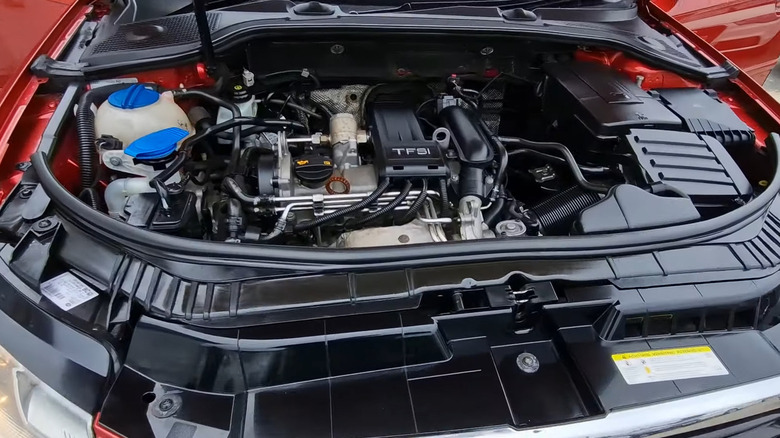
Now that we've got the comparisons out of the way, let's talk about the issues this engine family faced – there were quite a few. Specific examples would be too many to name, but the entire EA111 family suffered from four main pain points with a degree of commonality. These were timing chain stretch, timing chain tensioner failures, water pump issues, misfires and rough running, and electrical issues. The timing chain issues were at the forefront of complaints about the car, especially with regards to the durability of the chains.
Since the models that this engine family was found in (the Audi A1, A3, and Volkswagen Golf) are by far the cheapest on this list, these issues are worth being aware of. For instance, on the used market, a 2012 Audi A3 will cost you only around $7,000 for a low-mileage model, but be prepared for a repair bill sooner rather than later.
However, the good news for someone looking to pick up an Audi with the EA111 engine is that though the problems will be shared with the Golf, so will the solutions. Repairs (and labor) will be widely available and not mega-expensive, especially at independent mechanics. Volkswagen phased out the EA111 in 2012, and Audi followed suit soon after.
A note about Audi model names
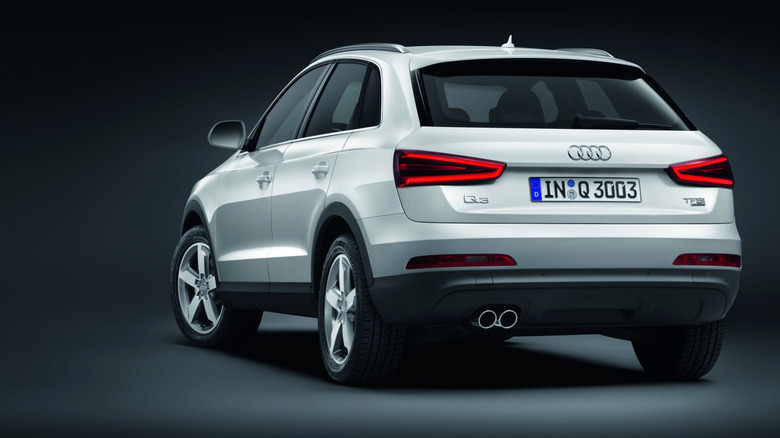
If you see an alphanumeric code behind a model, like "A4 B8," the B8 refers to the generation. It's important to mention the generation because VW has released several overlapping years. For example, the B8 ran from around 2008 to 2012, and the B8.5 ran from 2013 to 2016, but the B9 ran from 2015 onward. Different markets also had different phased rollouts.
Sometimes the U.S. was the first to get a new platform, sometimes it was the last, and other times it was skipped. Thus, chassis codes, which double up as generation codes ("B8" is to Audi what "997" is to Porsche) are useful to us.
Furthermore, all the engines on this list are from the 2010s, and this is with good reason. You see, when an engine is new, and develops a problem, Audi's service centers would fix it, meaning independent technicians wouldn't get to see or log the problems.
Warranty periods could stretch as long as seven years, if things like an extended warranty or extended Audi-approved service plan were purchased, and that would further delay the information being available to the consumer market. It's not just Audi that does this, either — basically every mainstream brand is guilty of the practice — but that's why the engines on this list are all "previous" generation. Of course, the cars being a little older also means that prices are probably down on the used market, so they could be tempting to buyers.
Methodology
After shortlisting several engines from recent generations of Audi vehicles known to be problematic, we began trawling the internet for complaints about the specific car and engine pairing. Every single car on this list has been looked up on the NHTSA recall finder tool, and that includes every single year that the generation was in production. Common issues were extrapolated and listed; we also took into account owner complaints and feedback on model-specific and Audi-specific internet forums.
We also looked at data on the engines in question through the various handbooks published either by Volkswagen Auto Group, Audi, or the NHTSA's self-study guides to confirm that there were no major architectural changes to the engine or engine family in the generation that we're talking about.
For technical facts and figures like horsepower, torque, displacement, weight, and model utilization, we looked directly at press releases from Audi. Where able, we sourced images directly from Audi's legacy press release archive to ensure that the exact engine we're talking about is shown, to avoid confusion. Where current pricing for used models is listed, we researched and took a ballpark figure from classifieds sites with a Dallas zip code and the filter set to show "nationwide" results.