

Two Companies Make Most Of The Memory Chips Inside Of Our Devices (And They're Being Sued...Again)
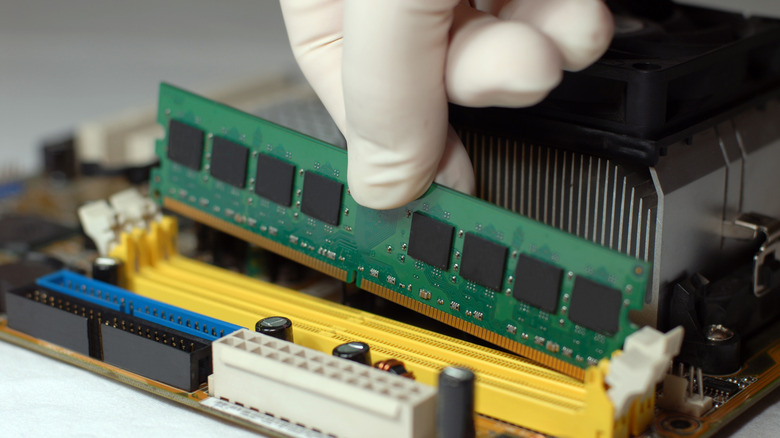
If you are using any electronic gadget today, it will almost certainly have a memory chip inside. This memory is typically labeled as RAM (Random Access Memory) or DRAM (Dynamic RAM). Given the abundance of electronic devices around us, it would be natural to assume that DRAM modules are widely available.
However, not only are memory chips incredibly difficult to manufacture, but we are also facing a severe shortage of DRAM modules as of mid 2026. This shortage has a lot to do with the fact that almost all of the memory modules in production today owe their origin to two manufactures from Korea (Samsung and SK Hynix), and one from the U.S. (Micron). Together, both the Korean giants account for around two thirds of the global memory market and operate at an absolutely mind-boggling scale. Micron Technology, while not a small player, lags behind the Koreans in size and scale, but is still considered part of the big three memory manufacturers.
On June 25, 2026, both Samsung and SK Hynix, along with Micron were named in a class action lawsuit where they are accused of willfully restricting the supply of DRAM modules to inflate prices. The lawsuit appears to be a reaction to the steep increase in RAM prices users have been experiencing since mid 2025. The crux of the lawsuit is that all three companies have redirected their attention towards manufacturing a more complex (and profitable) form of DRAM modules called HBM (High Bandwidth Memory), thereby creating an artificial shortage in the market, driving up prices for consumers.
What exactly does the lawsuit say?
The latest lawsuit against these companies has been filed by 17 plaintiffs. The crux of their argument is that the major companies involved in the DRAM industry have shifted their attention to the more lucrative high-bandwidth memory (HBM) segment, resulting in a massive reduction in the production of mainstream, consumer-focused RAM. This pivot also resulted in Micron completely exiting the consumer-focused RAM segment in 2025.
It further alleges that these companies made coordinated efforts to do so, eventually leading to the ongoing RAM shortage, and the subsequent price hike. They lawsuit goes on to add how memory prices shot up by nearly 700% in just four years.
While the claim that these companies are colluding has yet to be proven in court, it helps to get a historical perspective. A similar lawsuit filed against these same companies in 2020 collapsed because the plaintiffs were unable to convince the court that the companies had colluded to jack prices up. It is still too early to comment on whether the current lawsuit would also end up meeting a similar fate.
Going even further back in time, there have been instances of memory makers pleading guilty of doing the same thing they are accused of now. Those instances resulted in Samsung ending up paying a $300 million fine, and $185 million from Hynix. Other players from that era, including Infineon and Elpida were also fined $160 million and $84 million, respectively. In fact, a handful of senior executives served prison time. A notable exception was Micron, which took advantage of the Department of Justice's leniency program and avoided prosecution entirely.
Why can't other players move in and make more RAM?
One would think that if memory makers have redirected their attention towards High Bandwidth Memory, then perhaps new or smaller players could enter the segment and fill the void. Unfortunately, that's where the technological wizardry required to create these components comes in.
Setting up a DRAM manufacturing facility at scale is an extremely complex and expensive task. A single facility (called a fab) alone could cost anywhere between $15 billion and $20 billion to set up — before new customers are guaranteed. Making things worse, these fabs need to be constantly upgraded. Then there are the geopolitical and supply chain challenges that may prevent companies from collaborating, developing and acquiring materials and equipment needed to set up a manufacturing facility.
Simply put, only companies possessing a staggering amount of capital and financial strength will even consider setting one up. There aren't many that would be willing to take that kind of a financial risk.