

5 Upgrades That Make The Toyota Corolla Feel Less Basic
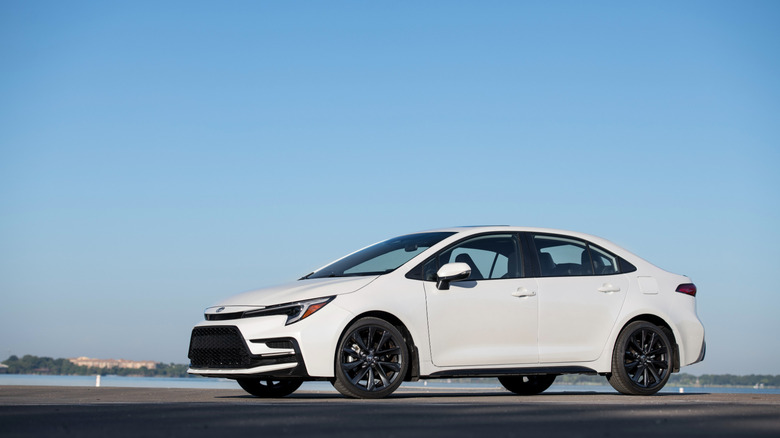
If you ask someone to picture in their mind the blandest, most appliance-like car in existence, the most likely response you'll get is a Toyota Corolla. It's right up there with the Tesla Model 3 and Nissan Rogue in terms of forgetfulness, a car so ordinary that it might as well be a refrigerator on wheels. But ordinary doesn't mean devoid of character; as any gearhead will tell you, any car can be full of life, provided you treat it well and aren't afraid to have fun with it. Of course, throwing parts at it certainly helps, too.
That leads us into the next debate: What kind of parts could you possibly throw at a Corolla of all things to enhance that character? While it may seem counterintuitive, let's first start off with what exactly a Toyota Corolla is — don't worry, this'll make sense.
A Corolla is an extremely affordable urban-oriented compact car. In fact, it's one of the most affordable cars on the market today. It's what you get if you're a college student who needs wheels immediately, or a broke salaryman in the city with a car-centric commute. In other words, it's fundamentally a small, no-frills machine. Of course, you can get fancier ones with hybrid powertrains and AWD, but it's still a far cry from even a mid-tier performance car — at least, a non-GR Corolla is. But it doesn't have to be.
The goal here is to work off this philosophy to enhance what the Corolla already has, rather than turning it into something it's not. This isn't a project car, so there will be no engine swaps or massive turbos here. We're keeping it simple and going with balanced, effective upgrades that preserve the car's character. Let's dive into it.
High-performance tires: $1000+
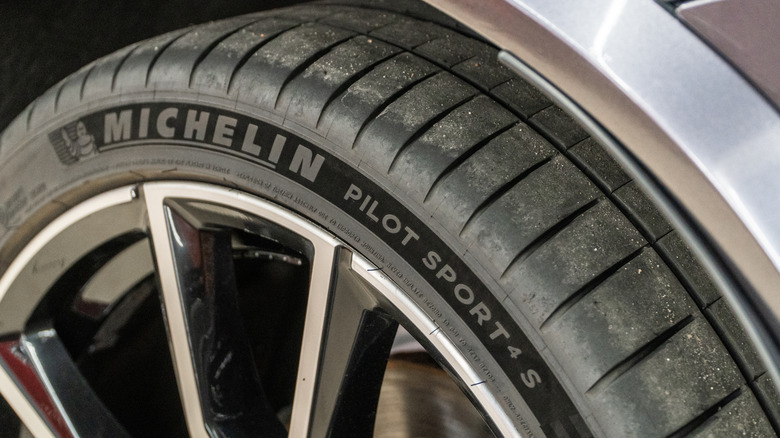
It's fairly obvious but easily forgotten — tires are (ideally) the only objects in contact with the road. They handle all the acceleration, braking, and handling duties of the car, so this is likely going to be one of your initial upgrades on just about anything performance-related. At the end of the day, you can throw as much power into your drivetrain as your wallet can bear, but without good tires, all you'll do is convert fuel into burning rubber. Likewise, good suspension or brakes are wastes of money if your wheels can't cash the checks your car's writing. Good tires mean good traction, and good traction is good fun.
Given that it's an economy car, Toyota Corollas come factory-equipped with economy tires to match, typically something like a Yokohama. We're going a little beefier though, focusing on either summer tires if weather is no concern, or high-performance all-seasons. Picture fitting some 18-inch wheels (if your Corolla doesn't have them already) and a set of 225/40/R18 Michelin Pilot Sport 4S tires to it. There are a number of alternatives to the French tire maker as well, such as Continental ExtremeContact Sport 02s or DWS 06s, Pirelli P-Zeros, and more.
Good tires will serve as the baseline for the rest of the build, so it's imperative to take these seriously. Moreover, it's equally important to be honest with your driving conditions. For instance, if you don't absolutely need winter tires, don't use them; otherwise, that's a great way to half their tread lives. Likewise, don't use summer tires in extreme cold. Do your research, have common sense, don't skimp out on tires, and you'll immediately notice a world of difference in your car's handling and stopping power.
Upgraded suspension: $250 - $1200+, depending on configuration and parts
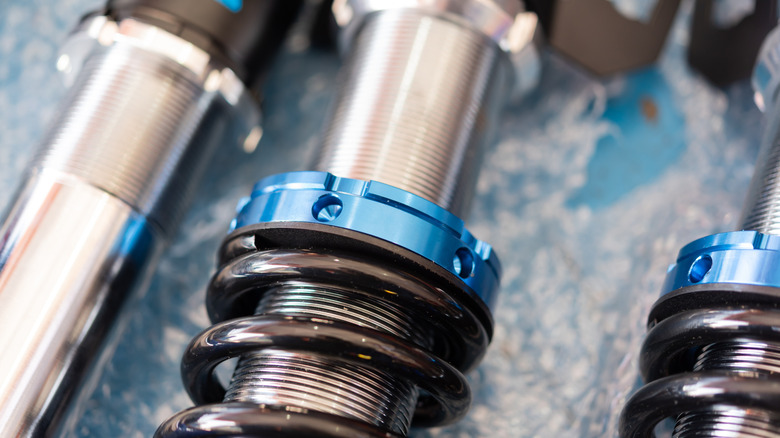
Now that we have tires, we need a suspension capable of keeping the car planted enough to utilize all that extra traction. A Corolla's factory suspension, like the rest of the car, is intended to be relatively compliant and basic. The 2026 model, both the hatchback and sedan, features a MacPherson strut up front and multi-link rear, a relatively common and readily-moddable setup. Toyota itself already does most of the work for us with the GR Corolla; all we have to do is emulate that.
So the next question, then, is what makes the GR Corolla's suspension so special? That actually translates to how high-performance vehicles handle so well – namely, a combination of stiff and low suspension that helps keep the car planted through the corners. You don't want factors like significant body roll or understeer, which tends to happen on these sorts of vehicles; even the GR Corolla is prone to understeer if it's driven hard. You want just enough understeer to keep the car controllable but not feel lethargic to corner.
Luckily, there are suspension kits for even brand-new Corollas already on the market. You have aggressive full coilover kits made by manufacturers such as BC Racingand Tein, designed to lower and stiffen the car for spirited street or light-duty track use. It's not outright going to make your Corolla handle like it's on rails, but it'll certainly provide a more engaged ride and aggressive stance to boot, if that's your thing. Alternatively, if you're looking for factory-but-enhanced, you can piecemeal it with mild upgrades like stiffer anti-roll bars, stiffer springs, and so on.
Upgraded brakes: $500 - $1500+
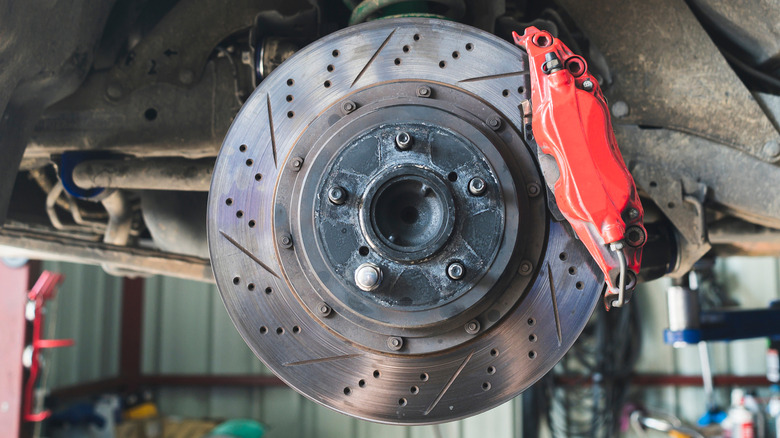
Alongside tires, brakes are quite possibly the most important system on your vehicle. You can have an engine, suspension, or any other number of failures, but you absolutely must be able to stop the car. So no matter what you decide, it's imperative that you never go cheap here and always opt for reputable brands with perfect fits.
That said, what can upgraded brakes do? Okay, there's one glaringly obvious answer: You stop faster. That's a given. But better brakes do more than just that — they dissipate heat more effectively, have a more responsive feel for greater confidence, and in some cases cut down on vehicle weight. You likely won't need full-blown carbon ceramic brakes like those used on supercars; indeed, good luck even finding those for a non-GR Corolla. Similarly, those GR Corolla brakes, while impressive, likely won't fit on a regular Corolla without significant modifications as they boast beefy four-piston calipers up front and two-piston rears, along with ventilated and slotted rotors.
Assuming you don't have the resources to retrofit GR Corolla brakes to a standard model, that still leaves you with some options. The standard brake diameter on a modern Corolla is 10.8 inches (with ventilated rotors) up front and 10.2 in the rear respectively, so any rotor in those sizes will fit with the right spindle. Moreover, upgrade kits exist that bump up the brake diameter — you may need bigger wheels to fit such brakes, though. They're also far more expensive since you're getting calipers as well. Total overhauls — calipers, pads, rotors, and lines — is certainly not cheap, but again, you never want to go cheap with brakes.
ECU tuning: $200-$1500+
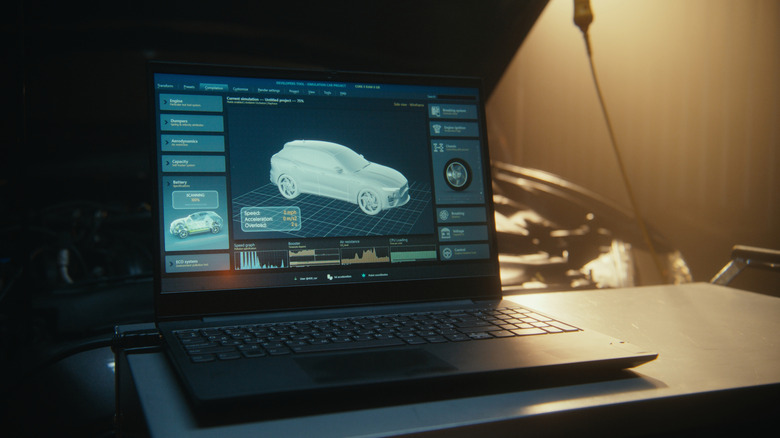
With all the handling upgrades out of the way, now it's time to talk power. By far one of the best ways to provide meaningful power gains with hardly any effort is with an ECU tuning module. These are devices which you plug into your car's OBD-II port, generally located below the driver's footwell in the dashboard — you may need a splitter as well, but those are plentiful enough.The parts themselves are likewise plentiful, with well-established brands like Apexi, Injen, and AEM all building such kits at varying price points. Or, if you're feeling spicy, go for a full-blown ECU flash or even a standalone ECU.
What exactly does all this mean, though? Let's rewind and talk about what exactly an ECU does. Short for Electronic Control Unit, your car's ECU is its brain, put simply. It tells a vehicle how much fuel to use and when and how much throttle the car needs, and it also controls parameters like electronic ignition timing. However, it's generally set up for more of a standard, eco-minded, and often lazy ride.
That's where ECU tuning comes in. As mentioned before, it comes in different flavors, ranging from mild to wild. What you'd likely be looking at is getting your ECU flashed, meaning you're modifying the ECU's parameters using a computer. You're basically telling the computer, "I want you to prioritize horsepower, not fuel economy." Despite its straightforwardness, it's actually a complex and involved process with any car (Corollas included), so it's best to take it to a specialist for this job. On the bright side, it offers great horsepower gains for relatively cheap and isn't invasive.
Bolt-on engine and exhaust upgrades: Widely varies in price
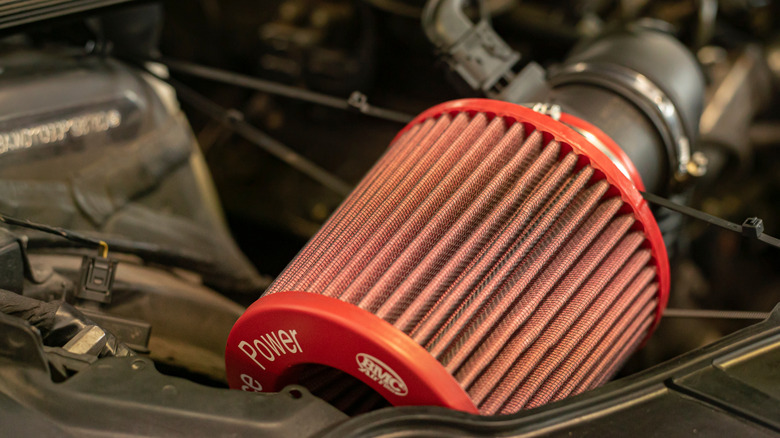
The ECU tune will only get you so far; what about other, mechanical upgrades for your Corolla's engine? Those parts also exist and are easy to come by, with everything from cold-air intakes to full exhaust systems and everything in between, built by a wide variety of brands. The Corolla is by far one of the most popular cars in the world after all, so it only makes sense that there's a healthy aftermarket culture. Many of these parts are bolt-on as well; you can install a high-flow cone air filter within an hour and the help of some videos on YouTube. Others — like the exhaust — will need professional installation, however.
All of these parts will have to work in synchronicity with the ECU for the most power gains. Think about it; if you put a bigger air filter and exhaust on your car, suddenly your engine can breathe far better than stock, so you need to tell the computer to accept more air. Of course, we're not aiming to boost the tune at all, since that's far more involved. But coupling these parts with a proper tune will allow the engine to actually utilize them to their potential. That said, your car is relatively smart. Fitting such parts without the tune isn't liable to brick your engine, though it might leave you with an irritating exhaust note.
Because there's so much variety here, it's all about personalization. A good idea is to replace stuff that needs replacing anyway. Time to change your spark plugs? Why not try higher-spec models instead? Rusty exhaust? Get a performance kit.
Our methodology
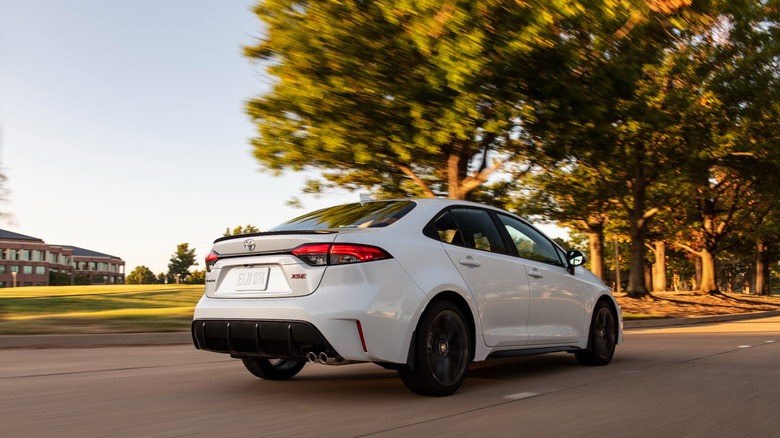
The specific cars we used for this article are the 2021-present E210 Toyota Corolla models, namely the sedan and hatchback. We did not take the GR Corolla into consideration, as it's already a factory-built performance Corolla and, naturally, hardly basic.
The parts were selected based on what has real, tangible performance results, as opposed to cosmetic add-ons. Moreover, interior modifications were not considered; this category is so expansive as to warrant its own list. We stuck with balanced upgrades which took into consideration the Corolla's character and enhanced it rather than significantly altering it. That ruled out things like radical suspension overhauls, forced induction, and functional aerodynamic elements requiring significant bodywork.
Lastly, we wanted to be absolutely certain that the parts themselves were good and fit the cars properly, so we sourced only from reputable manufacturers and checked the part numbers to confirm fitment where we could. Factors like how large certain parts were and what is used from the factory was sourced directly from Toyota, which publishes complete spec sheets of all current Corolla models.
As always, spirited driving is to be done within the local rules of the road, with safety the main priority. Performance upgrades or not, we do not condone the practice of reckless driving.