

Why Do Some Cars Make Popping Noises?
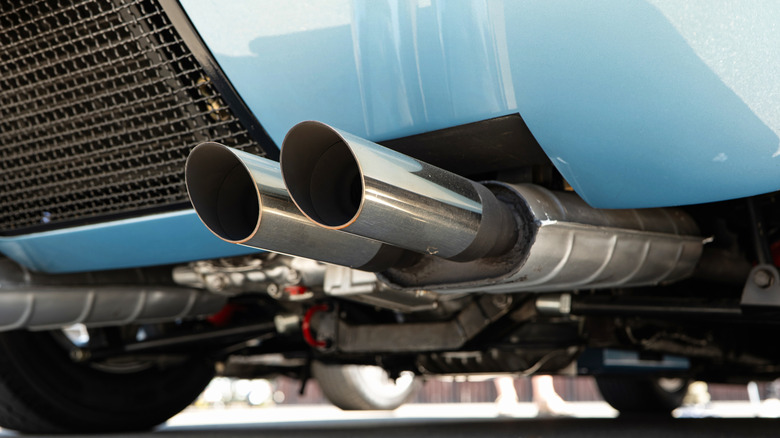
It's a running meme by now that the second you take your car to the mechanic, it refuses to make those same bad sounds you were hearing on the road. While a lot of those are hard to place, that pop from the exhaust is relatively easy to pin down, mostly because it's often pretty loud. You can also identify the cause once you know what to look out for.
The most common explanation for a pop is some of the fuel finding its way into the exhaust and burning up there, when it's supposed to do so in the cylinders. Several reasons contribute to them happening. One of these could be a crack or maybe a loose joint somewhere along the exhaust system. This leads to air slipping into the pipes, which then ends up lighting any leftover fuel. Things get worse with a worn spark plug or coil that can cause fuel to leave one or more cylinders, which then pops further down.
Sometimes the oxygen sensors malfunction too and tell the car's computer to add more fuel than the engine needs, relative to the air. Timing can create problems as well. Some cars quietly change how they feed fuel when you coast, and if the mix is too rich, you get those little pops. Just remember that not every pop is trouble. For instance, after a long drive, the exhaust can tick and pop on its own as the metal cools and shrinks.
Is it popping or backfiring (and is it dangerous)?
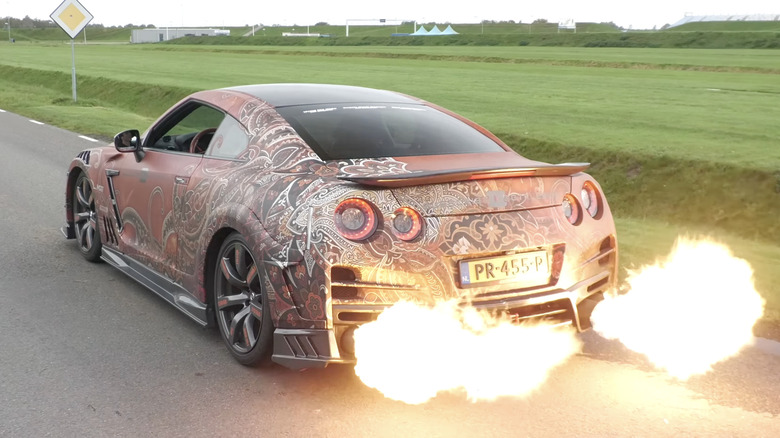
The word backfire is typically used to describe a loud pop, and every so often it's done so rightly, too. It's even caused by much the same stuff that causes a pop, though it typically describes a sharper bang. Sometimes, popping can get confused for something else, too: Knocking. This actually comes from deep in the motor and shows up as a metallic rap. It also usually strikes when you press the gas rather than lift your foot off.
That begs the question — is this really something to worry about? Sure, the occasional light popping can be ignored. In fact, plenty of performance cars are tuned to pop (backfire) for the drama. These cars use aftermarket exhausts that burble, and their fuel is metered so that some always slips into the pipe.
As for problematic pops, they are the ones that start out of nowhere, in a car with no tuning or history of them. Steady popping keeps shoving raw fuel downstream, and that slowly cooks the catalytic converter, a part that's pricey enough to be a top target for thieves. Sometimes these abnormal pops may be accompanied by a check engine light, and the car runs rough as well. This is when you should stop pushing your luck.