

5 Of The Safest Ryobi Power Tools You Can Give A Beginner To Start With
While it can be easy for prolific and experienced tool users to forget over time, tools can get downright dangerous without proper care. OSHA has basic hand and power tool safety rules for a reason: to keep the public informed about what's right and wrong as they work. Understanding tool safety is especially important for new tool users, even those trying out a basic, DIY-friendly brand like Ryobi. They need to work their way up to some tools, while others can form their simple yet effective beginner kit to get them accustomed to basic tool operation.
Generally speaking, it's not too hard to spot Ryobi tools that newcomers to the tool scene shouldn't pick up right away. The high-speed blade on a circular saw, the powerful chain of a chainsaw, and the thrust of a nailer, for example, aren't meant for the hands of a beginner. To prevent injury to the user and damage to the tool in their hand, these individuals should be guided by those with more experience and given tools that pose less risk of disaster. Even so, they should use these relatively safe tools correctly, further reducing the risk of accidents.
Fortunately, the Ryobi line isn't all overtly scary things like large, quickly moving sharp blades and projectile nails. Many of its tools are comparatively safe for first-timers looking to get hours under their belts.
1. 18-volt cordless drill
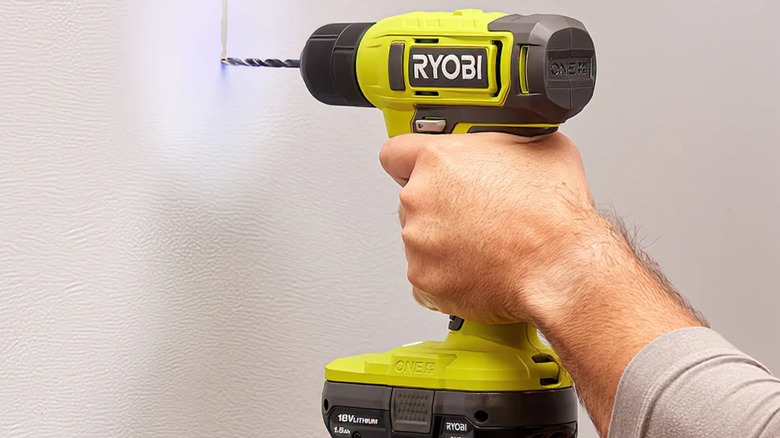
The cordless drill is truly a staple of any modern toolbox, and any DIYer or professional should have one around. Most importantly, they should know how to use it safely and effectively. With that said, this is a simple tool that doesn't take much skill to operate, and the risk of injury is low, so it's a solid candidate for a beginner's kit. As far as what Ryobi — one of the better of the major cordless drill brands — has to offer, the Ryobi 18-volt cordless drill is more than enough for a new user. It packs a reasonable amount of power without putting the user in life-altering danger.
At the same time, first-timers should know that using a Ryobi cordless drill should be done right. First and foremost, keep fingers and hands well away from the bit while it's spinning. It would take time and force to go through the hand, but it's quick to pull and tear skin. Despite this, you should avoid wearing gloves, as the material can catch on the spinning bit and pull your hand into the tool. Long hair should be tied back, dangly clothing or jewelry should be restrained or removed, and it's a good idea to wear a mask and eye protection. This way, when drilling into a material prone to creating dust, such as drywall, the particles aren't drawn in.
2. 40-volt cordless blower
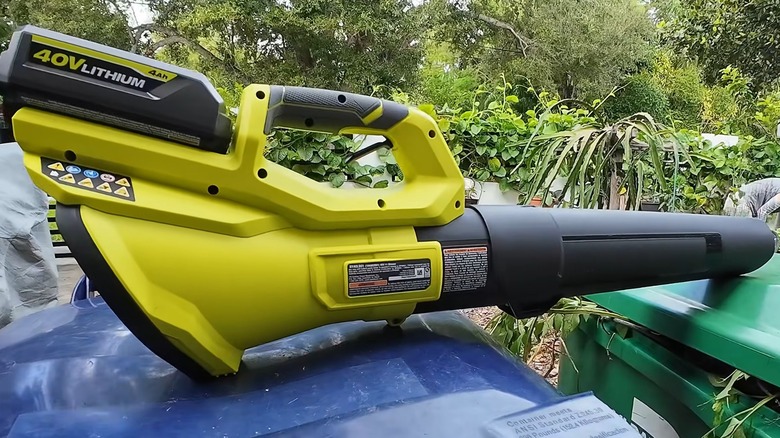
When an outdoor job is done and debris covers areas like patios and sidewalks, a good blower can clean things up quickly. Ryobi offers plenty of models for sale, such as the Ryobi 40-volt cordless blower, which aims for ease of mobility and cleaning effectiveness. This is another example of a Ryobi power tool a beginner could benefit from trying out, as it's straightforward to operate and the risk of bodily harm is minimal. Still, it's not accurate to say there's a 0% chance of bodily discomfort when using this overall user-friendly tool.
The biggest concern when using a Ryobi cordless blower is flying debris. The end of the blower should be positioned away from the face, but dust and sand are quick to fly around and create clouds in the vicinity all the same. Thus, these small airborne particles can reach and irritate the eyes and nose, so once again, eye protection and a mask are recommended to keep safe. Hearing protection is a must for all users, and opting for pants rather than shorts is also a smart move. Again, debris is unpredictable, and even a simple blower can kick pebbles and other hard, painful objects around.
3. 12-volt 6-inch pruning chainsaw
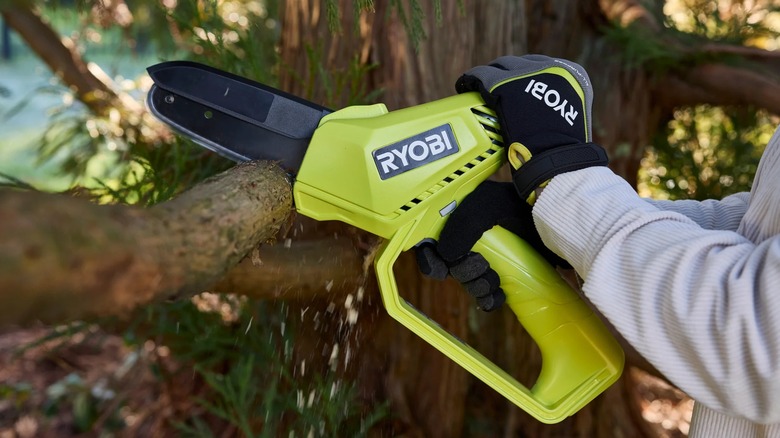
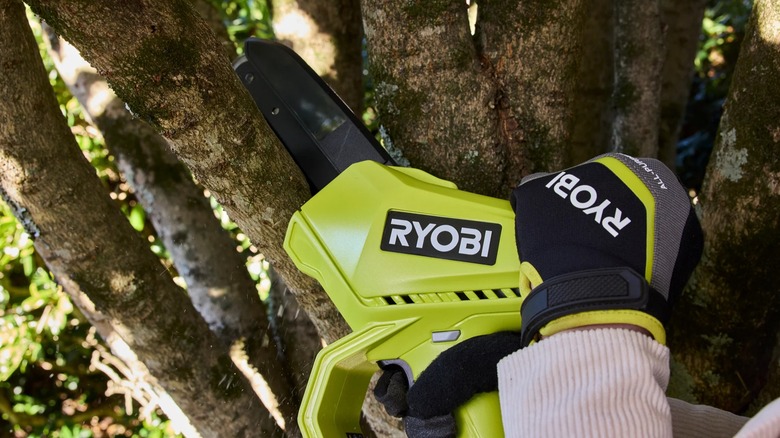
As mentioned, full-on chainsaws from Ryobi or any other brand are a bit much for beginners. They're big, heavy, powerful, and far too dangerous for the inexperienced. Fortunately, Ryobi does offer cordless mini chainsaw-like tools perfect for tight spaces and light use. For instance, there's the small and beginner-friendly Ryobi 12-volt 6-inch pruning chainsaw. This tool is basically a shrunken-down, battery-powered chainsaw designed for taking down smaller tree branches and limbs. It works on the pull of a trigger and features a guard over the blade for added user safety.
Of course, even in this compact form, this is still a chainsaw, so those handling it need to know how to operate it safely. Naturally, users need to be mindful of the blade, making sure not to put themselves in harm's way, whether or not the trigger is pulled. Users should always maintain a firm grip on the tool while cutting, ensuring it doesn't slip from their hand or swing downward once the intended cut is complete. Additionally, they should wear safety glasses, work gloves, and a mask when using this tool, given the likelihood of flying sawdust and wood chips.
4. Handheld electric cultivators
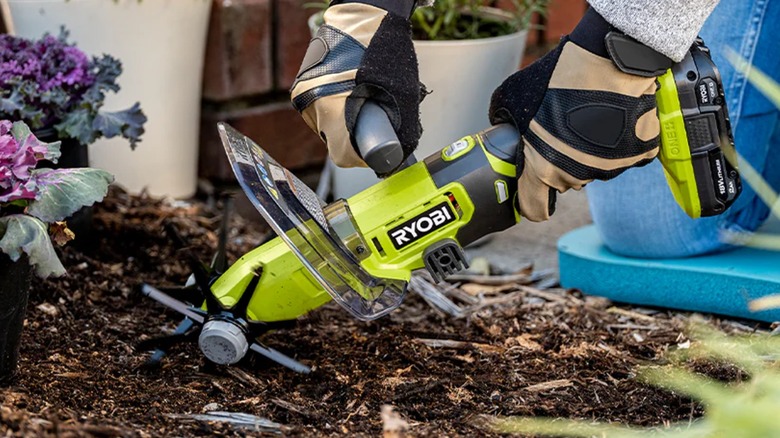
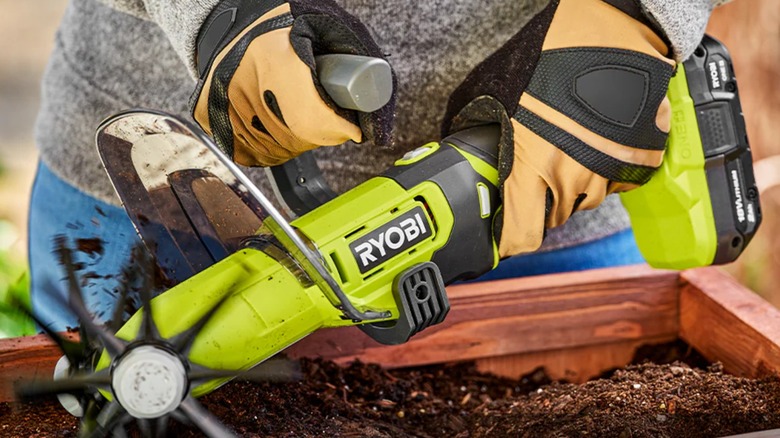
A key element of setting up an outdoor garden of any size is aeration. Plants and their roots need free access to oxygen to grow, so tools like cultivators are essential for loosening the soil to ensure ample airflow. While manual cultivators can get the job done, some of the best cordless yard tool brands, like Ryobi, offer handheld electric cultivators. This tool type is excellent for beginners, given its compact size, lightweight design, low power, and the fact that it doesn't require professional-level precision. Just attach a battery, pull the trigger, and insert the spinning tines into the soil for quick, effective soil shuffling.
Additionally, this tool doesn't require any extreme safety precautions. The biggest risk is coming into contact with the tines while they're spinning. If something's wrong with them, power down the machine and remove the battery before touching them. Otherwise, it's wise to take advantage of the added top handle for a strong two-handed grip and to wear gloves and goggles for added protection. Ryobi's cultivator comes with a protective shield to defend against flying debris, but extra eye and hand coverage is never a bad idea when using such a tool.
5. 18-volt 5-inch handheld random orbit sander
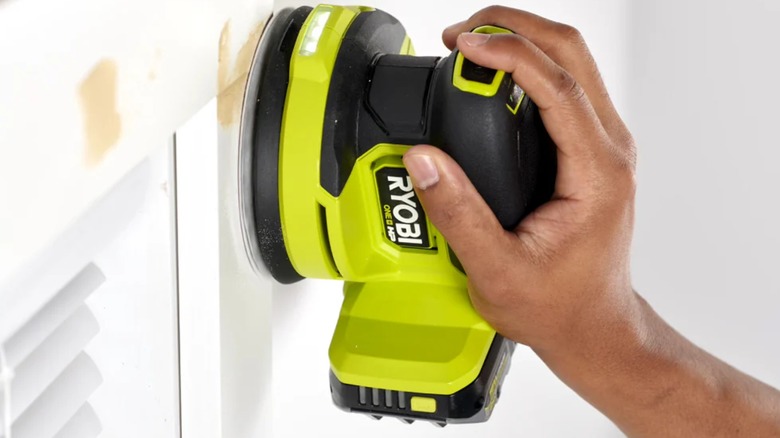
While the sanding part of woodworking might not look too complicated to the unfamiliar, there's a lot of nuance to grasp. Different sandpaper types, different sanders, and how to sand certain surfaces are all elements to study before getting started. For woodworking novices, Ryobi offers tools like the 18-volt 5-inch handheld random orbit sander to practice with. This is an easy-to-use, low-power, light sanding tool that is excellent for getting the hang of sanding techniques, sandpaper grits, and user form while sanding down a surface. Not to mention, it's another cordless Ryobi offering, making it even more straightforward to use.
Like with any sander, though, ample protection is crucial while using this random orbit sander. Users need a pair of goggles along with an effective face mask. Getting any sawdust in the eyes or inhaling particles during a woodworking project is far from ideal. A best-case no-mask scenario looks like mild throat and nose irritation, while worst-case means more severe respiratory issues or even cancer. More extreme outcomes are more likely when sanding something coated in lead paint, for example, which needs to be identified before starting. This way, the necessary Environmental Protection Agency-recommended steps to protect yourself can be taken.
How these tools were chosen
A multi-step process went into selecting these Ryobi tools as some of the best for beginner users. To start, we combed through the Ryobi power tool catalog, sorting out anything that was overtly a risk for the inexperienced — heavy-duty saws, nailers, and the like. Simultaneously, items that had no real use beyond their setup, such as jobsite fans and lights, were excluded. Despite their safe operation, they don't offer much for a power tool newcomer to learn. This narrowed it down to tools that fit both categories: simple, relatively safe tools that serve more tangible purposes on the job.
From here, we sifted through the remaining tools and chose a few that could teach first-time Ryobi users about tool safety. These tools are simple to use and helpful at work, but if the user isn't careful, they could cause minimal harm. In this sense, they have a practical, educational purpose, getting beginners acquainted with ideas like power tool safety, responsible use, and the consequences of misuse without putting them in serious danger.