

5 Ways Your Phone Has Quietly Changed How You Travel Abroad
What is the first thing you do when you land in a foreign country? You likely reach for your phone — and you probably aren't calling anyone to say you landed safely, either. It's just habit now. Check the signal strength, open Maps, check your messages. It's automatic, as natural as looking for the time. And that's not really a criticism, as the smartphone has genuinely made travel easier in so many ways. Booking a flight takes no time. Language barriers pose little problem. The best-reviewed restaurants are just a click away. Heck, you can even translate an entire foreign-language menu.
No one misses those hotels that turned out to be a shadow of the photos you were given or that dry, overcooked meal that really wasn't what you needed after a 13-hour flight. But there are quieter changes happening. Changes that are more difficult to notice because they crept up on us gradually. The smartphone hasn't just changed how we get around; it has changed the travel experience itself.
These changes might not be entirely positive — although they don't really make the smartphone a villain, either. However, they are worth paying attention to. After reading, you may even be motivated to leave your phone in the hotel for a couple of days, or at least turn it off for an hour. Here are five ways your phone has quietly changed how we travel in other countries.
You no longer experience getting lost
If you've ever taken a wrong turn when traveling, chances are it led to an unexpected moment you've never forgotten. A street food stall with incredible flavors, a stranger who took you to a place most tourists never see, or a festival you stumbled into without knowing what it was. These things still happen, just less often. GPS on smartphones has quietly removed the "getting lost" aspect of travel and, subsequently, is slowly erasing those unplanned moments that once defined the experience.
But let's not get too nostalgic about how things once were, even if the smartphone has replaced many traditional travel items you might miss. The upside is real. Gone are the days of unfolding giant paper maps on a street corner, looking unmistakably lost and a possible target for every tout and taxi driver in a three-block radius. One earbud in, and Google's GPS Girl is softly whispering directions in your ear — you're moving through the city like a local.
Research from the University of Southern California has shown that those who rely on GPS the most are those who already struggle with directions. That makes sense. Another study has shown that the heaviest GPS users have the worst sense of direction. That also makes sense. But that second study shows those heavy GPS users didn't start out like that. It shows that the more GPS is used, the more spatial memory declines. Long-term travelers who spend lengthy periods exploring new places are especially exposed to this. However, GPS is more of a tool than a threat; every generation has adopted strategic approaches that take some of the thinking strain away. We didn't stop using calculators, for example. But that wrong turn that leads somewhere unexpected is fast becoming a thing of the past.
You rely less on local knowledge
So, Google Maps was built for navigation. But, of course, Google being Google, they had to take things much further. Over time, the app has quietly become the first thing travelers open for just about everything. Where are the best-reviewed restaurants? Which hotel has the most 5-star ratings? Is there a pharmacy that isn't going to charge me an inflated price for aspirin? Google Maps even reviews bus stops and bridges if you need that knowledge. Yelp, TripAdvisor, Booking.com — they all do the same for their niche corners of the market. Travelers now arrive at a destination with a list of places they want to eat, shows they want to see, and attractions they are dying to visit. They even know how much everything's going to cost, which is ideal if you want to travel around the world as a budget backpacker. It's just that apps can answer just about every question a local once would have.
On top of guidebooks and other travelers, locals were once a primary source of information. This may have occasionally opened you up to potential scams or misguidance, but it also meant spontaneous encounters. Review sites might protect you from tourist trap restaurants, but asking a local might have taken you somewhere you probably would never have gone. Yelp can help you avoid a terrible restaurant or a language app might help you translate a Chinese menu, but that local who would have stepped forward to help could well have been the starting point of an amazing trip. Going off-plan carries risks, of course. A disappointing meal, poorly made handicrafts, and a trip to a local landmark that turned out to be a waste of time are all possibilities. However, serendipitous moments are what travel is really about.
You don't remember places the same way
Almost 2 trillion photos were shot in 2024, and the vast majority of them were shot with smartphones. Travelers must have made up a significant portion of that. They snap just about everything they look at: Sunsets, street food, temple doorways, views from bus windows, the inside of a pocket, the back of someone's head. It's no wonder we take so many because there are some brilliant phone cameras out there — but research suggests a cruel irony.
Fairfield University psychologist Linda Henkel discovered that photographing everything you see actively weakens your ability to remember events. She called this phenomenon the "photo-taking impairment effect." A follow-up study by Binghamton University researchers Rebecca Lurie and Deanne Westerman confirmed the same findings. It showed memory to be worse for both specific details and the broader meaning behind the photographs.
The traveler who spends an entire safari or carnival shooting or filming the spectacle remembers less than what the person using just their eyes does. This is exacerbated by the fact that many travelers don't even look at most of their photos again. A picture sitting unseen on a camera roll is simply doing nothing for the memory.
Those precious memories of that Marrakech market or stunning mountain pass have quietly shifted from something that happens inside your head to a moment shared between your brain and phone. It's not all bad news, though. Posting that photo on Instagram actually strengthens the memory of the moment. And if you do go through your backlog, you are able to recover some of those lost memories. The problem is, many travelers never do.
You're always partially at home
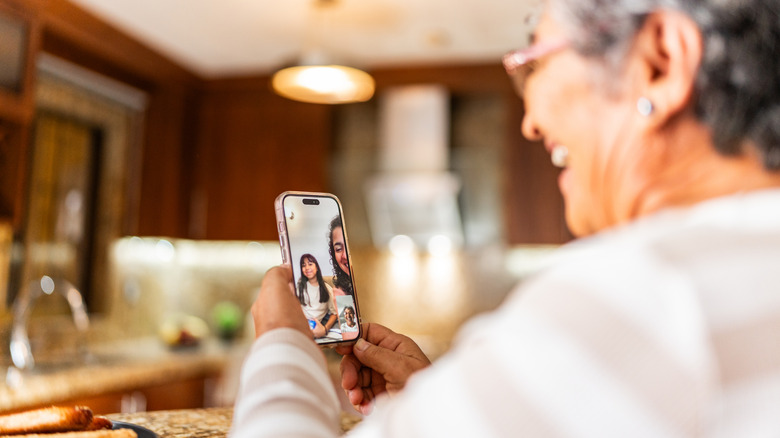
It doesn't matter if you travel to the next town or the ends of the Earth; a smartphone in your pocket means you're never fully away. You could be sitting on a tropical beach somewhere trying to enjoy a stunning temple sunset only to be distracted by answering emails or responding to notifications. It's a gadget that has changed the course of history, but that always-on culture has created obligations that can be difficult to ignore.
Somewhat unsurprisingly, research shows that staying plugged in while on vacation chips away at the mental recovery travel is supposed to provide. Additionally, a study by digital news publication Quartz of 24 volunteers on a completely digital-free vacation found ditching the smartphone to be difficult. Unease and restlessness set in almost immediately, and worry and anxiety soon followed.
The most tech-dependent volunteers, of course, found it hardest. Others found it a bit easier if they were in a rural setting with others and didn't have a backlog of work waiting for them at home. Those who managed to push through found they were experiencing more authentic encounters with locals. By the end, they also discovered that the social media likes and notifications they were missing out on no longer held any real appeal.
But there are definite positives to being able to stay more easily in touch with loved ones, especially elderly parents or kids who have been left at home. In fact, video calls like this were found to actually add to the experience and offer genuine peace of mind that previous generations didn't have. That said, it pays to sign out of Slack for a bit, put the news alerts on mute, and just get on with the relaxing you're supposed to be there to do.
You choose places for photos, not experience
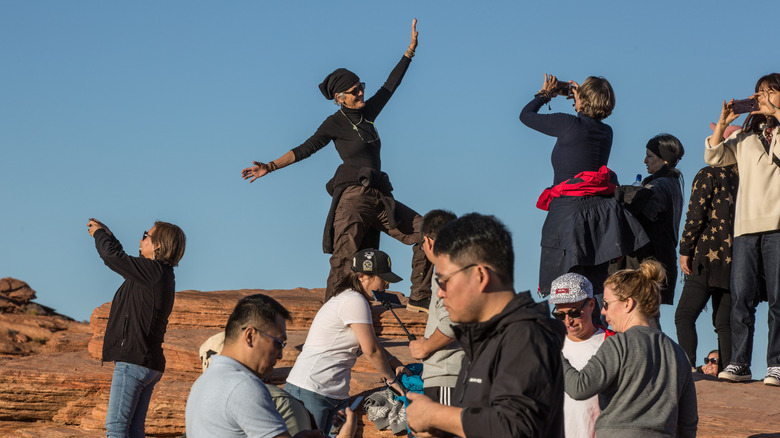
Chiang Mai, Thailand: Visitors to a temple are spotted ditching mandatory shoulder and leg coverings for social media-bound shots. Santorini, Greece: Elbows and arguments as throngs of tourists jostle for sunset photos in a reality far removed from brochure photos. Angkor Wat, Cambodia: Tourists prioritize getting the right filter despite being in front of one of Earth's most awe-inspiring sights.
These things happen in places where they shouldn't. The crowds, the jostling, the disrespect. They are often the result of people visiting places they saw on Instagram, even if the destination is completely wrong for them. Everyone is chasing the same image. But when this happens, the point of going anywhere starts to blur. Even luxury travel is being affected by this "monkey see, monkey do" approach. But a backlash is quietly taking place.
As per the Independent, a study by Preferred Hotels & Resorts shows that around two-thirds of luxury travelers think hotel design has become generic and overly focused on looking good for influencers. However, most travelers also say they would no longer pay for these accommodations. Around eight in ten say the greatest travel luxury now is to be somewhere without feeling the need to document it, while most say they now prefer to get information from locals.
Hopefully, the age of algorithm-driven travel is coming to an end. What benefit does visiting an iconic place just to take formulaic photos for likes really have anyway? Maybe we should go to places that suit us better rather than chasing Instagram moments. And maybe we should use our smartphones for tasks like making trip planning a breeze rather than curating our lives for an invisible audience.