

Torque-To-Yield Bolts: What Are They, And Why Do Automakers Use Them?
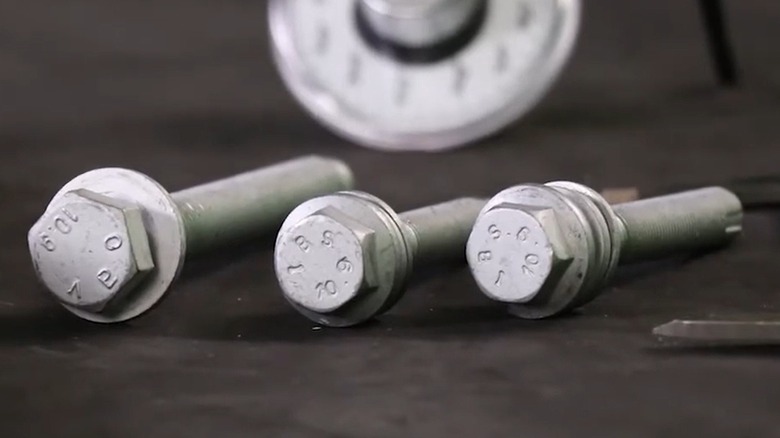
Your vehicle is composed of thousands of individual parts, ranging from wiring to body panels, all of which are held together by an intricate network of fasteners. These unsung heroes come in many shapes and sizes, ranging from clamps to screws, nuts and bolts to springs, and everything in between. One of the most important and somewhat misunderstood of these components is a specialized type of bolt, called the torque-to-yield bolt, or the TTY bolt. At first glance, these appear to be your standard, albeit longer bolts, but they're actually clever engineering tools in their own right.
Put simply, a TTY bolt is designed as both a bolt and elastic clamp. How it works isn't too dissimilar from someone pulling two blocks together from the middle. Imagine a piece of metal that gets stretched out lengthwise. It wants to return to its original shape, so it tries to un-stretch itself, but it can't, because it's fastened into something. Bigger bolts only work up to a point; the bigger a bolt is, the more resistant it is to that stretching action. Those jobs are best suited to a TTY bolt — it uses that clamping force to provide additional suction on whatever it's acting upon, meaning you'll likely encounter them with things like camshafts, or changing your head gasket if it blows.
These bolts must stretch to achieve their intended effect, meaning they cannot be reused. Their clamping strength lessens after just a single repeat usage, meaning you'll likely have gasket leaks or other problems. As such, always consider TTY bolts as single-use items. With that out of the way, let's discuss what exactly they're used for, how they work, and what tools you'll need to properly fasten them.
Where these bolts are useful
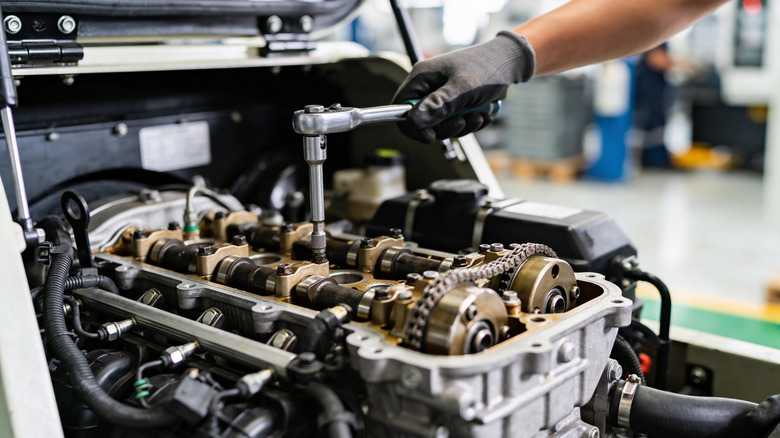
These bolts take more of an active role than standard bolts, acting as both a clamp and a fastener at the same time. The main difference is the force they exert; whereas a typical bolt only applies as much torque as one tightens it to, a TTY bolt's elasticity means it's exerting additional force, because it wants to return to its original state. This also means that a TTY bolt experiences immense stress during installation, effectively permanently damaging it from the moment it's properly tightened.
At first glance, one might question the veracity of a bolt that breaks if you use it correctly. That's actually the reason why they're so often used in high-pressure applications; because they're designed to torque to their mechanical limitations, they're particularly useful with engines and high-precision running gear components. Using incorrect size head bolts is a lesson automakers have long-since learned, though the issue does crop up from time to time — for example, it's arguably the main reason why Ford's 6.0-liter Power Stroke was so loathed by consumers.
To properly install a TTY bolt, you'll need a typical torque wrench and angle gauge, along with the unique diagram of your work to make sure you install them correctly and in the right order. Correctly torquing a TTY bolt likely won't require excessive difficulty; they're engineered to stretch without a ridiculous level of pressure applied by the user, after all.
How do TTY bolts work?
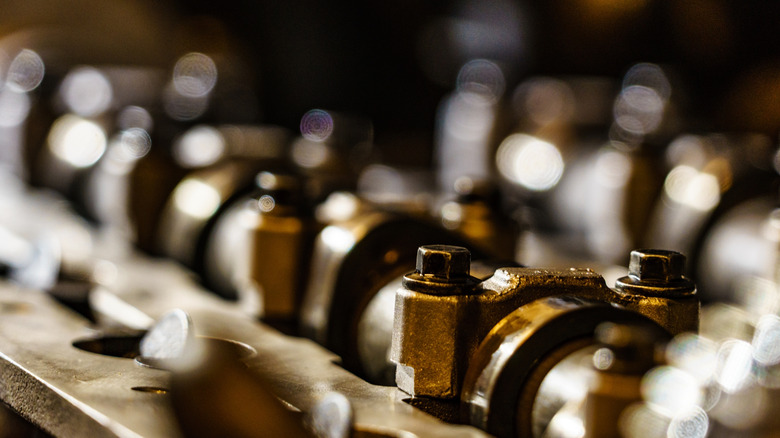
TTY bolts function the way they do because of how they're designed. A traditional bolt functions at a certain range that's below the point of permanent deformation; TTY bolts operate close to or within that range, known as yield. This installation method is what gives them the yield in the name. Think of yield as a point when the amount of torque the bolt is applying starts to plateau. If you want to apply a very consistent and specific level of torque over a lot of heat cycles, having a longer, flatter curve means the bolt won't lose its clamping force.
That's the magic of the TTY bolt — they're specifically engineered to provide a consistent clamping force anywhere within their yield point, utilizing specialized metallurgy, heat treatment, and other manufacturing processes to achieve a greater yield point than other bolts — meaning you can tighten them more accurately than another bolt of similar diameter and length. This provides an additional level of precision than what is normally achieved with a torque wrench, making it particularly useful for clamping pressurized components, certain metals like aluminum, and anything requiring gaskets to avoid overtorquing or undertorquing.
Much like any other bolt, every TTY bolt has a specific yield point and requires adjustment by a torque wrench to get it right. Every engine has its own individual requirements, typically involving a multi-step process of tightening to a specific torque spec, backing the bolt out by a certain amount, then re-tightening to a different spec. Moreover, on gasketed components like cylinder heads, the bolts must be tightened in a specific order to prevent leaks. Just don't overtighten them, otherwise you could break the bolt and have to remove it.