

What Is A Dog-Leg Pattern Gear Shifter And How Is It Different From H-Pattern Gearboxes?
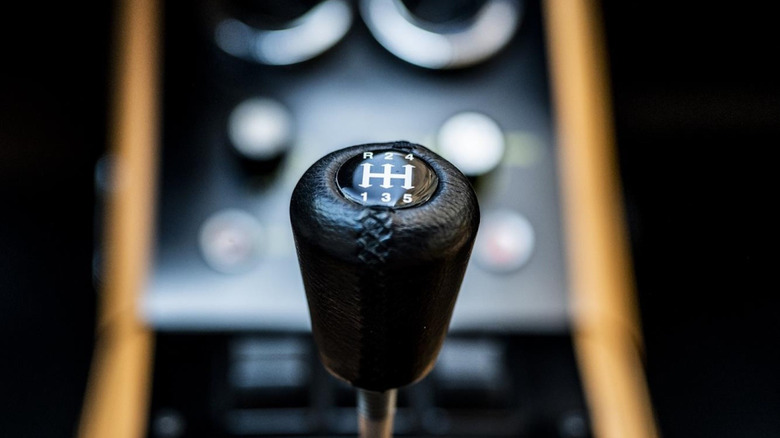
If you drive or have driven a manual car made somewhat recently, chances are your shifter is in an H-pattern. Second gear is straight down from first, fourth gear is straight down from third, and reverse is all the way over to the left and up.
However, there is another shift pattern that has occasionally shown up on performance cars. That's the "dog-leg" pattern, called that way because the shifting pattern looks like a dog's leg. First gear is all the way to the left and down, requiring you to shift over to the right and up to shift into second gear. This layout was predominantly used in European performance cars like a number of BMWs like the E30 M3 and 2002 Turbo. Additionally, it saw extended use in Lamborghini's iconic wedge-shaped Countach and Diablo.
As for why, it's not a case of a European brand doing something just for the sake of being different than an automaker across the Atlantic. There are some actual compelling reasons why first gear isn't as quickly accessible as the rest of the gears on a dogleg shifter.
The dog-leg shifter: all for racing
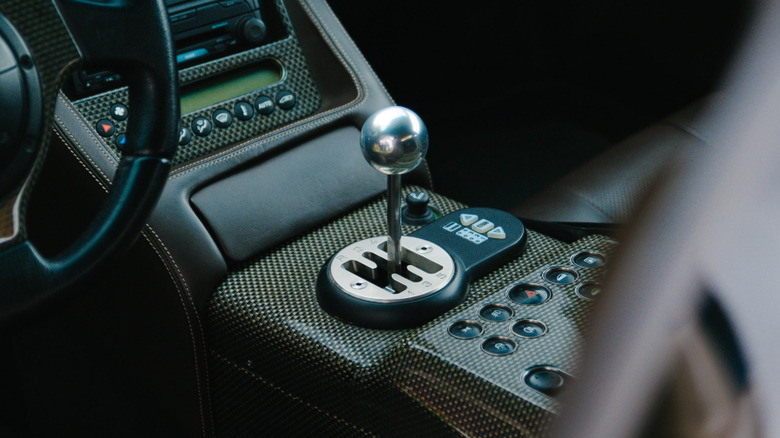
As with a large portion of automotive technology, the choice of dog-leg over H-pattern all boils down to racing. Think about what gears you are more likely to be using in a European GT car like the aforementioned BMW M3. 0-60 sprints might be useful a few times during any given race, but you aren't going to be upshifting from first gear all that many times during any particular maneuver. if you've done any racing, this becomes a lot more clear; you're much more likely to need to quickly shift from second to third gear.
Meanwhile, in a big American muscle car like a Buick GSX, you're shifting from first to second as quickly as you can to beat a Chevelle off the line at a drag race. The H-pattern is better suited for straight line tests of speed from a dead stop.
Nowadays, manual performance cars just about barely exist. Modern vehicles with automatic transmissions fitted with paddle shifters, dual-clutch gearboxes, and computer controls are much faster than a human can physically shift gears anyway, making the dog-leg vs. H-pattern shifter debate largely irrelevant unless you're a fan of the kinds of classic rulers of the road that famously had these types of manual transmissions.