

5 Disastrous Car Mods That Cost The Owners Big
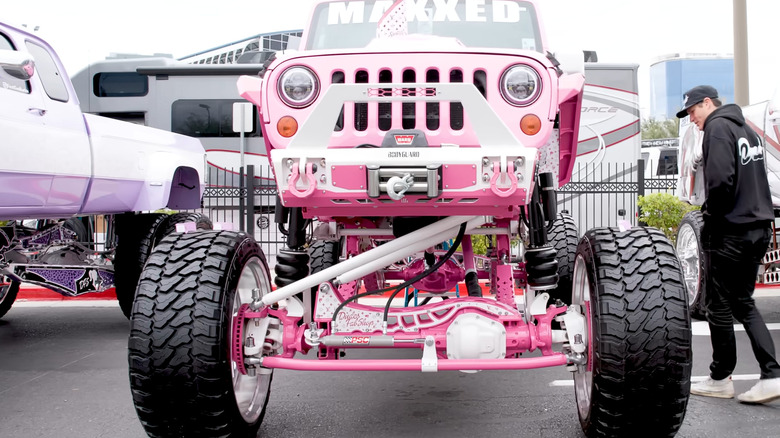
Modifying a vehicle that you own can be one of the great joys of the automotive world, provided that you do so correctly. Done wrong, this can result in destroyed car components, massive fines, voided warranties, and major bills due to your insurance refusing to pay out after an accident. The fact of the matter is that the automotive industry makes hundreds of millions of dollars a year by selling people on unique styling, improved performance, and better capability through "mods" — as aftermarket modifications are known in the industry. Now, some mods genuinely do add to a vehicle, such as quality suspension upgrades, better brake bits, and increasing power within reason. However, a large segment of mods only look good on social media until noticed by law enforcement or insurance adjusters.
Improper installs can also result in bills that dwarf any benefit that you got out of them. What makes the car mods on this list particularly problematic is how comprehensively they can go wrong. First there might be fines, followed by court appearances in some cases, and even criminal charges in extreme examples. Then, insurance complications often come at the worst possible moment, which is when an accident has happened, and you find out over the phone that coverage is unavailable. And for mechanical damage, a single stressed component can pass that stress onto adjacent systems until damage is unavoidable. So, with all that out of the way, here are five popular car modifications that can result in a huge bill for those that indulge in them.
Removing the Catalytic Converter
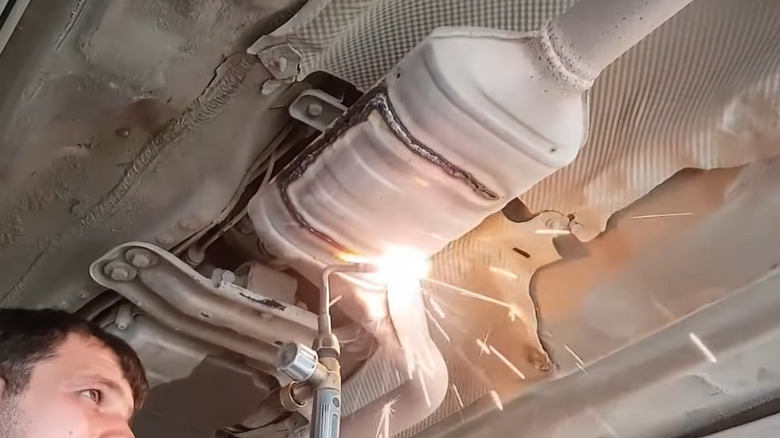
If you've ever heard an obnoxiously loud car at a meet or on the highway, it either has a very tuned exhaust system or has had the catalytic converter removed. For those who aren't aware, the catalytic converter is a unit mounted towards the end of the exhaust line. Its primary purpose is to reduce emissions by passing the exhaust gases through a honeycomb-like mesh structure filled with certain precious metals like platinum and palladium.
Those precious metals are the primary reason why some people like to steal your catalytic converter. Now, it is well documented that removing the catalytic converter from a car results in reduced backpressure in the exhaust system, which can result in marginal power gains. However, it's worth mentioning that the exhaust sensors in modern cars are very advanced, so reducing backpressure (by removing the catalytic converter) can actually trick the engine computer into making slightly less power as the downstream O2 sensor would be affected.
Then there's the legal ramifications. Under the Clean Air Act, which was passed in 1970, car modders can be fined $5,761 per component that is tampered with, and criminal penalties can run as high as up to $25,000 per day of driving while knowing your cat system is not up to scratch. Add to that the fact that a cat delete is illegal in every single state in the U.S. because of the harmful emissions that are let out because of it, and this particular car mod has only negative consequences.
Straight-Pipe Exhausts / Muffler Deletes
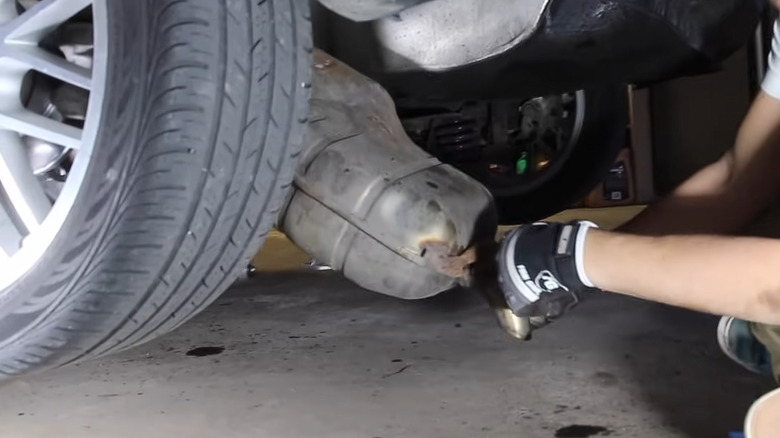
Straight-piping a car can be understood as being a more aggressive form of cat delete. A straight-pipe mod on a car will also include removing the muffler — which, once again, adds to the sound the car makes from the exhaust. Now, the intention behind this is usually to gain more power, though some people will be doing it simply to make their car louder. However, the amount of difference that this mod can make (at least from a performance perspective) depends largely on the type of engine that is in your car. Naturally aspirated engines, i.e. those without a turbocharger or other forced induction, will not benefit greatly from a straight pipe, cat delete, or a muffler delete.
However, as we mentioned earlier, the backpressure in the exhaust system and associated lines is reduced as the result of an exhaust mod like this. As a result, any vehicle equipped with a turbocharger has to overcome less resistance when that turbo is spooling up. Resultantly, it reaches boost RPM a little faster, which means it can deliver its additional turbo power a bit quicker. However, the results you get will vary greatly depending on the type of turbocharger as well as the specific layout of the turbo and exhaust components in the engine. In addition, your car may become non-compliant with noise laws, and you will be illegal due to the removal of the catalytic converter, resonator, and muffler, so the same fines from a cat delete will apply.
Pop & Bang Tunes
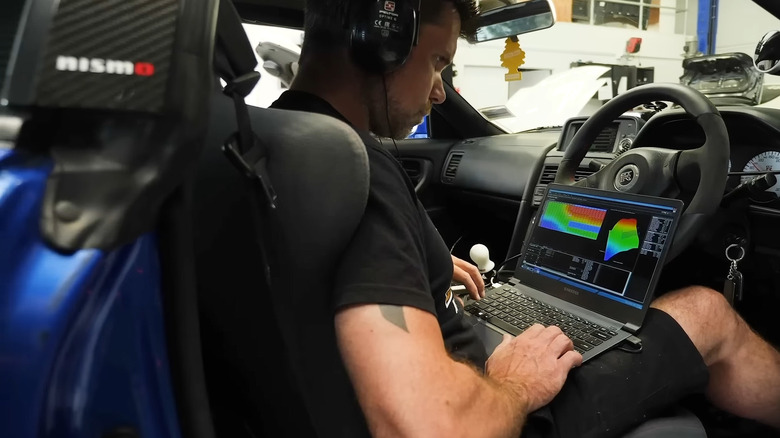
Pop and bang tunes, which are sometimes called "popcorn tunes" or "burble tunes" in the community, are a result of modifications to the car's software that purposely creates controlled exhaust backfires for sonic effect. There is no performance or efficiency gain behind a popcorn tune, as it is purely performative. The only real benefit of having a popcorn tune is that it makes your car sound better to some people; a lot of the "fun" you have with this sort of tune comes down to your driving skill. If you're curious, that pop-pop-pop sound from the exhaust is actually unburned fuel that is combusting inside the exhaust pipe and making mini-explosions, which is where the noise comes from.
Now, in a stock, from-factory car, there is very little fuel (if any) that manages to bypass the engine and get into the exhaust system. In performance-oriented sports cars like Lamborghinis and Ferraris, the engine sucks up so much fuel that some of it does indeed get into the exhaust and gets burned off. However, owners can opt for a software change to their everyday vehicle that alters the fuel-to-air ratio that the engine uses, thereby letting more fuel than is needed into the engine intentionally. A change in the ignition timing then delays the ignition ever so slightly, pushing the explosion (combustion) into the exhaust system instead of in the engine. Users should be warned that this entirely cosmetic mod adds stress to basically every component that it affects, and can come with hefty repair bills –- not to mention potentially getting ticketed for noise complaints.
Huge Oversized Wheels
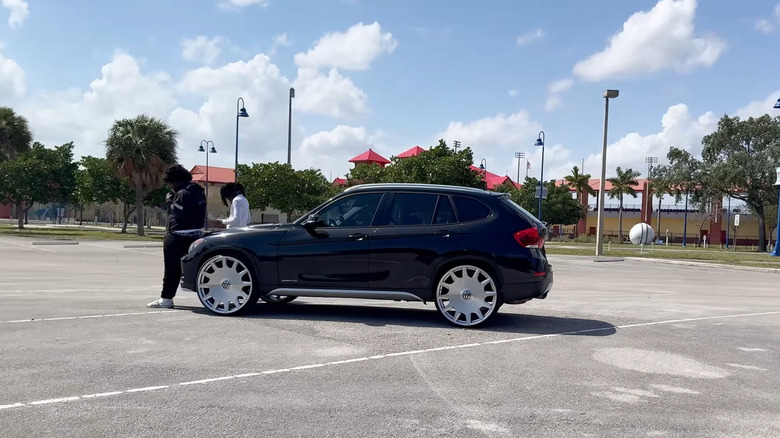
You might have seen cars with wheels that are undoubtedly too big for that vehicle. However, in many cases this isn't a decision made by an owner out of ignorance but purposely as a cosmetic upgrade. Of course, there are the comically large wheels that some low-rider builds use, and there are plenty of documented cases of enthusiasts outfitting their weekender builds with extremely large rims as well, so this isn't an uncommon occurrence in the community at all.
However, the consequences of this visual upgrade are anything but cosmetic, with several stresses being applied to different systems in the car. First off, we should talk about the brakes and suspension, which can be negatively affected if the wrong wheel size is used on a vehicle. Heavier, larger wheels also increase the unsprung weight of whatever car you equip them on, which could make a difference to insurance claims and might also raise some eyebrows when you go to get your plates renewed. There's also the non-zero chance that you will hurt your acceleration figures with larger wheels, and potentially your fuel economy as well.
If anything goes mechanically wrong, the replacement costs for multiple critical systems in the car will be quite high. Furthermore, since the size of your tire must change to match the wheel rim size, even things like the speed rating and width of your tire might change. If that happens, and you end up not using manufacturer-recommended tires and wheels, there's a chance that insurance will negate any claims made after an accident.
Lift Kits
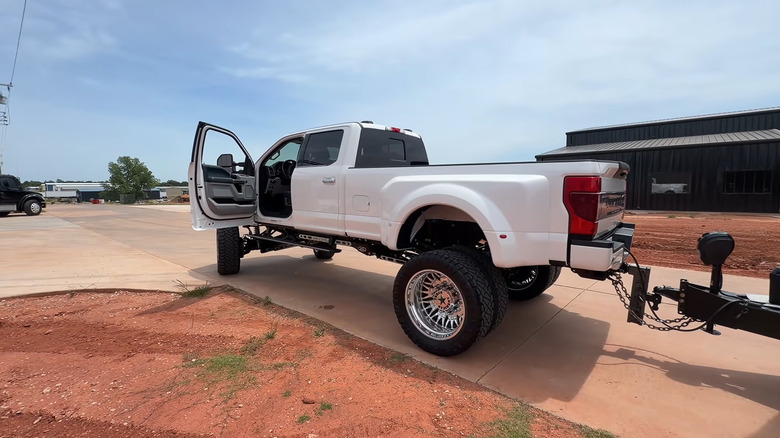
Lift kits are one type of very popular truck mods that have a major impact on fuel economy, and not in a good way. When done right, a lift on a truck can give it extra ground clearance, which is useful if you travel with your truck off-road a lot. The issue starts when people only add a couple inches to the truck without any of the other ancillary modifications that are supposed to come with it. For one, the suspension will need to be adjusted, as will the brakes and some other bits and bobs. The entire center of gravity for the vehicle also changes, so it's best to have a professional do the install to make sure it's done properly. Not following through with all required procedures can result in an expensive repair bill, a denied insurance claim after an accident, or possibly both.
There's also common consensus that towing with a lifted truck might not be the best idea (unless certain other modifications have been made to allow safe towing), given that the entire weight distribution, lean angle, and chassis orientation have changed on the vehicle. Some people also take the lifted truck to the other extreme through a "squatted" build, sometimes known as the "Cali lean" or "Carolina squat", which involves raising the front and dropping the rear. This gives a squatted truck its own set of separate issues, least of which how it's outright illegal in some jurisdictions like Virginia, Tennessee, California and both North and South Carolina.