

5 Common Truck Accessories That Have A Major Impact On Fuel Economy
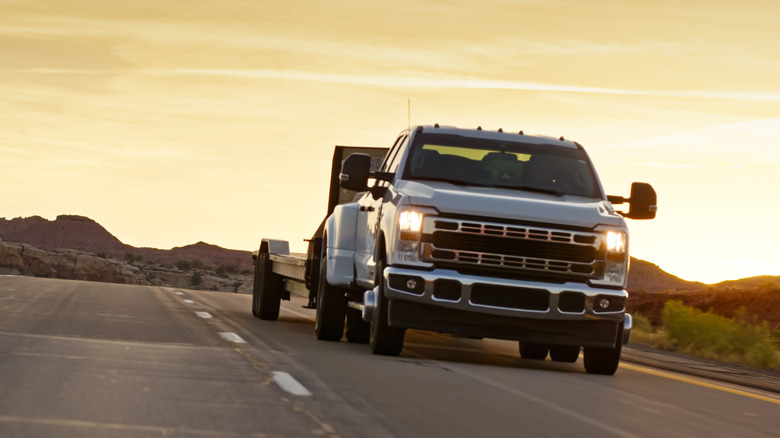
If you're going to drive a pickup truck, you've got to go big or go home, right? Driving down the highway, it feels like most truck owners would agree. You don't have to travel far to see one completely decked out with all the bells and whistles: Lift kits, oversized tires, the absolute works. But how many of the most popular truck upgrades are actually doing more harm than good?
Pickup owners might not realize it, but many of these accessories come with an unexpected tradeoff: worse fuel economy. From poorer aerodynamics to greater rolling resistance to more weight and engine load, even small changes to a truck's shape or mass can cause the engine to burn more fuel to maintain speed. Sure, these upgrades can actually be useful, but they also run the risk of making trucks work harder and giving you worse mileage in the process. These are five of the most common examples.
Lift kits
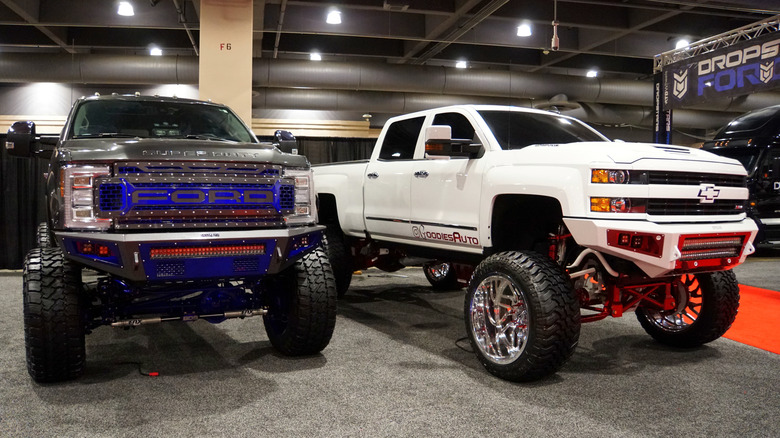
The lift kit might just be the most instantly recognizable truck mod around. This raises the body of the truck higher from the ground, giving you some additional clearance for off-road driving (or just driving to the grocery store). No matter what you think about how it looks, one thing remains true: It's not going to help your fuel economy.
It's all because of the added weight. Lift kits mean heavier suspension components plus extra brackets and hardware that increases the overall mass of the truck. Any additional weight will force the engine to exert more energy to accelerate and maintain momentum, meaning less efficient use of fuel.
Aerodynamics are another major concern. Off the manufacturing line, your truck is built to handle airflow as efficiently as possible for its size and shape. Lifting the frame farther away from the road creates a larger gap underneath the vehicle, meaning more air can circulate beneath it as you drive. That additional airflow increases aerodynamic drag, which forces the engine to work harder to maintain its speed. Again, that's going to ding your fuel economy.
Oversized tires
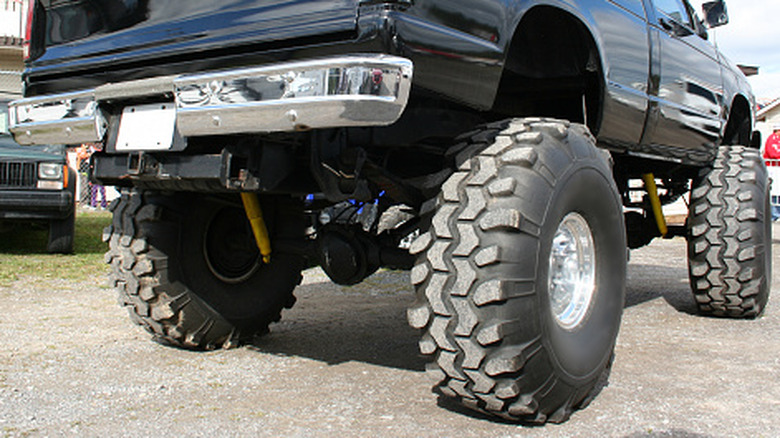
If you're installing a lift kit, odds are you're also adding bigger tires to your truck. After all, no rugged look is complete without them. And while they can improve traction on loose off-road surfaces, bigger tires can also reduce fuel efficiency. A few different factors are to blame here.
For starters, the width. Wider tires create a larger contact area with the road, meaning more rubber touches the pavement at all times. That generates greater rolling resistance, demanding more energy to keep the truck moving forward. That causes the engine to burn more fuel just to overcome the extra friction between the tires and the road. Larger tires also tend to be heavier. Extra tire mass increases rotational inertia, giving the engine even more reason to work harder to get the tires spinning.
Diameter plays a role as well. Oversized tires change the relationship between engine RPM and vehicle speed. If tires are too large relative to the truck's gearing, you might push the engine outside its ideal torque range. That forces the powertrain to work harder to maintain speed, which also means worse fuel economy.
Heavy steel bumper winches
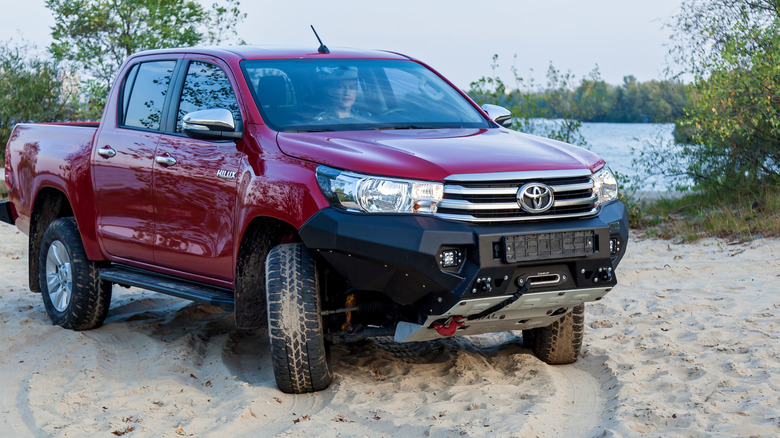
Steel bumpers with integrated winches are another common truck upgrade. But these heavy-duty setups also come with a significant fuel economy tradeoff. Weight is the most obvious reason. Steel bumpers are much, much heavier than factory bumpers.
Even adding just one to the front of a truck can place a lot of extra weight over the front axle. Installing both front and rear steel bumpers only makes things that much heavier. Factor in the extra weight of the winch, and you're looking at a much heavier curb weight than before. Every pound added to the vehicle means more energy needed to accelerate.
Aerodynamics also come into play here. Factory bumpers are designed to channel airflow around the front of the vehicle as smoothly as possible. But aftermarket steel bumpers are less concerned about airflow and more about utility, which means they're more likely to disrupt airflow and create additional drag.
Roof racks
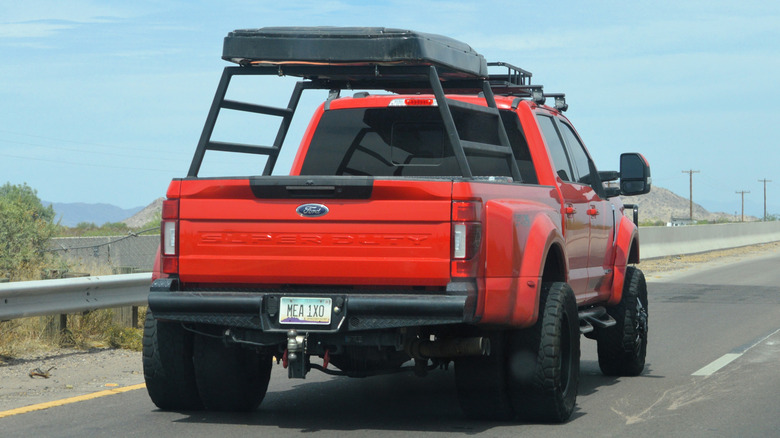
Compared to lift kits, oversized tires, and heavy bumpers, roof racks might seem relatively harmless. However, they can still affect fuel economy because of how they change the truck's aerodynamics. A recent test from Car & Driver showed just how much of a difference roof racks can make. After removing the crossbars from a vehicle, they saw fuel economy improve from 25 mpg to 28 mpg. That's about a 12% increase, which is far from nothing.
It's like this: Roof racks and crossbars interrupt the smooth movement of air over the top of the vehicle. Instead of gliding cleanly across the roofline, air collides with the bars and creates turbulence. That increases aerodynamic drag, which, in turn, forces the engine to use more fuel to maintain speed. Add mounted cargo to the roof rack, and it's only going to get that much worse. Then, you're adding excess weight and creating additional drag by exposing even more surface area to oncoming air.
Large towing mirrors
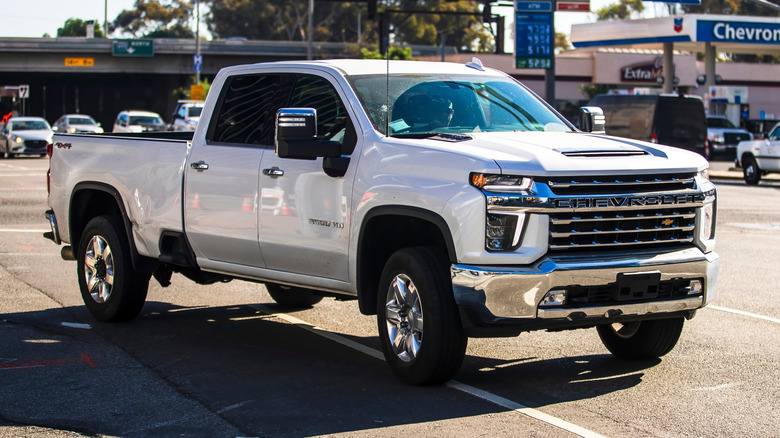
We can't forget towing mirrors. Yes, they're pretty much a must-have for anybody hauling wide trailers. But their larger size also creates more aerodynamic drag than standard mirrors. That can definitely reduce fuel economy, even when no trailer is attached.
Compared to standard mirrors, towing mirrors present far more surface area to the wind. And according to the basic principles of aerodynamics, more surface means greater drag. It's the same problem with roof racks. Because more air is colliding with the object as the vehicle moves forward, the fuel economy is going to take a hit.
MostPlus Auto tested on a Ford F-150 to illustrate the effect. Using standard mirrors, the truck saw 18.7 mpg. After switching to towing mirrors, fuel economy dropped to 17.9 mpg. That's almost one whole mile per gallon. Over time, that's going to add up. For truck owners who tow often, you might not really have a choice here. But if you don't absolutely need the upgrade for your F-150, you might want to consider how they'll impact fuel economy before adding them just for show.