

5 Of The Coolest Luxury Car Brand Logos
Many kids learn to recognize popular logos before they even learn how to read. Toddlers may associate the Golden Arches with a yummy treat, or know that Mickey Mouse ears indicate movie time. Kids often spot well-known brands on the road as well, easily recognizing Toyota by its trio of ovals or Mercedes-Benz by its famous star.
Practically every car brand has a logo, a symbol that consumers can quickly identify and associate with certain traits and characteristics. They may represent speed, prestige, the company's origins or founders, or even its values. Some car logos are decades old, and changing an established symbol can be a risk – Kia's updated logo confused consumers and even prompted thousands of Google searches! Whether you see it as a symbol of rich history, premium luxury, or masterful design, every luxury car emblem has a deliberate story to tell. Here are five logos that stand out not just for their striking looks, but for the interesting stories behind their creation.
1. Ferrari
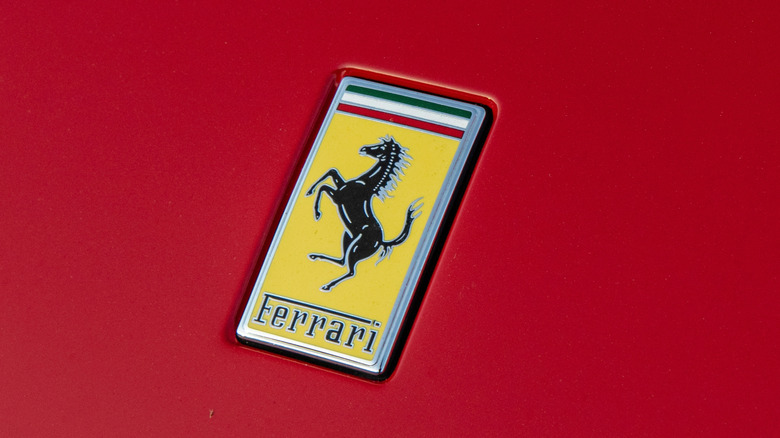
Arguably one of the most iconic and prestigious logos in the world, the prancing horse is associated with speed, wealth, and luxury. Many may be surprised to learn that Ferrari traces the history of its iconic logo not to a car, but to an airplane. In 1923, years before he founded the company, race car driver Enzo Ferrari met the family of World War I pilot Francesco Baracca after competing in the Circuito del Savio Grand Prix. A friendship was formed, and eventually Baracca's mother, Contessa Paolina Biancoli, urged Ferrari to adopt a logo for his race cars: the symbol her son had used on his biplane during the war. Though he'd been killed in action, the pilot's mother thought the symbol would bring good fortune.
That symbol? A rearing black stallion. Baracca was a national hero, and Enzo Ferrari took the suggestion and made the symbol his own. He added a yellow background in a nod to his hometown of Modena, a stripe at the top in the colors of the Italian flag, and the initials "S.F." for "Scuderia Ferrari," or "Ferrari Stables."
When Enzo Ferrari launched the first Ferrari road cars in 1947, they boasted this logo in a rectangular badge. Virtually identical to its original design, today the logo is an unmistakable icon that even casual fans instantly recognize. If you'd love to have the Prancing Horse in your garage, expect to pony up some big bucks — the least expensive model, the Ferrari Amalfi, starts at about $266,000.
2. Rolls-Royce
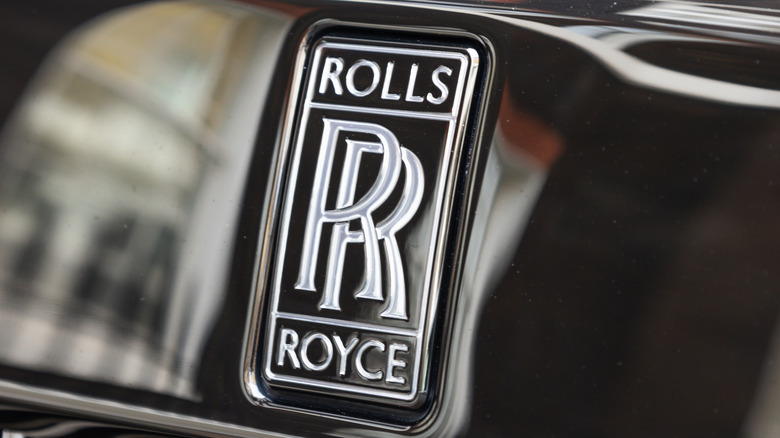
This logo may not be as recognizable to the average driver as others, but it represents the pinnacle of wealth and luxury. Founded in 1906 by Charles Rolls and Henry Royce, Rolls-Royce has always focused on ultra-premium, bespoke automobiles. Its first logo featured what would eventually become the company's defining signature: two superimposed Rs representing the two founders. Originally produced in red enamel, the company shifted to black letters in 1934. The original logo also featured several other symbols, including a lion, two roses, a seahorse, wings, and the silhouette of a woman meant to represent the goddess Nike. The logo changed over the years, but the goddess Nike was depicted differently.
Perhaps even more famous than its logo, the Rolls-Royce hood ornament depicts a woman in a sweeping gown, her arms outstretched behind her as if she's about to take flight. Called the Spirit of Ecstasy, the icon is more than 100 years old and has graced the hood of every Rolls-Royce since 1911.
Today, traditional Rolls-Royce models feature the double-R emblem along with the Spirit of Ecstasy hood ornament. Buyers should expect custom-crafted luxury. Inside, you'll find leather, wool, real-wood veneers, metal, plush seating with massage functions, custom lighting, and a silent cabin. Of course, drivers should also expect cutting-edge technology, a powerful engine, and prices starting at $300,000 or more.
3. Lamborghini
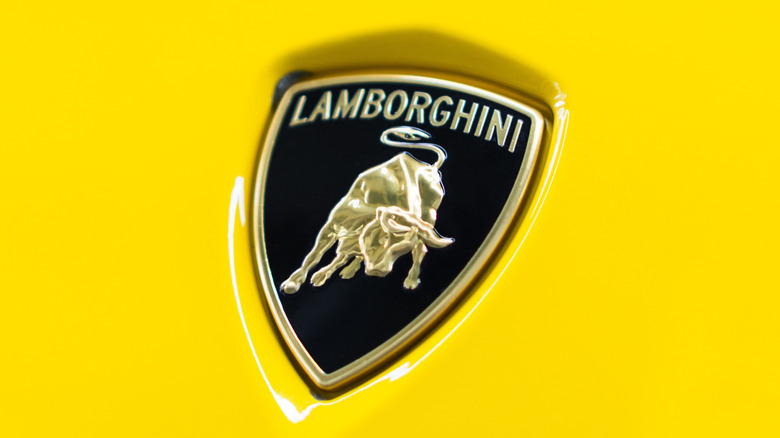
Lamborghini is renowned for its roaring engines, powerful performance, and flashy styling, like the over-the-top 2026 Temerario. So you may be surprised to learn that Lamborghini's roots are agricultural. Its raging bull logo may symbolize aggressive power, but the company was formed in 1948 to build tractors, not cars. The original logo was a triangle displaying the letters "F L C" for founder Ferruccio Lamborghini along with the city where the company was headquartered.
The iconic bull logo didn't appear until the company began producing sports cars in 1963. The company's founder selected the bull because his astrological sign was a Taurus, and he was also a fan of bullfighting. The first badge was supposed to be white and red with a gold bull on a light blue background, but the amount of color delayed production. Thus, the badge on the first prototype featured a white-and-black bull on a simple red background.
Lamborghini's logo has undergone subtle changes throughout the years but has always featured the raging bull. In 2024, the automaker debuted an updated logo. It boasts a black background with "Lamborghini" spelled out in gold in a modern font, along with a more minimalist gold bull in its classic pose. If you're lucky enough to own a Lamborghini, or even just score a ride in one, you'll notice the bull also typically appears on the steering wheel, wheel caps, and even on interior trim and seats.
4. Maserati
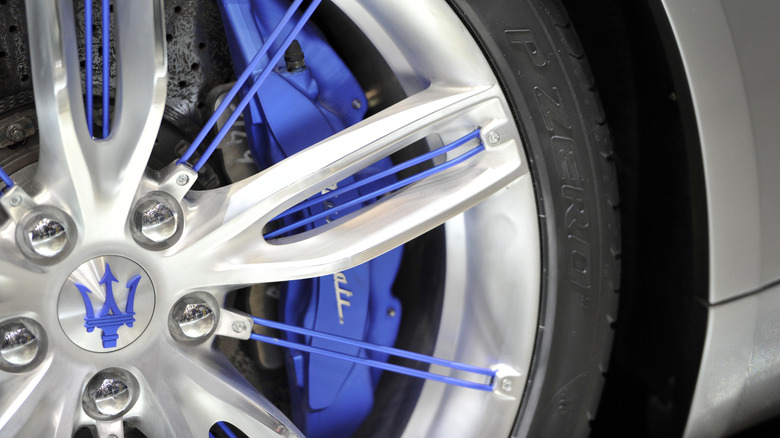
When the Maserati brothers designed their first car, the Tipo 26, in 1926, they knew it needed a badge, or logo, to set it apart from other racing cars. While other manufacturers in the Art Deco era, like Bentley and Aston Martin, adopted winged designs, Maserati turned to the only brother in the family not interested in cars. A lover of the arts and design, Mario Maserati created the famous trident logo based on a statue of Neptune in Piazza Maggiore in Bologna.
The original badge was rectangular and constructed of pure silver, featuring a black trident. In 1931, the badge was redesigned as an oval to fit curved radiators. The shape has remained, though the trident has undergone various iterations over the years. Today, the oval displays a blue trident on a white background, with "Maserati" printed in clean white text on a blue background at the bottom.
The three prongs of the trident have been interpreted in different ways, but many believe that they represent power, control, and strength. Maserati has also referenced the number three with light clusters at the front and rear of the car and in triple-vent positions on the sides of its cars. Buyers typically find the famous trident on the grille, trunk, steering wheel, headrests, and even along the C-pillar on some models. The wheel rims also feature a trident-inspired design.
5. Lucid
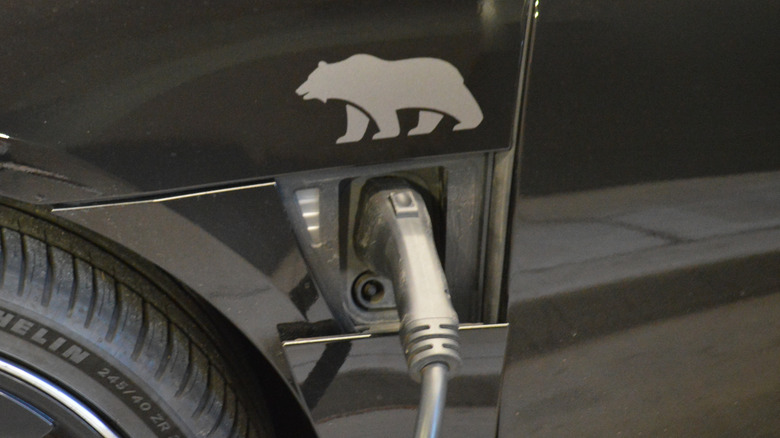
Lucid is most certainly the newest brand on our list, but it may also have the most fun, clever logo story yet. If you know anything about Lucid or have spotted the Air or the new Gravity on the road, you may think the company's logo is its name, but you'd be wrong. While both models simply boast the company's name on their hoods, Lucid's logo is actually a bear, and you can find it if you look closely enough.
The Lucid bear can be found inside on headrests, Pilot Panel interfaces, and the Glass Cockpit. Drivers may also spot what some reviewers are calling "Easter Egg bears," or bears cleverly hidden in upholstery, consoles, and even the frunk. A bear graphic also appears when drivers activate Launch Mode. Outside, some models display the bear on the wheel center caps, and buyers can also customize their vehicle by adding the logo to the sides. But why a bear?
Lucid, which sells only electric vehicles, is a California company founded in 2016. The state's flag, often called the Bear Flag, prominently features a brown grizzly bear. Lucid selected the animal because it "symbolizes entrepreneurial freedom and serves as a reminder of our commitment to sustainability," and as a nod to the company's heritage and California's influence on the brand. Recently, the company redesigned the bear logo, lifting the animal's head to symbolize the company's spirit and dreams, and giving it an assertive, forward-leaning stance. The clean lines also reflect the automaker's minimalist design on both the Air and the Gravity.