

How Far Should A Generator Be From Your House When In Use?
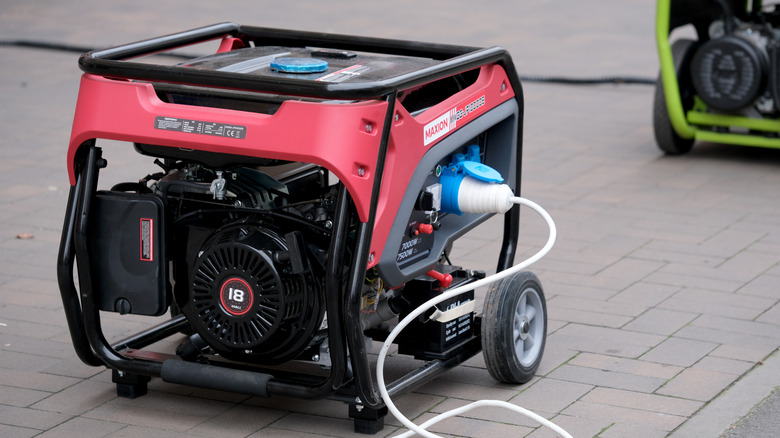
It's hard to overstate just how valuable and convenient a portable generator can be. They can provide emergency backup power during an outage or blackout or make a camping trip a lot more comfortable. They can even potentially save lives in times of catastrophic power grid failure. Whole-home generators have become increasingly popular over the years as well, with Consumer Reports saying they can potentially increase the value of your property between 3% to 5%. All that aside, generators also pose an inherent safety risk if not installed or used properly.
According to the United States Consumer Product Safety Commission, about 100 people a year die from non-fire related carbon monoxide poisoning associated with portable generators. Portable generators continue to be the most dangerous fuel-burning consumer product on the market as it relates to carbon monoxide poisoning –- even more so than gas-powered furnaces or stoves. While portable generators and other gas-powered tools should never be operated indoors, simply placing them outside isn't enough — they need to be at least 20 feet away from your home.
The generator 20-foot rule helps protect against carbon monoxide poisoning
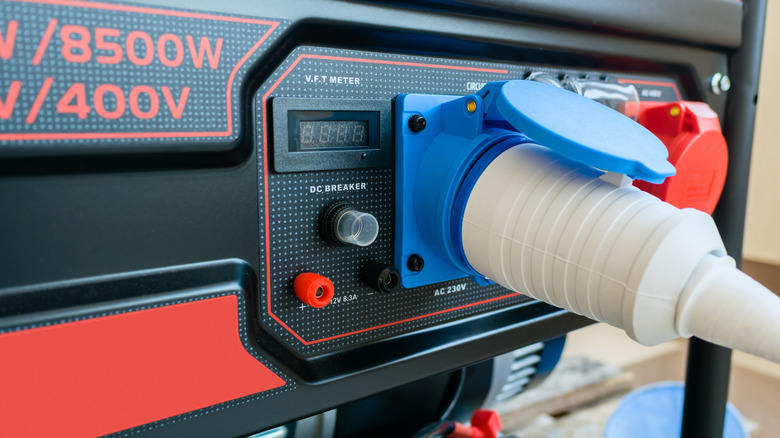
When using a portable generator, maintaining a minimum of 20 feet from the home is of paramount importance. This may not be guidance you'll see from a generator manufacturer, but both the CDC and the US CPSC recommend it. As critical weather events continue to rise alongside the world's drastically changing weather, carbon monoxide related deaths and injuries usually crop up in their wake. The February 2021 winter storm (Winter Storm Uri) that left millions without power in Texas also resulted in what many experts believe is the worst carbon monoxide poisoning event in years, as desperate people made dangerous home heating mistakes in a bid to keep warm.
Some state governments –- like Texas –- have not formally required CO alarms by law in the past, but after the 2021 storm and epidemic of carbon monoxide poisoning that followed, renewed interest and scrutiny into protecting people from carbon monoxide has sparked some amount of reform. The federal government has known about the CO hazards generators pose for years, and the CPSC has required warning labels on them since 2007, in hopes of curtailing carbon monoxide related deaths. However, the warning labels were never intended to replace greater federal regulation, which has categorically failed over the years as the generator industry continues to mostly regulate itself.
How to protect yourself while using portable generators
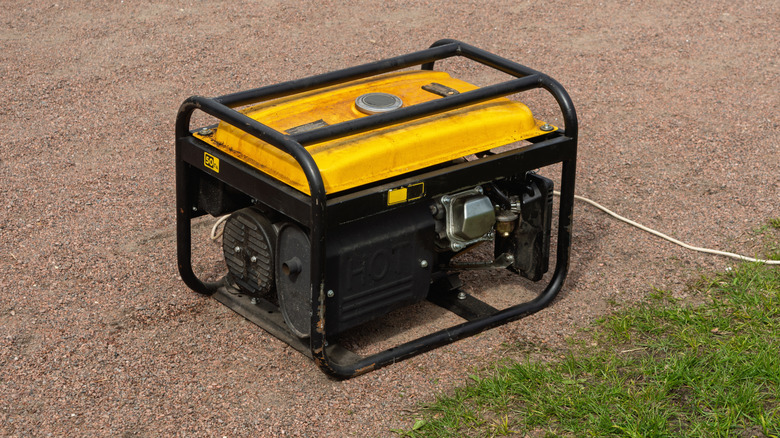
Until such a time that greater laws exist to help protect and educate consumers, when using a portable generator, you need to be your own first line of defense. That starts with making sure you have CO alarms in your home. The National Fire Protection Agency calls for CO alarms to be installed in a centralized location outside of bedrooms, on every floor of the home, and anywhere else as applicable by state and local codes. CO alarms should be tested monthly and interconnected, if possible. In the absence of hardwired alarms, there are wireless options available.
When it comes time to shop for a portable generator, opt for one that has an integrated shut-off switch that will kill the generator if high carbon monoxide levels are detected. Many generator makers have started using this technology, like Harbor Freight's Predator series and its CO Secure feature. However, not all generator brands do, and there is no legal requirement for them to do so –- shop accordingly.
No matter what the product manual says, the safest thing is to set the generator up at least 20 feet from the property; a heavy duty power cord can be used to close the distance. Set the generator up on a stable, non-flammable surface, and try to keep it out of the elements –- by using some type of open, canopy-like structure. Under no circumstances should you backfeed your electrical system with a "suicide cord" or similar option. If you don't have an interlock or a transfer switch, you need to use an extension cord to plug in your load(s) directly into the generator. If anything prevents you from using a generator safely, then you should not use one.