

5 Classic Electronics & Pieces Of Tech That Instantly Remind Gen Xers Of Their Parents
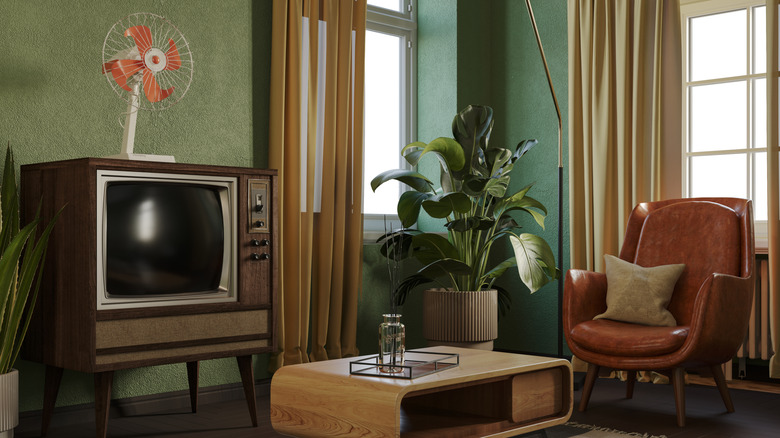
If you're of a certain age, you probably fondly remember corded landline telephones, scratch 'n sniff stickers, and Tupperware. If your home didn't have any of these items, you were probably born sometime after the early 1980s. Generation X is typically defined as those born between 1965 and 1980, meaning they're about 46 to 61 years old today. Often overshadowed by Baby Boomers or Millennials, they are a sandwich generation that may currently be taking care of both their children and their elderly parents.
They grew up in a different time, well before the digital age. Forget smartphones and artificial intelligence. Their state-of-the-art tech was more like a Sony Walkman. And their parents? They were Baby Boomers, born between 1946 and 1964. Much like the cultural shift between Gen X and Gen Z, these parents were raised in a completely different world than the one their children grew up in. Forget cassette players, many people this age remember watching TV on a black and white television. Here are five classic electronics that many Gen Xers grew up with, whether they were relics from the Boomer era or new, cutting-edge technology.
Rotary phone
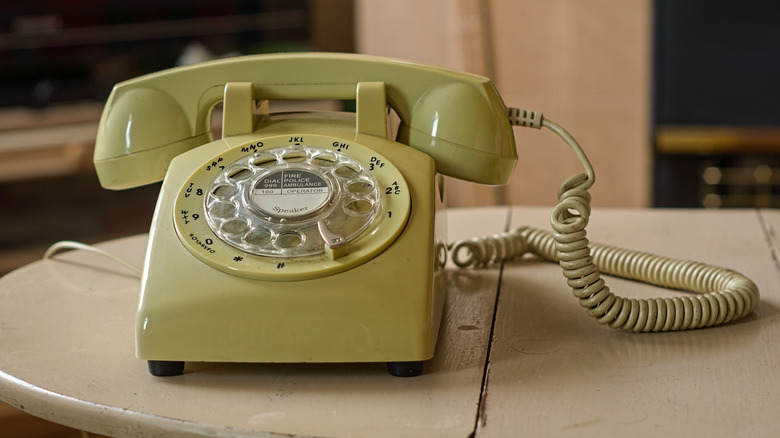
If you're too young to drive, you may not even know what a rotary phone is. We aren't just referring to the corded landline phones that you can still spot here and there. We mean the old-fashioned phones with a rotary dial that required you to put your finger into a number's hole and spin clockwise until you hit the metal stop, then let the dial return and do it again with the next number. Sounds tedious, right? If you put this phone in front of an eight-year-old and asked them to call home, they probably wouldn't know how.
There was no memory, no redial function and no caller ID. From the 1930s through the early 1960s, rotary phones were made from Bakelite, the very first synthetic plastic. If you're a Gen Xer, the phone in your house growing up was probably made of a more lightweight plastic and was the property of the Bell System. Customers paid a lease fee but at least had their choice of colors, including bubblegum pink and bright yellow. Today, these phones are mostly used for decoration after being replaced by more modern touch-tone landline phones and, of course, cell phones.
VCR
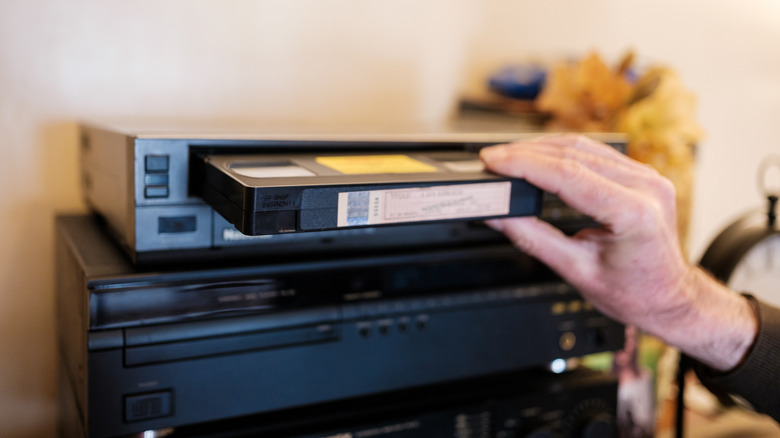
Long before we could queue up an entire season of our favorite show to binge on Netflix, watching a movie at home was a much more complicated, and dare we say, special affair. The VCR, or video cassette recorder, was a staple of most households in the 1990s, but if you were lucky enough, your parents may have invested in one even earlier. And when we say invested, we truly mean it was an investment — a VCR sold for about $1,000 or more in 1975, and still cost on average $200 to $400 by the mid-1980s. One thousand dollars in 1975 is equal to more than $6,000 today.
Remember the Blu-ray versus HD-DVD war in the 2000s? A similar situation played out in the 1970s and early 1980s, when VHS was introduced as competition to Sony Betamax machines. Many households had one or the other, few had both, and each took differently-sized tapes. VHS was less expensive and ultimately won the battle, and eventually most homes had a VCR.
Today, many movies hit the small screens in our living rooms shortly after their theatrical release, but this simply wasn't the case 50 years ago. The first American films released on VHS were "The Sound of Music," "Patton," and "M*A*S*H*," which were all re-released to the public in 1977. The 2005 movie "A History of Violence" was the last film to be widely released on VHS. Today, most VCRs have been regulated to basements or the junk heap.
Electric drip coffee maker
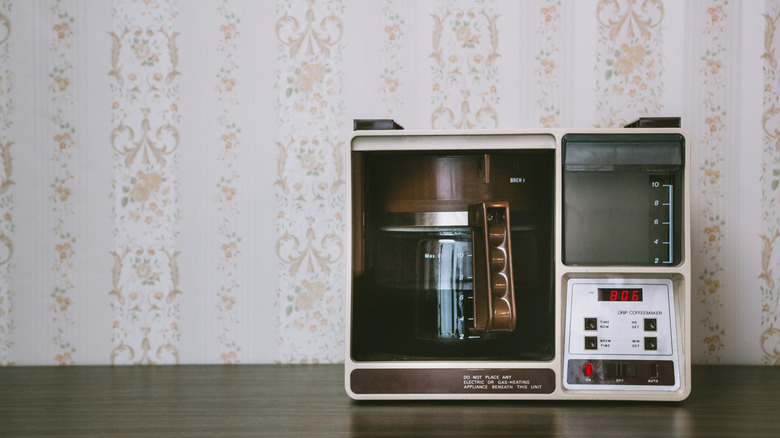
Today, many of us pop a pod into a single-serve machine to get that coffee fix, but in the 1970s and 1980s, you'd have to make an entire pot, or survive on instant. The popular Mr. Coffee, introduced in 1972, was the first automatic electric drip coffee maker. The technology took off, quickly replacing stovetop and electric percolators. The machine had a water reservoir just like many single-serve machines today, and an automated drip system. It came with a glass carafe that would sit on the hot plate, keeping the coffee warm. All you needed for that perfect cup of joe was a filter and coffee grounds.
You can still buy drip coffee machines, of course, and the Mr. Coffee brand has expanded to include cold brew, espresso machines, and other specialty brewers, but many coffee addicts have switched to Keurig or other, more complicated, machines. For some, the drip, drip, drip of an electric coffee maker will always remind them of days gone by.
Clock radio
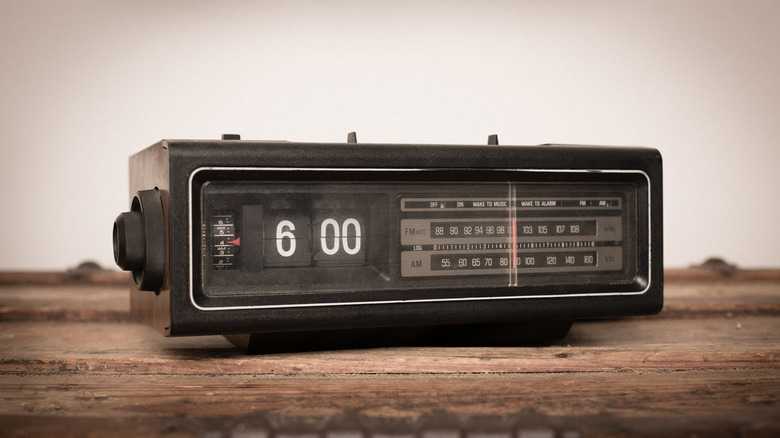
Today, our nightstands are often cluttered with chargers, smartphones, e-readers and fitness trackers, but your parents' nightstands probably looked a bit different. You may remember a clunky lamp and a corded phone, and some type of clock radio. Likely boxy, perhaps boasting that faux woodgrain look that was so popular in the 1970s and 1980s, these small electronics were in almost every home for decades.
Clock radios made the switch from analog to digital with flip clocks in the 1970s. Instead of waking up to a loud buzzer, clock radios allowed the user to wake to their favorite radio station. Of course, you could also simply listen to the radio whenever you wanted. These small electronics were sold in different shapes, sizes, and colors. The Sony Dream Machine was a popular choice. Introduced in the 1960s, it was sold until 2011 when smartphones began to take over the job of a clock radio. If you like a bit of nostalgia, you can still pick up a clock radio on Amazon, and there are plenty of Sony Dream Machines on eBay in many different styles. It may feel old school, but many sleep experts recommend a technology-free bedroom. For a better night's sleep, take a cue from your parents and ditch the smartphone alarm.
Answering machine
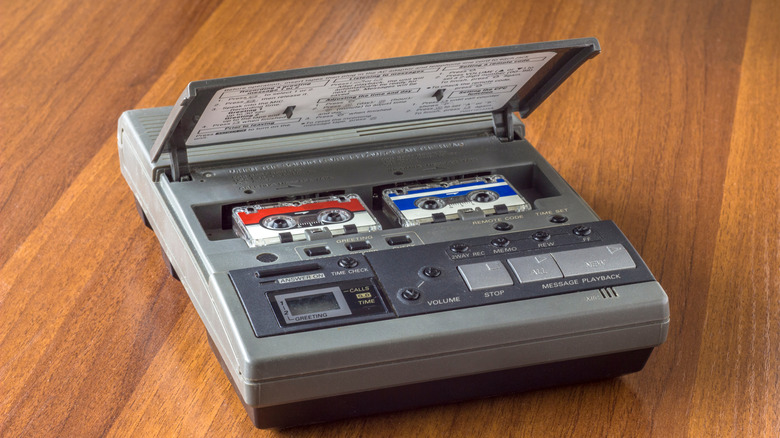
Long before the days of 24/7 availability, answering machines received calls when we were on vacation or out grocery shopping. If you grew up in the 1970s or 1980s, you probably remember calling your best friend, hoping for a pool date, only to be met with the standard, "Hi, you've reached the Smith family. We're not at home right now..." greeting.
The history of the answering machine seems to be up for debate. A man named Joseph Zimmermann is credited with inventing one of the first machines in the late 1940s, but these were huge, bulky devices that weren't designed for home use. He sold more than 6,000 of them, but answering machines didn't truly catch on commercially until technology allowed for smaller devices in the early 1970s. The PhoneMate Model 400, introduced in 1971, still weighed 10 pounds, but it could hold 20 messages on reel-to-reel tape. By the early 1980s, digital answering machines were available, and eventually they were built directly into the base units of phones, eliminating the need for two devices. While most of us rely on smartphones and voicemail today, you can still buy phones with built-in answering machines.