

5 Notable Differences Between American And European Cars
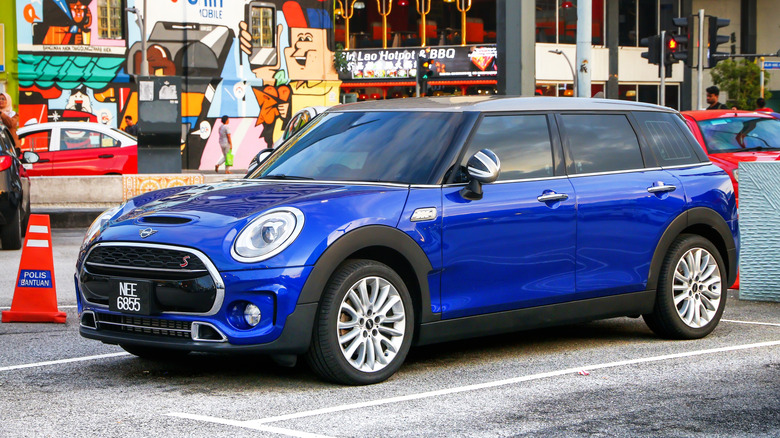
Drive a car in the U.S. and you get wide lanes, lots of space, long straight highways, and typically, more car. Drive a car in Europe, and you get narrow city streets, winding mountain roads, and a vehicle built small enough to actually fit them. Two continents, two completely different ideas about what a car should be. Besides just the natural habitat and the size, there are plenty of differences between American and European cars.
The differences are the product of distinct infrastructure, regulations, safety legislation, and driving culture — each shaping manufacturers' decisions over decades. This is also partly why European trucks look so different from what we see in America. These vehicles diverge in ways that go far deeper than badge or price tag. We're talking about, among many things, how the engine oil is formulated, how the suspension is tuned, what mirrors are legally allowed, and whether the gearbox even has an automatic option.
For most buyers, these differences are invisible until they matter — like when you import a European car and reach for the wrong oil, or rent a car in Italy and realize you haven't driven a manual in years. Understanding what separates these two automotive philosophies isn't just trivia. Here are five of the most notable differences between American and European cars.
Euro and U.S. car engine differences
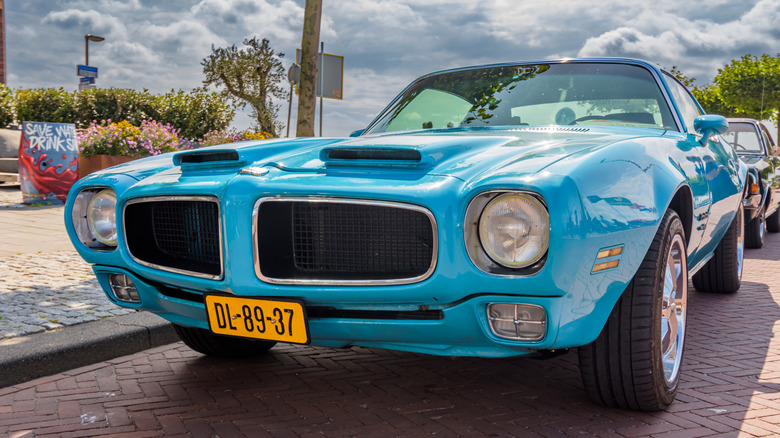
If you stroll down the U.S. automotive history lane, you'll see massive displacement engines ranging into the seven and eight liter range. Cars like the Dodge Viper with its 8.4-liter V10, the C6 Chevrolet Corvette Z06 with its 7.0-liter LS7, and the Ford Super Duty's 7.3-liter Godzilla V8 are prime examples of American displacement culture at its peak. In Europe, an eight liter engine is something you'll only find in a Bugatti – a car that serves an entirely different purpose to an entirely different clientele.
In 2026, the simple American V8 is still holding up relatively well, while in Europe, V8s are a dying breed, increasingly hybridized, overly complex, and phased out due to stringent environmental regulations. Moreover, European cars can't use American oil for a few distinct reasons. The regulations surrounding oil are governed by two different bodies – the API (American Petroleum Institute) in the U.S. and the ACEA (European Automobile Manufacturers Association) in Europe.
Potentially one of the biggest differences between the two markets is how each market relies on diesel. In Europe, diesel is common in small hatchbacks and passenger cars as whole. These are prized for fuel economy and highway cruising. In the U.S., diesel is typically reserved for trucks and larger vehicles. Take BMW's F30 3 Series that ran from 2012 to 2019 – in Europe you could get the 316d, 318d, 320d, 325d, and the 330d. In the U.S. you were largely limited to gasoline variants (except for the 328d no one bought). It is a similar story across most other models as well.
Technology and equipment differences
Another area where American and European cars go their separate ways is technology and the equipment you typically find on them. For starters, having a remote start function in a U.S. car is fairly common, while in Europe it is extremely rare. The mirrors are also different — whereas U.S. regulations only permit flat or slightly convex mirrors on the driver's side, Europe allows aspherical mirrors which provide a significantly wider field of vision.
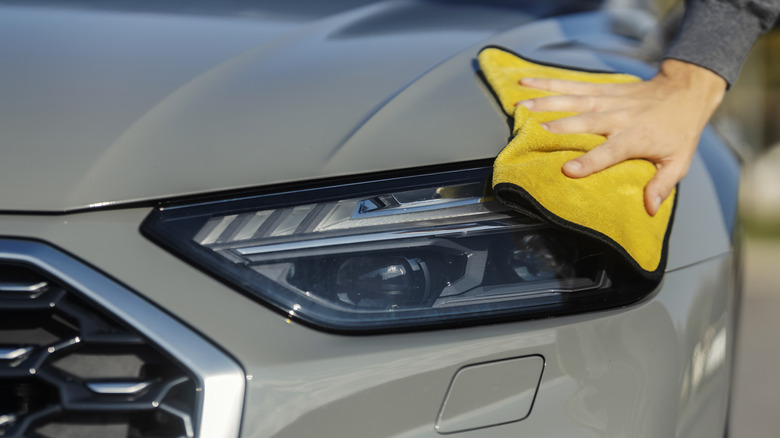
Headlights are another point of divergence. While European regulations allow for adaptive LED headlights that can selectively blank out portions of the high beam to avoid blinding oncoming traffic, these are still not realistically permitted in the U.S. because they can't act fast enough. On the other hand, reversing cameras have been mandatory on all new U.S. vehicles since 2018, while Europe has no equivalent universal camera mandate.
Rear fog lights tell a similar story in reverse — they are mandatory in Europe but they are not mandatory in the U.S.The EU also mandated Intelligent Speed Assistance on all new cars from July 2024, a system that reads speed limit signs and nudges the driver to comply. No such requirement exists in the U.S. Also, in North America, you can have red turn signals, while in Europe, they are only amber.
Safety and crash standards
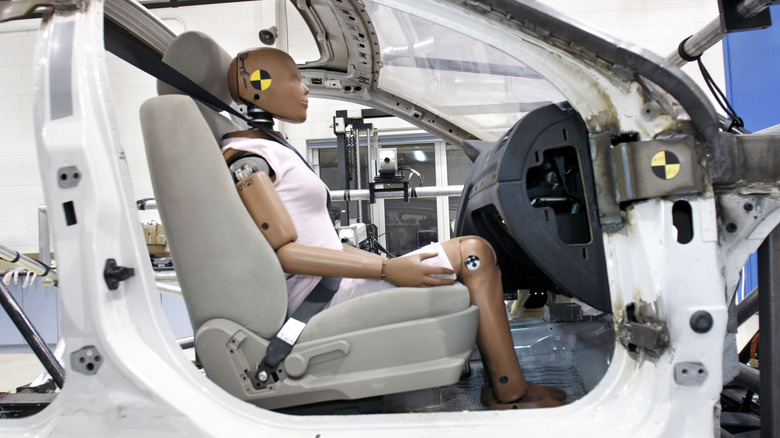
One of the more consequential areas where American and European cars also differ has to do with safety and the different standards. Both markets have their own independent crash testing bodies – EuroNCAP in Europe and a combination of the National Highway Traffic Safety Administration and the Insurance Institute for Highway Safety (IIHS) in the U.S. The tests themselves differ, and they don't always agree on what a safe car looks like.
The top crash-tested EVs by IIHS are not necessarily the ones that score highest under EuroNCAP. EuroNCAP places heavy emphasis on pedestrian protection, autonomous emergency braking performance, and occupant assist systems, while IIHS is known for its small overlap frontal test, which simulates a car hitting a narrow object like a tree or pole at speed. The result is that the same model sold in both markets may have subtle but meaningful differences under the skin.
Whether it be additional structural reinforcement, different airbag calibration, or revised bumper systems, differences do exist. Speaking of bumpers, one area where European regulations produced a more aesthetically pleasing result is bumper design — the plasticky, protrusion-style bumpers common on American cars were not required in Europe, and eventually, automakers found ways to integrate those structures into the car's bodywork.
Size and design
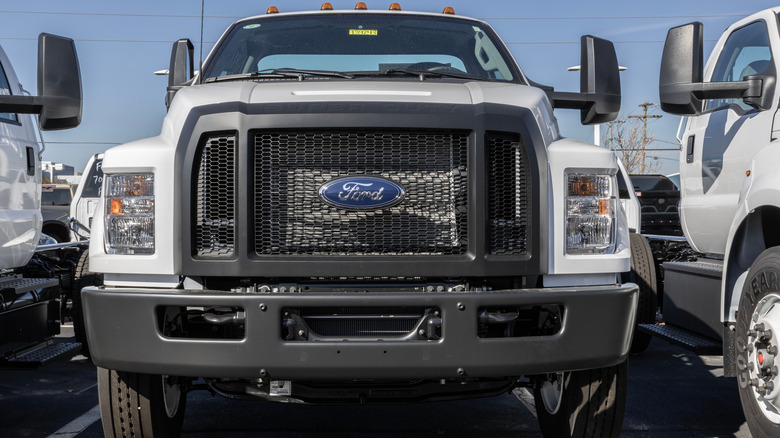
Potentially the biggest difference between American and European cars is size. American cars are, in virtually every measurable dimension, bigger. Wider bodies, longer wheelbases, taller ride heights, and heavier curb weights are all signatures of the American market — a direct reflection of the infrastructure they were built for. Wide interstate highways, large parking lots, and long open roads encouraged manufacturers to build big, and consumers to expect it.
European roads tell a different story. Medieval city centers, narrow country lanes, and tight multi-story parking garages imposed hard constraints on vehicle dimensions for decades. The result is a design philosophy built around compactness and efficiency. In other words, cars that are smaller, because bigger simply wouldn't fit.
The cultural gap is just as wide as the physical one. American automotive identity has long been tied to presence and power. Think of the muscle car, the full-size pickup, the three-row full-size SUV. European automotive identity leans toward precision, refinement, and driving feel. A BMW M3 and a Ford Mustang GT both qualify as performance cars, yet they represent fundamentally different answers to the same question.
This divergence is also visible at the extremes. The Ford F-150 – America's best-selling vehicle until it lost its title in 2025 – is so wide it would struggle to fit down many streets in Rome or Prague. Meanwhile, the Fiat 500 — one of Europe's most iconic city cars — looks almost comically undersized parked next to an American full-size truck.
Manual transmissions
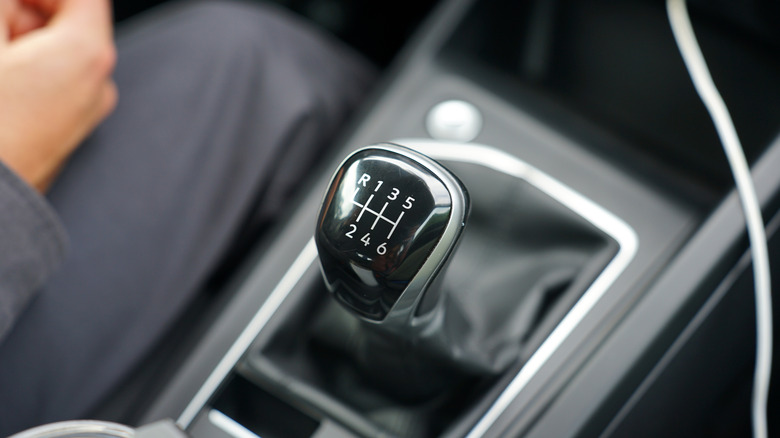
In Europe, the manual gearbox remains the default in smaller city cars. These are your hatchbacks, crossovers, and small sedans. If you pay a bit extra, you can typically upgrade to an automatic transmission. This is reflected in driving culture too, with some European driving tests conducted in a manual as standard, meaning a license obtained in an automatic only permits you to drive automatics.
In the U.S., the situation is reversed. Automatic transmissions dominate the market across every segment, while manual options have largely disappeared from the mainstream. The interesting twist, however, is that when Americans do choose a manual, it tends to be in a performance context. Enthusiast cars like the BMW 2 Series, Ford Mustang, and Porsche 911 still offer manual gearboxes.
Their uptake among American buyers is arguably stronger than among European ones. Some even believe that this could cause a major resurgence of the manual transmission. In other words, the manual transmission in Europe is a mundane, everyday tool found in entry-level cars. The same gearbox carries an entirely different cultural meaning for many performance car enthusiasts in the U.S.