

5 Of The Biggest Drawbacks Of OLED TVs
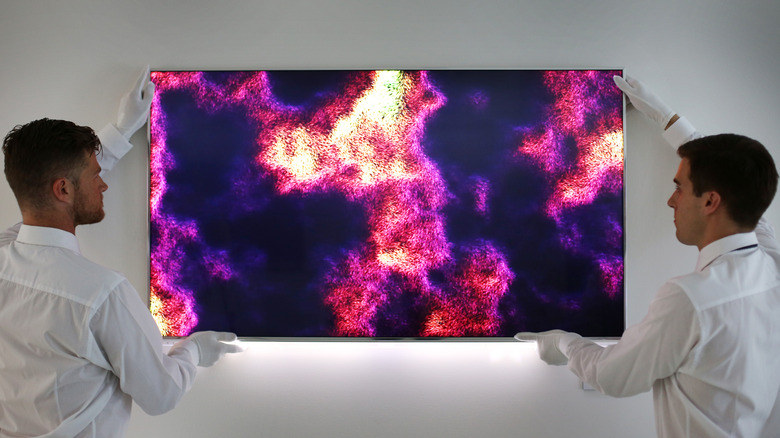
OLED televisions have long enjoyed a prestigious position at the top of the display food chain, making them the most coveted type of TV for pixel-peepers. Unlike traditional liquid crystal diode (LCD) panels, which shine light through colored layers to produce an image, OLED pixels are self-emissive, meaning they light up individually. This sounds like a minor difference at first, but the implications are massive. OLED TVs can show true blacks and are often considered to have an infinite contrast ratio, since black pixels simply do not turn on. This also leads to superior color accuracy, better viewing angles, and even superior energy efficiency.
However, OLED TVs are not perfect. Drawbacks do exist, as OLED — which stands for organic light-emitting diode — technology comes with certain issues that LCD owners don't need to worry about, and the organic nature of OLEDs creates a particular set of inescapable frustrations. From the always-present fear of burn-in to the soaring price tag that accompanies OLED despite its comparatively shorter lifespan, we've rounded up 5 of the biggest headaches associated with this premium panel technology.
OLED displays are more prone to burn-in
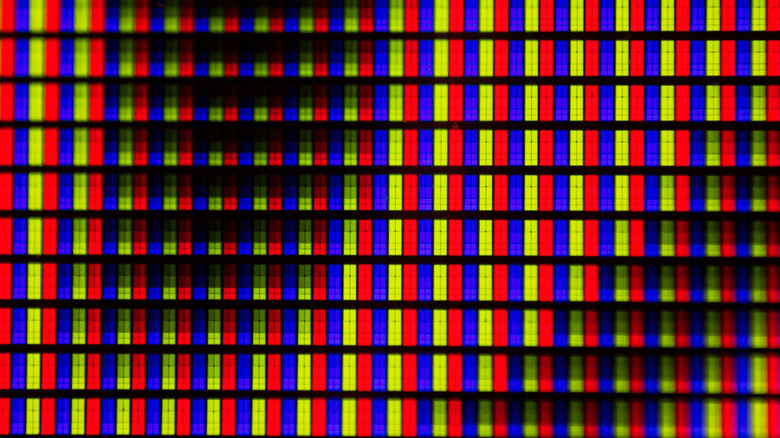
The main problem plaguing OLED TVs is their propensity toward pixel burn-in. The organic materials in OLED pixels degrade with use, with uneven degradation due to different pixels being illuminated for different periods of time. If a static image or element is displayed on the screen for too long, the pixels used to display it will deteriorate, leaving a permanent ghost image on the display, which often looks like a faint shadow. The brighter an OLED TV gets, the more susceptible it is to burn-in, creating a catch-22 situation where you're choosing between brightness and longevity.
OLED burn-in is a fact of life, like death and taxes. That said, many TV manufacturers have introduced features to mitigate burn-in on OLED units. These include pixel-shifting, which moves the entire image over by a few pixels every so often, preventing any single group of pixels from being overused. There's also logo dimming, which turns brightness down on fixed elements. Lastly, refresh cycles reset and recalibrate the pixels at fixed intervals. Unfortunately, all of these are stopgap measures. There are things you should do to help prevent OLED burn-in, but there is no getting around the fact that you can never eliminate the risk entirely.
OLED TVs are comparatively dim
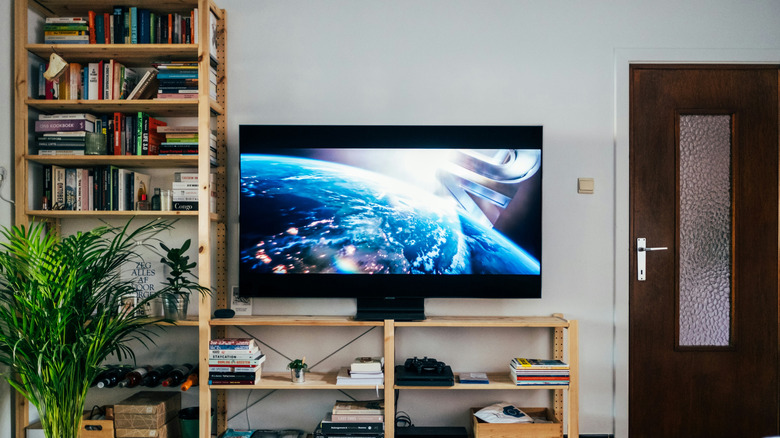
While OLED panels are coveted for their mathematically infinite contrast ratios and per-pixel lighting, one of their primary downsides is that they can be much dimmer than LCD-based tech such as Mini-LED or QLED. This comes down to the self-emissive pixels the technology relies on.
LCD TVs rely on backlights for brightness, but OLEDs don't have those. Instead, they have small, self-emissive pixels that produce comparatively less light. This isn't necessarily a bad thing; since each pixel is independently controlled and black pixels simply don't display, OLEDs don't need to be exceedingly bright to trick the eye into perceiving a high contrast ratio. However, while that allows for a much more accurate image, it's also outright dimmer than a comparable LCD TV.
In fairness, OLED panels do continue to get brighter as equally bright minds work to improve the technology. But it's a battle against physics, since brighter pixels are more likely to experience burn-in. That said, it doesn't help that manufacturers often measure brightness in misleading ways. You'll often see them tout the "peak brightness" of OLED displays on TVs and smartphones, but this only refers to a snapshot of the brightest pixel onscreen. So, while a display might reach 2,000 nits of peak brightness or higher, the average brightness of the entire display is likely to be far lower.
OLED TVs can look worse in bright rooms
Given that OLEDs are dimmer than traditional LCDs, it shouldn't surprise you that they're also worse in rooms with a lot of natural light. Unless you plan to put your TV in a basement or dedicated home theater room, or are willing to buy blackout shades for your living room along with your new TV, OLED might end up offering a poorer viewing experience than an LCD.
To be clear, OLED TVs can look incredibly vibrant and vivid in the right sort of lighting. In well-lit environments, however, the limited brightness of an OLED display becomes much more apparent. Images can appear washed out and hard to see, especially in darker scenes or in content with desaturated colors.
You can work around this issue somewhat by placing an OLED TV away from light sources (which can also cause undesirable reflections), not putting your TV in front of a window, and more. But those measures will only go so far, especially if your OLED TV is on the dimmer side. If you're the type to leave a cable news channel running all day on a TV facing a large window to the outside (shout out to my neighbors across the street), you should probably avoid an OLED TV.
Owning an OLED TV is prohibitively expensive
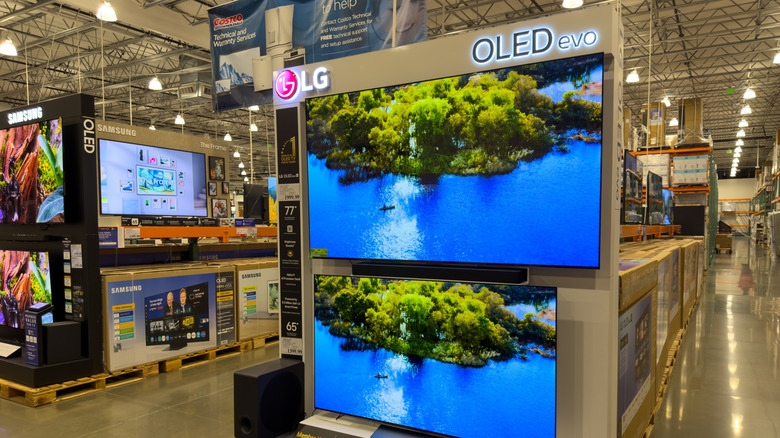
Even with all their drawbacks, OLED TVs remain coveted by videophiles for their contrast and color accuracy. They are also, unfortunately, costlier to produce. With high production costs and high demand, OLED TVs command a price tag that many consumers find prohibitively expensive. Is it worth paying extra for OLED? In some cases, yes. Movie lovers and gamers can benefit from the upsides they bring to the table. Others can rest assured that their LCD TV is the right choice for casual watching in brighter rooms. But if you can't afford one, the value proposition for OLED is entirely theoretical.
You also need to factor in things like display size and extra features. Often, the same money you'd pay for a given OLED TV can get you a larger, more feature-rich TV. And when comparing OLED to mini-LED picture quality, the performance gap continues to narrow. Unless you put them right alongside one another or happen to be a display expert, it can be impossible to tell the difference between an OLED and a good mini-LED. Furthermore, good LCD TVs are brighter, less fragile, and have longer lifespans, making them the obvious choice for anyone who would rather shell out for a new TV as infrequently as possible — which is probably most people.
There are some more affordable OLED TVs worth buying in 2026, but it could take some time for prices to come down to the level of other display technologies, if ever. Savvy shoppers can get a good deal on older OLED TVs, as models from two or three years ago drop in price, but that's not guaranteed.
OLED displays can have shorter lifespans

Despite costing much more than other display technologies, OLED displays have shorter lifespans. That's due to the same factors that make them more prone to burn-in. As noted, OLED displays contain organic compounds, and those organic elements wear out over time. They also wear out unevenly. Even if your OLED television does not experience burn-in, it may still develop color shifts over time.
Part of the reason OLED products can get so expensive is all the engineering work required to fight an uphill battle against physics. Intricate algorithms and hardware-level controls work in tandem to alleviate the inevitable degradation of OLED pixels. The tradeoff, as always, is brightness versus longevity. You can think of owning an OLED a bit like owning a bonsai tree: if you don't have the resources and knowledge to care for it, you're better off saving your money and buying a cheaper houseplant.
Ultimately, the cost of an OLED TV isn't merely the already high price tag at the store. It's also the fact that you'll more than likely need to upgrade sooner than if you had purchased a non-OLED model. That dynamic further establishes OLED TVs as a luxury market, making them less accessible for the average consumer.