

5 Cool Facts About Submarines You Probably Didn't Know
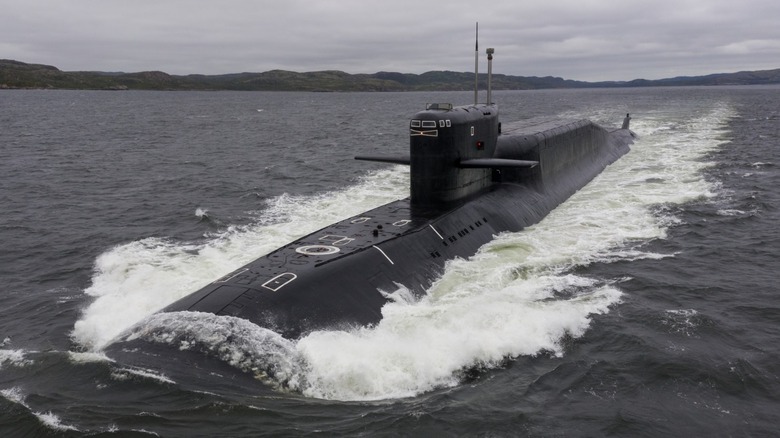
Submarines are some of the most mysterious vehicles the U.S. military has in service right now, which is why the Navy calls its submarine branch the "Silent Service." These war machines are literally designed to disappear beneath the waves, lurking in the deep sea to conduct reconnaissance, deploy special operations forces, protect fleets, or to serve as an unseen deterrent sitting just off the shore of a potential rival.
Only a select few can wear the "dolphin" submarine warfare insignia, one of the toughest badges to earn in the Navy, and many modern submarines only require 130 to 150 crew members to keep them fully operational (compared to the 4,660 sailors, officers, staff, and aviators serving aboard the USS Gerald R. Ford aircraft carrier). It's because of this exclusivity that makes submarines quite interesting, especially they are rarely seen outside of their home port.
So, if you're interested in these metal tubes that glide under the water, we will cover some cool facts that you probably don't know about submarines. We'll examine its similarities with airplanes, how submariners know their location even without GPS, the surprising limits of nuclear subs, and a few other interesting things about aboard a vessel that does not experience night and day.
Submarines fly through the water using hydroplanes
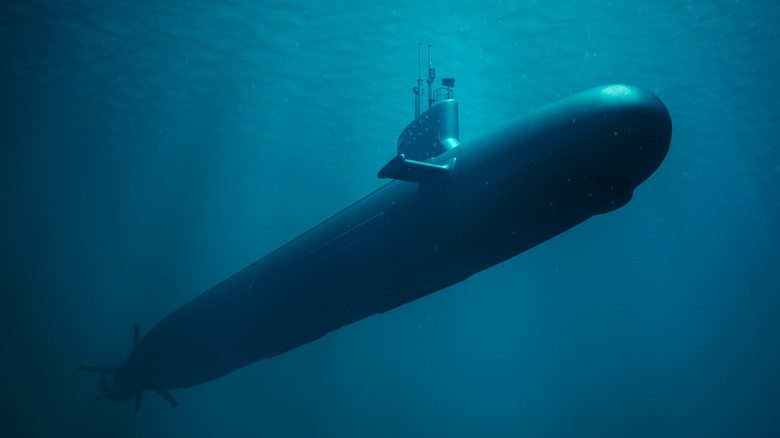
Submarines change their buoyancy by purposefully taking on water if they want to dive and then use compressed air to blow the water out of the ballast tanks if they want to surface. But once the boat (which is a traditional term for a submarine) has stabilized underwater, it will use its diving planes to change its depth. This is similar to how airplanes use elevators to change their pitch and altitude, except that submarines travel through water, not air.
These surfaces, also called hydroplanes, look like small wings attached externally to the submarine. Just like aircraft, the effectiveness of these surfaces is affected by speed, with the diving planes becoming less helpful the slower a submarine goes. They often come in two sets — one located towards the front and another at the rear, which is usually co-located with rudders for directional control. These are placed accordingly to give them the highest possible leverage and allow the ship to be more maneuverable.
The forward hydroplanes, located near the sub's nose, are quite effective during low-speed maneuvers and primarily used for controlling the sub's depth, while the stern planes are often used to control the angle or pitch of the ship. Nevertheless, experienced submariners can also use the forward hydroplanes at higher speeds in case of an emergency. Unlike airplanes, where only one pilot controls all the control surfaces, older submarines need three crew members to control the two planes and the rudder. Newer subs are adopting "fly-by-wire" technology, though, which would make submarine handling much easier and require fewer personnel to manage.
Submarines know exactly where they are without looking outside
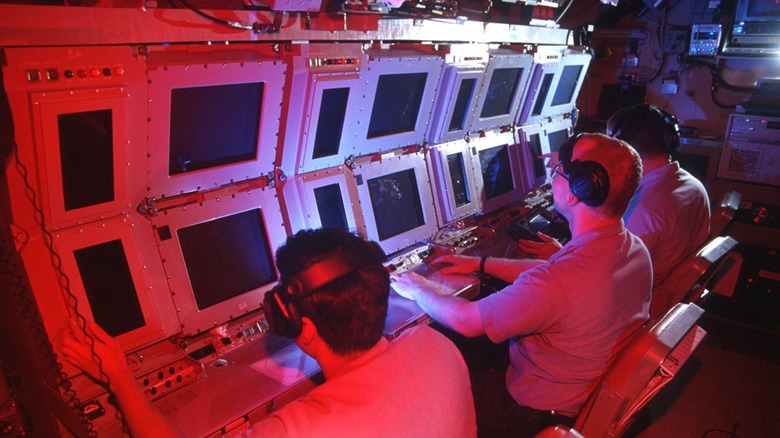
Most of us take GPS for granted, especially given how reliable our phones have become in satellite navigation. While submarines also use this technology when they're surfaced on the water, they need an alternative when they dive because those same satellite signals cannot penetrate the ocean depths. Subs also cannot use traditional methods like celestial navigation or using a sextant as these require the sailor to see the sky, which is impossible for a submarine unless it surfaces (which puts it at risk of being detected).
This is where inertial navigation systems (INS) come in. These machines use devices like gyroscopes and accelerometers to determine the distance and direction that it has traveled from a specific point. While they're not as accurate as GPS, they're still good enough to estimate a sub's location to within hundreds of feet. The crew must calibrate the gyroscopes every 150 hours using other navigation equipment though, as tiny errors that are introduced in the INS can accumulate over time, causing it to drift and become inaccurate.
Light can barely penetrate water, too, so submarines cannot see its immediate surroundings. To help determine its actual environment, submarines use advanced active and passive sonar sensors instead. Active sonar generates a sound burst, and the submarine then listens for sound waves that bounce back. It then uses that data to "see" around it. This is a risky move, though, as other ships, especially hostile ones, can also hear the ping and use that to triangulate where the boat is. Often times, the submarine crew uses passive sonar, which uses sensitive microphones to listen for other ships and marine life, so that they don't get detected themselves.
Food limits the range of most nuclear submarines

The distance that we can travel in our cars are often limited by how much fuel or charge we have left. This is also true for diesel-electric submarines that need refuel regularly to remain operational (although these older types of subs still pose a threat to the U.S. Navy). However, the United States boasts an all-nuclear submarine fleet, meaning it's not constrained by traditional fuel. A submarine's nuclear power plant already comes with all the fuel that it needs to remain in service for several years, with some going as far as two to three decades between fuel stops.
It also has a limitless supply of water; after all, submarines operate in it. While the crew cannot directly consume the salty seawater, these boats have their own water desalination and distillation plants that generate fresh water for drinking and hygiene. So, the number one limiting factor for a submarine's range is the fuel that its crew runs on — food. After all, humans need to eat three times a day, especially if they're doing strenuous work (such as being on duty on a submarine).
These boats have cooks on duty daily to prepare four meals — breakfast, lunch, dinner, and midnight rations — for the entire crew in a tiny galley. They usually have enough stock and supply to last the average 77-day patrol, keeping the submarine's complement healthy and well-fed. But if the submarine is required to extend its mission, the U.S. Navy, Marine Corps, or Air Force can conduct vertical replenishment (VERTREP) missions that would deliver fresh goods to the crew via MH-60R Seahawk helicopters, CMV-22 Osprey VTOL aircraft, and even C-17 Globemaster III cargo planes.
There's no day and night for submarine crews
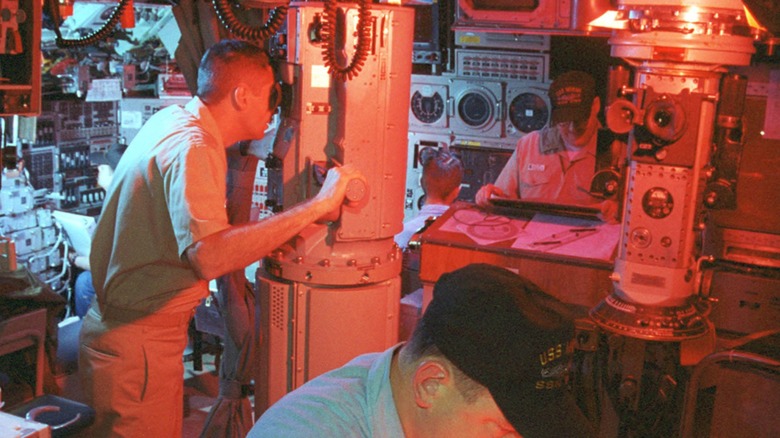
Surface ships have the sun and the night sky to indicate the approximate time in their location, but submarine crews do not have this luxury while underway. Because of this, crews on patrol may never get to see the sun for weeks, if not months at a time, and will only breathe fresh air once they're back home. U.S. Navy veteran David Chetlain shared a good anecdote on The War Horse of what life aboard a ballistic missile submarine was like, where he shows how time does not matter when you're patrolling the deep blue sea.
Instead of the usual 8-hour workday that most civilians have, most Navy submarines follow an 18-hour schedule: six hours on watch at your station, six hours for other tasks like maintenance and training, and another six hours for rest — at least on paper. As Chetlain said, your duties could go beyond what's written, and you might end up doing 48-hour days on as little as 90 minutes of sleep.
Besides that, the lack of visual cues mean that you wouldn't know if it was day or night outside. The only way you'd know what the time or day is if you look at your watch and calendar. The hectic schedule aboard submarines, even during peacetime, combined with the changing time zones as the boat travels across the world and lack of sunlight and nighttime means that your body might be telling you that it should be a cool 10 pm on a Wednesday night when it's actually a sunny 10 am on the weekend (not that weekends matter when you're deployed on a submarine).
Lost submarines are on eternal patrol
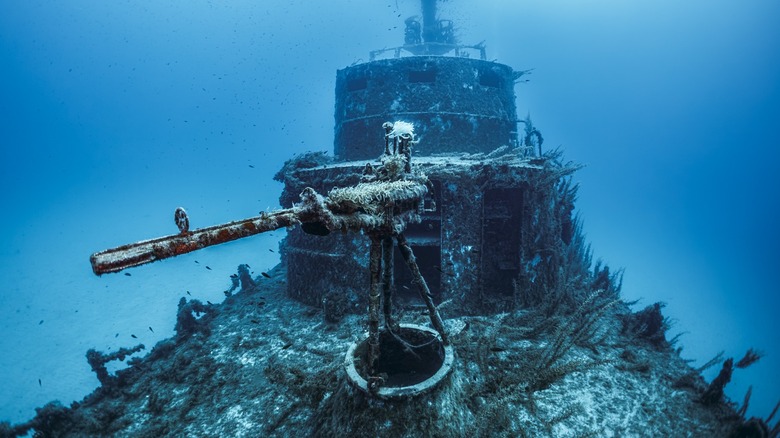
Military service comes with a lot of risk, and this is doubly true for submarines. The U.S. Navy lost 52 submarines during World War 2, resulting in a 20% casualty rate — the highest percentage among American armed forces. It also lost a few subs before 1941, plus four more after the war. In total, On Eternal Patrol lists 65 U.S. Navy submarines that have been lost, either due to accidents, enemy action, or for unknown reasons. These 65 vessels are said to be "on eternal patrol," as they've haven't returned after their mission.
The term comes from naval tradition, wherein a submarine leaving port on a deployment is said to go on patrol. Combat deployments are considered as "war patrols," while nuclear-arms ballistic missile submarines are said to be on "deterrence patrols." So, if a submarine does not return, it is said to be on an "eternal patrol." Note that this term applies to all submarines, regardless of whether they've been found or not.
For example, even though both the wrecks of the USS Thresher and the USS Scorpion, the last two submarines the U.S. lost, have already been discovered and documented, they're still on the list of submarines on eternal patrol. Another interesting tidbit is that even if these subs and their crews are no longer with us, the Navy still sends out greetings to each of these lost ships on Christmas Eve to help keep their memory alive.