

5 Formula 1 Drivers Whose Careers Ended Too Soon
The lucky few who get to drive Formula 1 cars for a living are among the greatest drivers of their respective generations. Some go on to have long and glorious careers; Michael Schumacher, Lewis Hamilton, and Fernando Alonso spring to mind. For others, the journey is shorter, and in some cases it's too short.
It would be far too easy to curate this list just as some kind of morbid obituary column; many of the sports greats have not just had their careers cut short, but also their lives. This is the nature of motorsport and a reality that drivers accept. This list must reflect that.
But that isn't the only reason that drivers have had their Formula 1 careers end too soon. Some have walked away voluntarily at the very peak of their game, others have suffered devastating injuries that robbed them of their career and the continuing chance to drive F1 cars that can reach phenomenal speeds.
The life of an F1 star might seem glamorous — and let's be fair, it probably is — but it also takes place in a highly-pressurized, incredibly competitive, and inherently dangerous arena. Then there's the politics, the up-and-coming drivers, sponsorship deals, and injuries to deal with — all of which can suddenly end careers.
Ayrton Senna
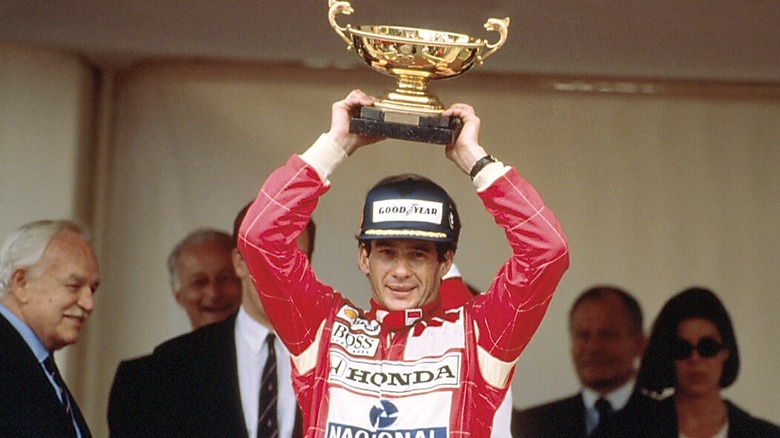
Ayrton Senna is regarded as one of the greatest drivers of all time, and during his F1 career drove one of the 1980s cars that define racing history.
Senna was a driver who understood the risks of the sport, who pushed the limits more than most other drivers, and who believed that winning without taking risks was a hollow victory. But despite his win-at-all-costs attitude, his death was still one of the biggest shocks to ever hit F1.
The 1994 San Marino Grand Prix was held from April 29 to May 1, and is still remembered as the most shocking race event in F1 history. By race day, it had already claimed the life of Austrian driver Roland Ratzenberger, and Rubens Barrichello had been seriously injured.
Yet, all this was overshadowed by the death of three-time world champion Ayrton Senna. The Brazilian lost control of his Williams at the notorious high-speed Tamburello corner just seven laps into the Grand Prix and sustained fatal head injuries. The crash tragically cut short a career that had already brought him three world championships, saw him idolised in his native Brazil, and whose uncompromising approach to racing had won him legions of fans.
While Senna's racing legacy will be remembered for thrilling victories and fierce rivalries with the likes of Alain Prost and Nigel Mansell, perhaps a more lasting legacy is the impact he had on F1 safety. In the wake of the tragic weekend, the FIA immediately introduced a raft of safety measures to minimize the dangers to the driver's face.
Nico Rosberg
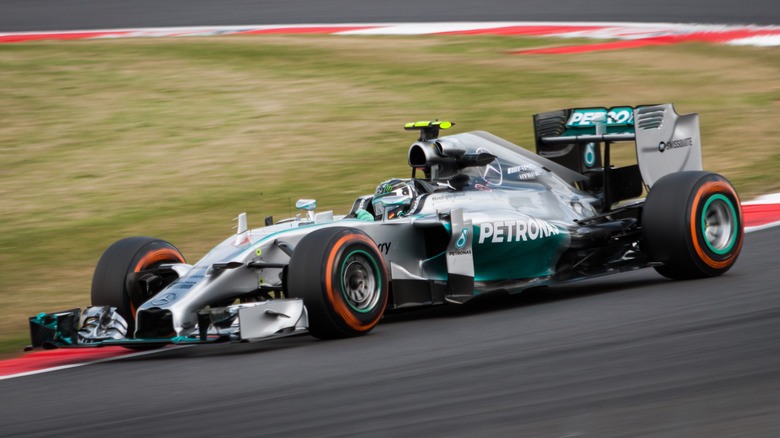
When Nico Rosberg won the Formula 1 World Championship driving for Mercedes in 2016, he was a driver at the top of his game and driving the best car on the grid. He makes this list by virtue of being the latest driver to retire immediately upon winning the F1 Championship. As such, his inclusion is more representative of a list of drivers that includes Nigel Mansell, Alain Prost, and Sir Jackie Stewart.
Nico certainly wasn't the youngest driver to retire (he was 31 at the time), but he had dedicated his life to racing with the ultimate goal of lifting the Formula 1 World Championship. Put simply, for Nico Rosberg, the sacrifices he'd made from the age of six had borne fruit, and that fruit was enough.
Five days after celebrating his victory, and with a lucrative two-year Mercedes contract in his pocket, he walked away from Formula 1. To understand why someone should walk away from such a situation, we need to scratch just under the surface of Formula 1's glamour.
Formula 1 drivers lead a jetset lifestyle. That is, they spend a lot of times in jets; a yearly flight tally of 100 is not unusual. In between this, there's the intense training regime, endless rounds of hotel rooms, PR commitments, and much more. On Sundays, you do get to drive race cars, though.
To become an F1 champion, you have to be totally committed to that, to the expense of everything else. Family time and social life have to take a back seat, and having just got married and with a new daughter joining the family it seemed that Nico's commitment to the sport had peaked when he won the championship.
Jules Bianchi
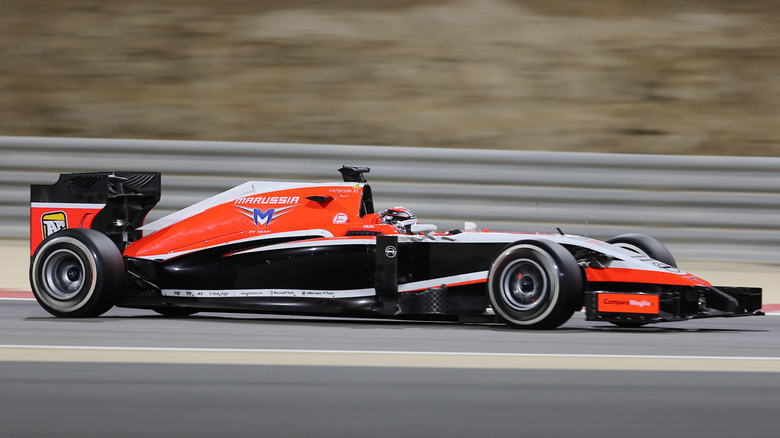
The tragic death of up-and-coming driver Jules Bianchi was all the more shocking because it was the first death to hit the sport since the safety improvements triggered by Senna's death. Jules Bianchi suffered serious head injuries during the 2014 Japanese Grand Prix, injuries that he would eventually pass away from in July 2015.
At the time of the incident, Jules Bianchi was considered a superstar of the future. Although he was driving for Marussia, a back-of-the-grid team, he'd already impressed with some stellar drives. He was also part of the Ferrari Driver Academy and was essentially farmed out to Marussia to get race experience. It was widely expected that his talent would see him become a future driver for the famous Maranello-based team.
Earlier that year, during the Monaco Grand Prix, he'd already proved himself to have the potential to be an F1 great. The street course is incredibly difficult to pass on, yet that didn't seem to deter Jules. Starting from last place on the grid, he steered the Marussia to ninth place and earned the team its first-ever Formula 1 points. This was despite him receiving two time penalties during the race.
The truly sad thing is that his death in Japan was preventable. The incident happened during a rain-soaked race and under double yellow flag conditions. According to the FIA report regarding the accident, Jules Bianchi was traveling too fast in the yellow flag section of the course (turn 7) and lost control. Unfortunately, the car struck a mobile crane being used to recover another car that had also left the road.
Robert Kubica
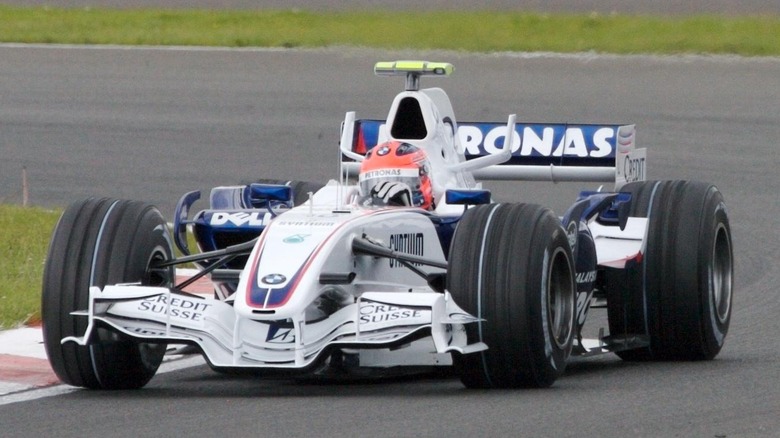
Robert Kubica was another driver who was widely regarded as a future superstar of the sport, and another driver whose future was seemingly linked with Ferrari, with the driver having signed a contract to partner Fernando Alonso at the Italian team from 2012.
Kubica's Formula 1 career began with the BMW Sauber team, joining the team in 2006. With one of the most powerful BMW engines ever just behind him, Kubica's maiden win at the Canadian Grand Prix the next year that saw the Formula 1 paddock really sit up and take notice. The driver signed for the Renault Formula 1 team for the 2010 season before deciding to join Ferrari in 2012. At this stage, the first Polish driver in Formula 1 looked to have made it to the top of the sport.
However, fate had other ideas. On February 6, 2011, Kubica was driving a Skoda Fabia in the Ronde il Andora rally when he lost control of the car. In the resulting accident, he lost almost three quarters of his blood. But for his career, the most devastating injuries were the 42 fractures he sustained and the sub-amputation of his right forearm.
Now, there is an argument that says that this accident didn't end his career. This is partially true, as through sheer persistence, Kubica did return to the Formula 1 paddock eight years later to drive for the Williams team. But it wasn't a glorious return, and certainly his career as a top driver was over, ended prematurely thanks to a crash in a race he was dubious about entering. More positively, Kubica went on to compete in rallying, before magnificently and fittingly winning the 2025 Le Mans 24 hours driving the impressive, serial-winning, Ferrari 499P Le Mans Hypercar class.
Jim Clark
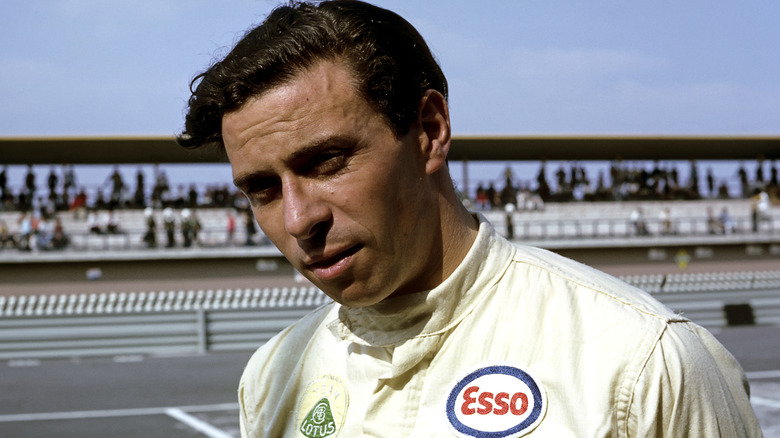
Jim Clark drove during a time when it wasn't unusual for drivers to compete in multiple disciplines at the same time. So, although Jim Clark is most strongly associated with Formula 1, he was a remarkable driver who thrived in several motorsport arenas.
In 1965, for instance, he took his second and last F1 World Championship, won the Indy 500, claimed the Australian and New Zealand Tasman Series, and won the Formula 2 Trophées de France. Not a bad haul for the son of a Scottish sheep farmer who had no real ambition to become a race driver.
Tragically, it was when driving in an F2 race at Hockenheim in Germany during the 1968 Formula 1 season that Jim Clark's career came to a sudden end. The incident happened on the fifth lap when Clark lost control of his Lotus 48 and crashed into the trees, sustaining fatal injuries. Although never confirmed, a deflated rear tire is considered the probable cause of the accident.
At the time of the crash, Jim Clark was undoubtedly the best race driver on the planet, and is still frequently touted as the greatest race driver of all time — something that the stats seem to verify. When he died, Jim Clark held records for the most F1 victories and pole positions among others. But perhaps more impressively, Clark is the only driver to have captured multiple championships in the same season while competing in F1. Jim Clark's career ended far too soon, depriving the sport of one of its greatest ever talents.