

5 Phones That Beat The Samsung Galaxy S26 Ultra's Battery Life
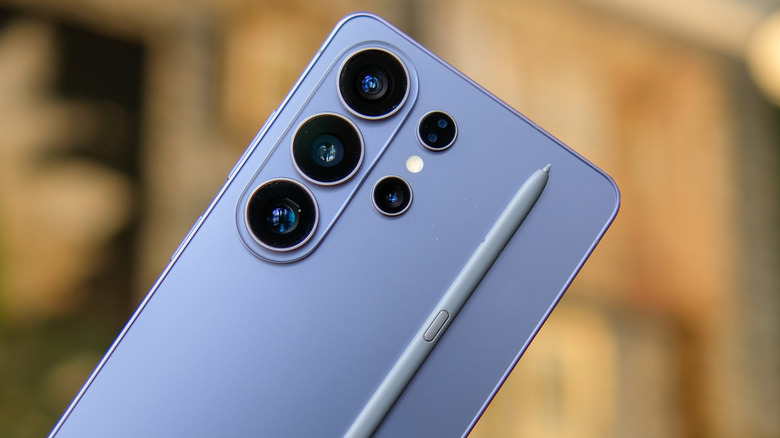
The Galaxy S26 Ultra is Samsung's most powerful smartphone to date. It's powered by the Snapdragon 8 Elite Gen 5 SoC and is available with up to 1TB of storage and 16GB of RAM. You get a quad-camera setup on the rear comprising a 200-megapixel main sensor, two telephoto lenses, and a 50-megapixel ultrawide sensor. It's also the only premium smartphone from a mainstream brand that comes with a stylus built in.
Though Samsung hasn't overhauled the design of its Galaxy S Ultra flagship in over four years, the Galaxy S26 Ultra does feature a unique hardware addition — Privacy Display. Despite the growing selection of Samsung Galaxy features, there aren't many year-over-year changes hardware-wise. The Galaxy S26 Ultra has a massive 6.9-inch display and is by no means a compact flagship — yet, it's only powered by a 5,000 mAh battery.
Fortunately, owing to the chip's efficiency and Samsung's excellent software optimization, the Galaxy S26 Ultra actually lasts all day on a single charge. Its charging speeds have also gotten much faster, at up to 60W with a compatible adapter. However, if battery life is at the top of your priorities, you can do much better than what Samsung is offering here. We've compiled a selection of smartphones with comparable performance that edge out the Galaxy S26 Ultra in battery endurance. It's worth noting that a few of our picks aren't officially sold in the U.S., and importing them may first require you to verify carrier compatibility.
iPhone 17 Pro Max
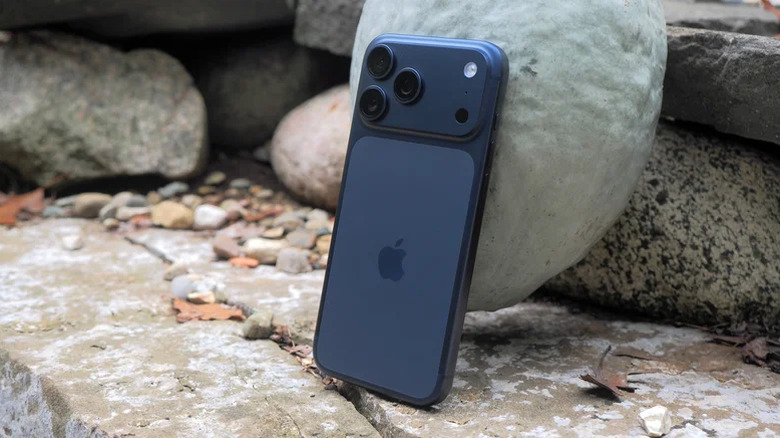
The iPhone 17 Pro Max we reviewed is the safest flagship recommendation if you value the display and camera performance of the Galaxy S26 Ultra. It's available globally and is actually priced cheaper than Samsung's flagship. iPhones have never had the biggest battery capacities on paper, but have always managed to match or outperform their Android counterparts thanks to the fact that Apple controls both the hardware and software — yielding maximum efficiency.
The iPhone 17 Pro Max packs in a marginally larger battery at 5,088 mAh for the e-SIM model that should power the experience for an entire day and then some. In a comparison carried out by GSMArena, the iPhone 17 Pro Max beat the Galaxy S26 Ultra in web browsing and gaming endurance tests. In fact, this was the model that shipped with a physical SIM card slot, which has a smaller 4,832 mAh battery. The charging time for the iPhone, however, is noticeably slower. It still takes over an hour to fully charge, while the S26 Ultra can do it in roughly 40 minutes.
While you're not getting spectacularly longer battery life with the iPhone 17 Pro Max, you do need to factor in the fact that it's the only smartphone from a mainstream brand in the U.S. that confidently matches the Galaxy S26 Ultra in other aspects, such as performance, camera quality, and long-term software support. Pricing starts at $1,199 for the 256GB model, which is a hundred bucks less than the Galaxy S26 Ultra's launch price.
OnePlus 15
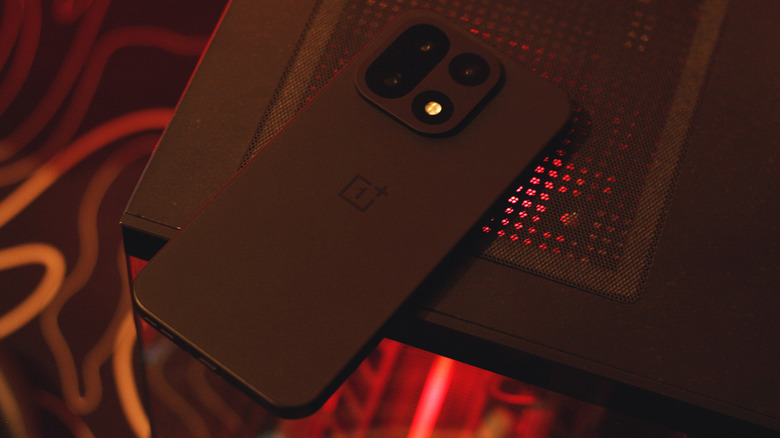
Over the years, OnePlus has earned a reputation for offering some of the fastest smartphones at a fraction of the price of the iPhones and Samsungs of the world. Though pricing has crept up over the years, the $900 OnePlus 15 is still considerably more affordable than the Galaxy S26 Ultra. It's powered by the same chipset and can be decked out with up to 16GB of RAM. However, OnePlus' emphasis on snappy performance is evident, given all the animation tweaks and optimization that OxygenOS has got going.
One of the OnePlus 15's highlights is its massive 7,300 mAh battery. Like most other Chinese OEMs, OnePlus has shifted to using high-density silicon-carbon batteries for its smartphones. This is why, despite its smaller footprint, the OnePlus 15 packs in a much larger battery compared to the Galaxy S26 Ultra. Furthermore, OxygenOS is pretty aggressive with battery management — there's negligible battery drain overnight, and even under heavy load, the Snapdragon 8 Elite Gen 5 displays great efficiency.
In our review of the OnePlus 15, we practically couldn't kill it in a day. With regular use, it comfortably lasts a day and a half — sometimes even two days. When it's finally time to plug it in, the included 80W SuperVOOC charger charges it in under an hour. Models sold in China and India can be charged even faster with the 120W SuperVOOC charger that OnePlus bundles in with every purchase.
RedMagic 11 Pro
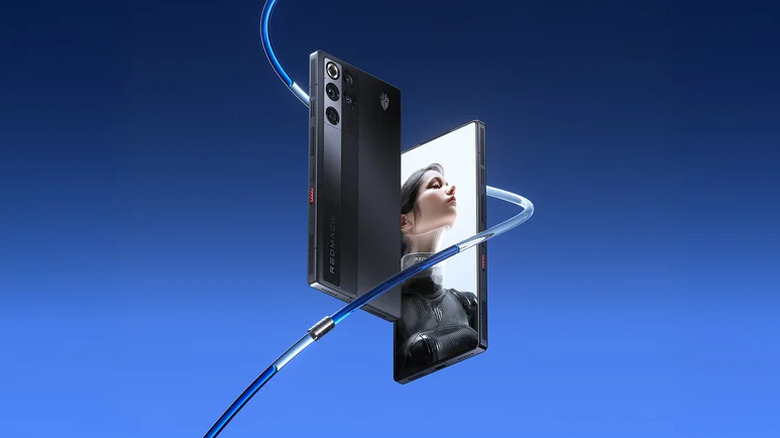
The Galaxy S26 Ultra is a great smartphone to play games on, but if gaming is a priority, you might want to consider the RedMagic 11 Pro. It's powered by the Snapdragon 8 Elite Gen 5 chip and can be configured with up to 24GB of RAM and a terabyte of storage. If you can ignore its semi-transparent industrial look, you'll actually find its shape and camera module very similar to that of the Galaxy S26 Ultra. On the front is a 6.85-inch 144Hz notchless display, with the front-facing camera hidden underneath the panel.
All of this power is backed by a mammoth 7,500 mAh silicon-carbon battery. PhoneArena reviewed the phone in great detail and highlighted how the battery is practically impossible to kill in a single day, even with intensive use or gaming. RedMagic bundles a power adapter that can fast charge the device with up to 80W of power. Interestingly enough, it matches its wireless charging speeds at 80W as well, though you will need to buy a compatible charger for it.
Since the RedMagic 11 Pro is a gaming phone at its core, you do get a sprinkle of unique features, including capacitive shoulder triggers and a 3.5mm headphone jack. Camera performance isn't too bad, but the Galaxy S26 Ultra has the RedMagic 11 Pro soundly beat in this department. Pricing, however, is a treat — the phone starts at $700 for the 256GB storage variant that comes with 12GB of RAM.
Oppo Find X9 Pro
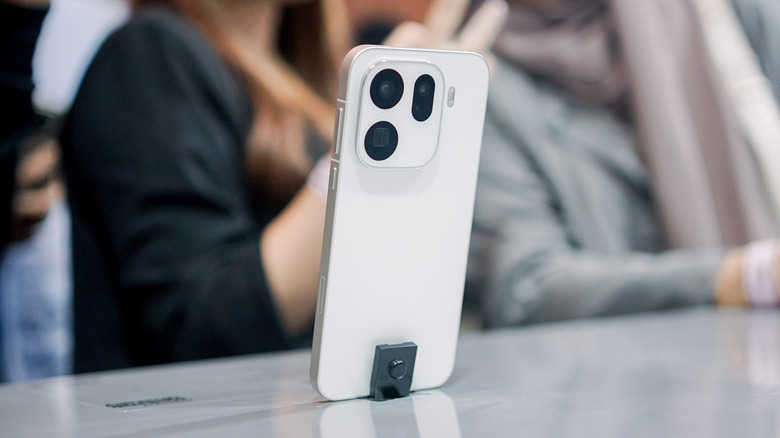
Oppo doesn't operate in the U.S., but in the countries where it does, the brand has shifted its focus toward delivering flagships with class-leading cameras. The Oppo Find X9 Pro features a triple-camera setup, consisting of 50-megapixel wide and ultrawide sensors, and an additional 200-megapixel 3x telephoto lens. The design feels familiar because the Find X9 Pro is basically a OnePlus 15 with a better set of cameras. Although the Find X9 Ultra is the brand's most powerful smartphone, the Find X9 Pro actually has it beat when it comes to battery capacity.
It packs in a 7,500 mAh silicon-carbon battery that can charge at up to 80W wired or 50W wirelessly. In GSMArena's battery test, the Find X9 Pro dwarfs the Galaxy S26 Ultra and the iPhone 17 Pro Max. Since it runs ColorOS, which is very similar in form and function to OxygenOS, you can expect excellent standby times and efficiency. The MediaTek Dimensity 9500 that powers the phone trades blows with the Snapdragon 8 Elite Gen 5 that other prominent flagships in the space utilize.
The Find X9 Pro sports a 6.78-inch 120Hz AMOLED display and comes with up to 16GB of RAM and 1TB of fast UFS 4.1 storage. Like the OnePlus 15, you can use reverse wireless charging to charge other devices with up to 10W of power. The phone was launched at CNY 5,300, which works out to roughly $800.
Xiaomi 17 Pro Max
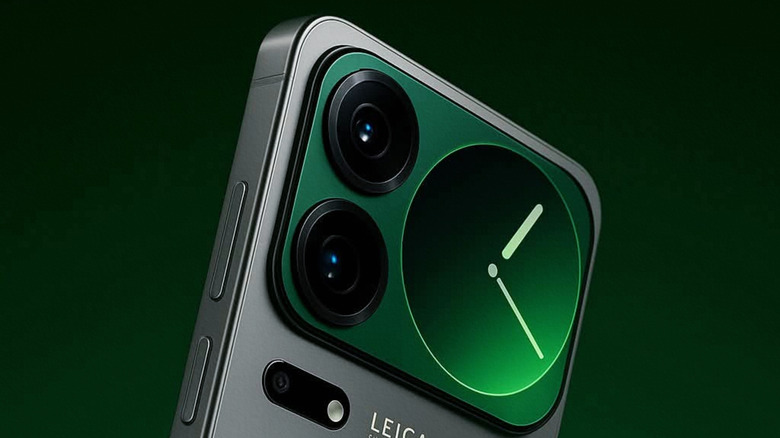
Xiaomi is another tech giant that, unfortunately, doesn't have a strong presence in the U.S. market. The Xiaomi 17 Pro Max looks and sounds a lot like Apple's flagship, but if you can look past the unapologetic imitation here, you'll find great value in the device. For starters, it's powered by the Snapdragon 8 Elite Gen 5 SoC and comes in RAM and storage capacities of 16GB and 1TB, respectively. On paper, it's just as powerful as the Galaxy S26 Ultra and other flagships. An area it beats the S26 Ultra in, however, is endurance.
The Xiaomi 17 Pro Max is a large device, with a 6.9-inch AMOLED display. It makes good use of its footprint — the 7,500 mAh silicon-carbon battery inside means the phone lasts hours on end with intensive use. When it does eventually drain out, you can charge it in under an hour with the included 100W charger. The device scored 89% in Notebookcheck's comprehensive review, which also praised its long-lasting battery.
The rest of the phone is just as interesting — there's an entire second 120Hz AMOLED display on the back that can display notifications or double as a viewfinder for the rear camera. You get a triple 50-megapixel camera setup, comprising a wide, an ultrawide, and a telephoto sensor. The phone was launched in China at CNY 6,000, which roughly converts to around $900.