

Does Porting An Intake Manifold Affect Engine Performance?
We may receive a commission on purchases made from links.
Automakers strive to produce the highest-performing engines that meet their budget goals. That often means the performance gains from porting and polishing intake (and exhaust) ports aren't cost-effective in a volume business like producing automobiles. For reference, there's a factory in China that builds a car every 60 seconds.
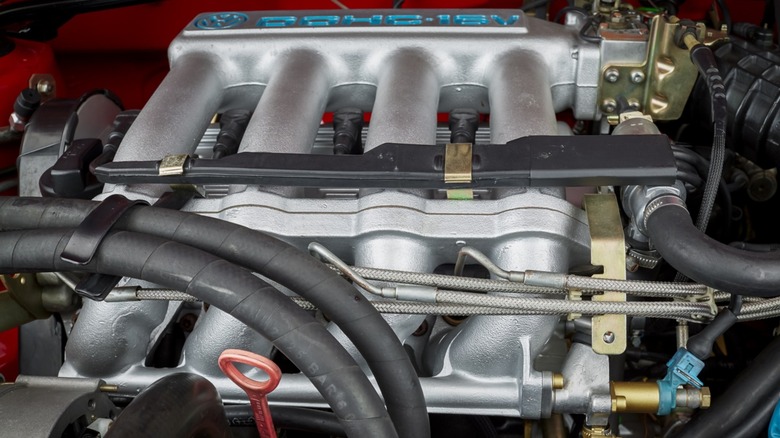
Porting and associated polishing of an intake manifold can increase airflow into the engine by removing or smoothing ridges, bumps, or excess material left behind during the casting process. Ultimately, more air flow through the intake manifold can increase the car's horsepower. An internal combustion engine is essentially an air pump at its core. It pulls air (and fuel) in during the intake stroke and pumps air (and spent fuel) out during the exhaust stroke. Sandwiched between those strokes in the typical four-stroke engine are the compression and power strokes, the latter of which provides the energy to drive the others.
With just a few simple tools, time, and patience, you can enjoy the benefits of a higher-flowing intake manifold by porting and polishing it in your home garage. It's a DIY-friendly project that should still leave some time to enjoy a portion of your weekend basking in the afterglow of a successful project.
DIY porting your intake manifold
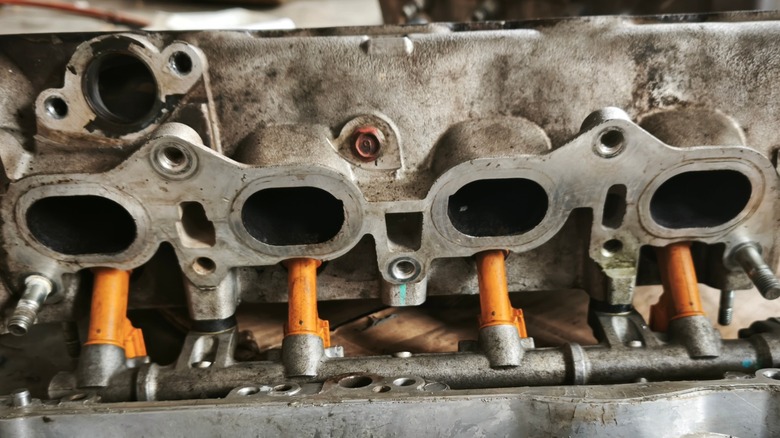
The first, and likely most daunting, part of porting your intake manifold is removing it from the car (unless you're porting a new intake in preparation for a swap). Either way, once you have your intake manifold on your workbench, you'll need to make a plan of attack.
To accomplish your porting job, you'll need a type of power grinder known as a die grinder. It can be electric, battery-powered, or pneumatic. If you have a Dremel-type tool, that'll work in a pinch. You'll also need a selection of grinding burrs and sanding attachments for your die grinder.
A good method for determining areas that require porting is to coat the intake manifold's gasket mounting surface with a layout marking fluid, such as Dykem Steel Blue. Allow a few minutes for it to dry, lay the gasket in place using a few bolts as pins, and scribe around the inner gasket openings. Use the scribed line as a guide to open the intake ports and remove or smooth any internal port steps, bumps, and ridges, while avoiding grinding into water passages, neighboring ports, or the exterior of the intake manifold. When finished grinding, you can smooth out the rough casting marks, but avoid polishing the intake ports to a mirror finish.
While porting your intake manifold gives the engine more potential intake air, the exhaust side, starting with the cylinder head exhaust ports, has to keep up. You'll have to decide how far you're willing to go chasing performance gains. Will you go all-in with match-ported exhaust manifolds or headers, or with a free-flowing exhaust system? Or will you enjoy the slight bump in power from a simple intake manifold port and polish?